Is the Whole World Wrong? Soviet Propaganda, Neo-Marxism, and the Gulag of the Mind | With Natan Sharansky
THT Natan Sharansky — corrected transcript
English (US)
00:00:00.000 — 00:00:34.140 · Natan Sharansky
You don't need dictatorship to be afraid. If you don't appreciate your freedom enough, you don't appreciate how much better is your life when you're freely speaking your mind and you do things in which you really believe, you can lose your freedom. Even the free world, the best American universities, the moment political correctness or progressive public opinion controls your behavior, you are enslaved.
00:00:37.940 — 00:03:46.060 · Ben Chertoff
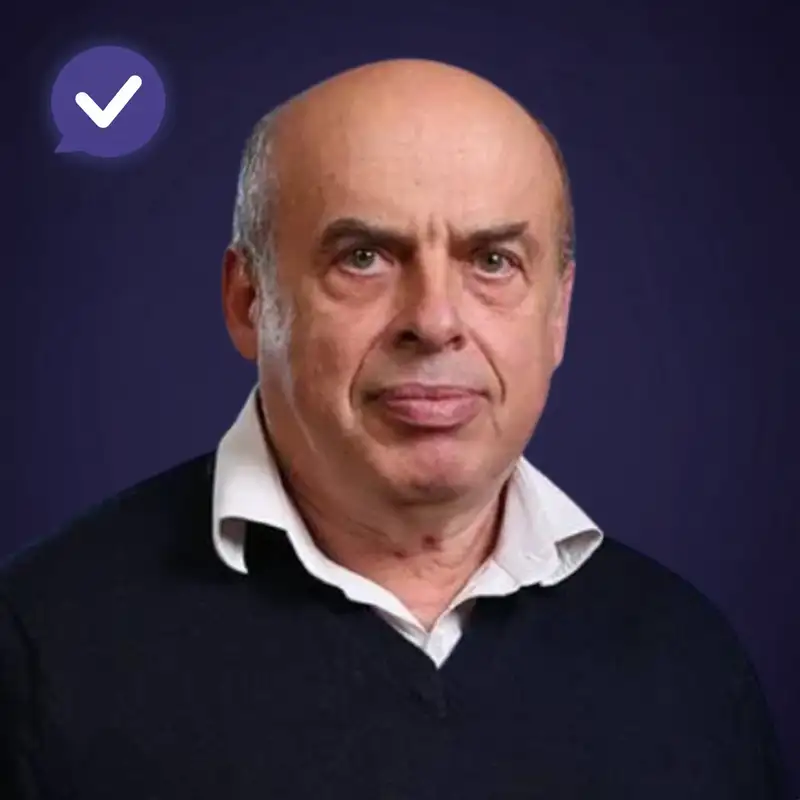
This is The Honest Take, the show that goes past the headlines to find out what's actually true about Israel and about the people covering it. I'm Ben Chertoff, and my guest today is Natan Sharansky, Soviet refusenik, nine years a political prisoner, then an Israeli cabinet minister and chairman of the Jewish Agency. He's also the man behind the 3D test of antisemitism. Today, we're asking what a man who grew up inside Soviet propaganda hears on American campuses now, and where criticism of Israel ends and antisemitism begins. Before we start, if you're not subscribed, take two seconds to fix that. And if you can, leave the show a rating. It's the main way people find us. All right, here's Natan. Natan Sharansky was five years old when Stalin died. His father took him aside and told him it was a miracle for the Jews. Then he told him to never say so to anyone. The next day at kindergarten, Natan cried along with all the other children, but he had no idea which of them were really crying and which were crying like him. That was Soviet life. You said what you were supposed to say, and you kept the truth for your family. He grew up, as he puts it, without identity and without freedom. Then came 1967. In 1967, Israel won the Six-Day War and Soviet Jews started finding out who they really were. Natan became a refusenik. One of the Jews refused permission to leave for Israel, who decided to fight instead of wait. He spoke for the Jewish immigration movement and for the Soviet human rights movement at the same time, and he says he found his identity and his freedom together. Two for one price. In 1977, the KGB arrested him for treason. He was sentenced to 13 years. He served nine in prison and the Gulag before he was freed in February 1986 and went to Israel the same day. He went on to serve in four Israeli governments and to chair the Jewish Agency. In 2003, as minister responsible for the diaspora, he toured American campuses and he came back worried. A Jewish student at Harvard Business School told him she wanted to sign a letter supporting Israel, but wouldn't because three professors who mattered for her career weren't signing. This wasn't Moscow. This was Harvard. Out of those years came his 3D test. When Israel is demonized, delegitimized, or held to a double standard, that's antisemitism. We get into that test and into how much of today's campus language he first heard in Soviet propaganda. We get into Human Rights Watch, which started as Helsinki Watch to amplify dissidents like him, and why its own founder broke with it over Israel.
00:03:46.820 — 00:03:48.840 · Ben Chertoff
Natan Sharansky, welcome to The Honest Take.
00:03:50.000 — 00:03:51.440 · Natan Sharansky
Thank you for the right take.
00:03:51.560 — 00:04:07.720 · Ben Chertoff
Thank you so much for being here. There are people listening who have never heard the word refusenik. Can we start there? What did that term mean, and what was the difference between somebody who simply got refused and someone who was a refusenik?
00:04:08.180 — 00:07:06.020 · Natan Sharansky
We started our struggle for the right to leave Soviet Union. It was the right to leave as Jews, and then also to leave for Israel, because we were absolutely deprived of anything Jewish except from antisemitism. So the only meaning of the word Jew was that you are a victim of antisemitism. And then after '67, when we discovered Israel, it came to our lives in a very powerful way. And all the people look at you and say, how you Jews did it. So you suddenly feel that you're responsible for something that you're not really connected. And that's when we started reading in the underground from the books which were wrote mainly by Americans and other Jewish tourists. You start reading about our history, in fact, about ourselves, and you discover that you have thousands of years of history and you discover that there are such things as Jewish people who are coming from different places. Say, oh, your father is from Odessa and we are from Odessa, or grandfathers, whatever. So suddenly everybody is from Odessa. Everybody says, we are family, we want to help you. And then we discovered there is a state which is ready to send airplanes to the end of the world to help. So, you discover your identity, history, people, country. And that's how we started fighting for our right to leave Soviet Union. And there was no legislation which could permit you to raise such a question. So that was a fight which included tens, hundreds, thousands, tens of thousands of people who were demanding from the Soviet Union to give us permission to go to Israel. And big numbers of people were refused to be given a visa. Now some of them decided not simply to wait, and you can wait all your life, in the meantime lose your job, you lose your career, but to fight, to be active, to organize letters of the protest, to meet with the foreign tourists, to pass them information, to get from them materials, later to organize meetings with those senators, the congressmen, or some other politicians who are coming. All this, of course, under strong, tough control of the KGB. So you have to be ready to cross all these red lines. So these activists were called refuseniks. And then some of them became also prisoners of Zion. So those who were really arrested. That's more or less the state or the category.
00:07:06.300 — 00:07:07.320 · Ben Chertoff
Yourself included.
00:07:08.200 — 00:07:09.560 · Natan Sharansky
This movement, yeah.
00:07:10.140 — 00:07:33.700 · Ben Chertoff
I want to go back to something that you just said: the only thing Jewish in your upbringing was antisemitism. You know, no bar mitzvah, no Hebrew books. I didn't realize that you didn't even know. No brit milah, no Jewish holidays. Nothing. And you didn't even know the Jewish history at all, which is astounding.
00:07:33.700 — 00:08:53.860 · Natan Sharansky
No, no, no. Well, you know some stories like from your parents, and so you see the piece of art David with the head of Goliath, and so you hear the stories. But systematically, you're not connected to all this. It's some kind of piece in the Museum of Art. And the only way how you're connected is that the ID of your parents is written "Jew" or any other nationality, but if it is "Jew," all the discussions at home are that you as a Jew cannot have such a career, cannot go to this university. There are all types of restrictions. And the bottom line is, because you're a Jew, you must be number one in your class, in your school, in physics or in mathematics or in music or in chess. So your professional success, that's some kind of protection from this disease called Jew. So there was nothing positive in this world. And that's why I can say that we were grown without identity.
00:08:54.360 — 00:09:14.960 · Ben Chertoff
Yeah, the only way out was then to be the best. Yeah. You were five years old when Stalin died, and you have a story about your father telling you something privately, and then you go back to kindergarten, and it's a very different experience. Can you tell me what happened, that story?
00:09:14.960 — 00:11:40.380 · Natan Sharansky
Yeah, so not only we were deprived of identity, we also were deprived of freedom. What it means to be a loyal Soviet citizen, I first discovered when I was five years old, and Stalin died. Stalin was the leader dictator of the Soviet Union. And my father told me, a five-year-old boy, remember all your life that miracle happened when we Jews were in big danger. He didn't go into the details of the Doctors' Plot, that Jews are accused in poisoning the Soviet leaders, that there is a big campaign preparing to evacuate all the Jews to Siberia. He didn't go into all these details, but he said, we were in danger. Stalin died just in time. It's a miracle. But remember all your life: don't say to anybody what I just now said. Do what everybody does, and I go to the kindergarten, and I cry together with all the children about Stalin, and we are singing songs about the son of all the people, Stalin, and I have no idea who of the children is really crying, and who is crying like me. And that's the typical life of Soviet citizens. You say what you're supposed to say, you vote as everybody has to vote. You read books which are permitted to read. And you know that all this is lie. But the real life has to be kept secret for your family, for close friends, and so on. And you have no idea how many of these citizens around you are doublethinkers like you, who really don't believe in this official ideology, and who are really believing in it. That's typical life of Soviet citizens. That's how we grew without identity and without freedom. And then, after 1967, when Israel entered our life, then it was history which we discovered, people which we discovered, culture which we discovered, and that's when you suddenly have things which are more important for you than physical survival, success on the exams to the university. And that's how we started this cycle.
00:11:41.440 — 00:11:57.980 · Ben Chertoff
Did you find each other after the Six-Day War, after 1967? I mean, was that a time when people actually started talking about what was really happening without just toeing the party line? Was that a fear that had gone away?
00:11:59.940 — 00:13:32.900 · Natan Sharansky
No, I can't say that 1967 was an important release point in that view. It was important in meaning of discovering our identity, that's what gave us strength to speak. But there were some people who dared to speak openly and they usually went to prison, so-called dissidents, not necessarily Jewish. Many of them were Jewish. And so it was known that there were a few people who dared to speak publicly their mind and usually they'll go to prison. And there were a lot of people who were discussing the rules between themselves. I remember my father from a very early age. I remember how he was trying to listen to Voice of America, Radio Liberty, or some others. And they were all jammed. So you really have to hear through jamming. And at the same time, you're concerned that your neighbors—it was a communal apartment, a few families practically in one apartment—will not hear. So there were big attempts to know the truth and at the same time not to show your interest. So from this point, it simply made our desire to know and to discuss Israel also much stronger than before.
00:13:33.340 — 00:13:49.760 · Ben Chertoff
It also changed the atmosphere of antisemitism in the Soviet Union when the 1967 war happened and the rise of antizionist rhetoric. Can you explain how that changed? What did that feel like for Jews?
00:13:50.620 — 00:16:03.360 · Natan Sharansky
First of all, Soviet leaders were bewildered, because they gave a lot of money and a lot of weapons and sent a lot of so-called advisors, but in fact officers, to Egypt and to Syria, and in fact a lot of intelligence. And the Soviet intelligence told Nasser, who was the dictator of Egypt, that's the time. Go ahead and you can destroy them. And they in fact started celebrating in official press this historical victory of democratic, peace-loving Arab countries over an American agent, Zionist Israel. So, suddenly, in the middle of these celebrations, Israel started the war and finished it in a few days. So, it was a huge humiliation. They immediately, abruptly stopped diplomatic relations with Israel, practically all the satellite countries of the Soviet Union. And it was another round of antizionist propaganda. But I have to say, it's not the first time from all my childhood I remember all these waves of hatred towards Israel, but at the same time, antisemitic propaganda. And I have to say, in Soviet Union, it was clear for everybody that it's all connected, it's almost the same, that the moment there is another attacks on Israel, everybody knew that your Jewish neighbors can have problems. And vice versa, if there is another Jewish doctors' plot or some other antisemitic campaign, it goes together with attacks on Israel. So it goes without saying that antizionist attacks on the Jewish state and the attacks on Jews go hand in hand.
00:16:03.980 — 00:16:11.220 · Ben Chertoff
Did you feel the increase in that though after 67? How did that manifest for you personally?
00:16:12.300 — 00:17:08.620 · Natan Sharansky
Well, first of all antizionist propaganda became stronger, but also access, let's say, to the universities by Jews became more difficult. I have to say that after some years of preparation, in 1966, I entered the highest Soviet institute of physics and mathematics, like MIT in the United States. It was very, very difficult for Jews to enter this university. A year after this, I wouldn't be able at all to enter this university because a year after this, it was already after the war. [unclear] So it became much tougher. Jews became even more suspected as Jews were viewed even more as dangerous, not loyal to the Soviet system.
00:17:10.280 — 00:17:32.000 · Ben Chertoff
When you hear on a campus these very same terms of Zionism, racism, fascism, genocide, colonialism, apartheid, all the stuff that came out of Soviet antizionist propaganda. And you see these college kids who think that this is something new. What do you hear when you hear that?
00:17:33.700 — 00:19:04.200 · Natan Sharansky
Well, first of all, I have to say it didn't start today. In 2003, I as a minister, responsible also for diaspora, made my tour over 13 campuses, universities of America, including Berkeley, Columbia, Harvard, all the leading universities. I spoke a lot with Jewish students, watched all these campaigns, and wrote an article that the occupied territories were American universities. And I said to Ariel Sharon that I believe that is the most important battlefield for the future of next generation Jews. And why I felt it? Because for the first time, I saw Jewish students who were telling me, some of them, but they were telling me that they prefer, though they have deep solidarity with Israel, but they prefer to be silent because it will be bad for their career. And you understand? It's not in Moscow. It's in the Harvard Business School. A postgraduate tells me that she wants very much to sign a letter in support of Israel, but her three professors who are very important for her career will not sign.
00:19:04.380 — 00:19:06.740 · Ben Chertoff
That's what you grew up with. I mean, yeah.
00:19:07.220 — 00:25:02.120 · Natan Sharansky
Yeah, so it really looked to me like [unclear] in the universities. Almost the same way: being afraid for their career in America, in the best institutions. And also there, when I am coming just in the middle of the second intifada, when practically in every corner of Jerusalem there was another bus or cafe, whatever, there were another 20 people killed from the suicide bombers. And you come to the university, and you hear all the time about Israel occupation or cruel war against Palestinians. And anti-apartheid weeks—that's when started this anti-apartheid weeks—when they put a symbolic wall in the center of the campus and say, that's what Israelis do now to Palestinians. And I don't remember if already they were speaking about genocide, but definitely they were speaking about very brutal, unjustified wars, which Israel is launching against poor, miserable Palestinian people. And then it was all antizionist activity, but at the same time, the Jews were the first to feel it and to be scared of it. That's exactly, by the way, I had a lot of debates about where it finishes, the legitimate criticism of Israel and its government, and where it begins, pure antisemitism. Because everybody was saying to me, oh, we are not antisemites, we only disagree with the policy of Israel. And then they're saying about racism and apartheid and all this nonsense. So then I proposed this, that I thought is very simple and clear criteria, saying that so-called 3D principle. I said Jews, through a thousand years, were the victims of this demonization, delegitimization and double standard towards Jews. And of course, there is thousands of examples how it was working through the centuries. Now, if you see the same tools applied to Jewish states, that Israel is demonized, like these accusations of genocide, or the right of Israel is questioned to exist, is questioned, delegitimization, or Israel is judged by standards which no other country in the world is given. That's antisemitism. That's antisemitism simply in the clothes of antizionism. What was happening 20 years ago that brought me this feeling of the danger. That, in fact, my days of Soviet Union connecting between or accusing Zionists of racism and slogans connecting antisemitism with the attacks on Israel, it comes back, and it comes back not through dictatorships, but through academia in the United States of America. That was very alarming, and I don't have to tell you that since then, in the last 20 years, it became much, much, much worse. And one of the reasons: that generation of those students who participated in Israel Apartheid Weeks, it's already 20 years, many of them are professors today who are encouraging the next generation of students to participate in these weeks. And of course, it reached its highest point on the 7th of October, or I'd say on the 8th of October. 7th of October was an unbelievable pogrom and shock for all of us. And we saw how our very existence is a danger and how cruel our enemies are. But on 8th of October, it was no less shocking that in the leading universities of the West, in Yale, in Harvard, in Columbia, there are demonstrations celebrating. It was before the war in Gaza started. We hadn't sent one tank into Gaza. Hamas was still in southern Israel. We had all the pogroms and hostages who were taken. And immediately after this, there are celebrations, like the professor from Yale who declares, "That's how liberation begins." And that showed how far the situation of American campuses went towards this atmosphere of Soviet Union. There's not even neo-Marxism, it's Bolshevism, the most primitive neo-Marxism, met with Islamists, with enthusiasm of those who want to see Israel destroyed. And that was, I would say a very powerful message that we are really in the middle of a very hard war, where two forces, communists and Islamists, are meeting and uniting their efforts.
00:25:03.680 — 00:25:17.760 · Ben Chertoff
I want to talk about some of the antizionist Jews, too, on the campus, Jewish Voice for Peace. The Soviets built a committee of prominent Jews to say all their antizionist propaganda.
00:25:18.080 — 00:28:43.260 · Natan Sharansky
You have to say, Jews for Peace in Palestine, whatever they're called, they probably do it voluntarily, meaning they are like useful idiots, maybe without understanding how they're playing in the hands of the most primitive terrorist groups in this world. But still, they are doing it because they think like this. In this Soviet committee, people were doing it in order to save their career, some outstanding academician or writer. When he is proposed to join it, it means that if you want to continue your work in the academy, or if you want to continue enjoying all those rights which we are giving to the recognized right, you have to join it. So they felt as long as they want to be loyal Soviet citizens and they're not thinking about leaving Soviet Union, they decided that they have to accept it. But the group of these Jews who were the members of the committee was very small because the Soviet Union didn't need—it was not a massive organization. They simply wanted the most popular known names. I will join in order every Soviet Jew will understand that is the position. That should be the position of Jews. But everybody knew. Everybody knew that these are people who are forced to say it. And their influence was rather limited. When I see what is happening on the campuses, in fact, it's also very small groups. I have to say, these are [unclear] groups. I was in Columbia University a number of times after the 7th of October. I was in many other universities. And you see how many Jews are really shocked and are looking for the way to defend their own dignity. And how few is this group? But the problem is that for mass media, for CNN, for New York Times, they are the spokesmen. And I saw how during this encampment, during this terrible thing which happened at Columbia University, there were three or four people who were permanently interviewed. Jews who say, I as a Jew cannot accept that this was. And then I go to Columbia University, and I find there are a lot of Jews in Hillel who are like in the fortress, having this struggle. And then there was, of course, a famous letter of 500 Columbia University Jews who wrote a very powerful letter in their own name that we are Jews, we are Zionists, Zionists is our identity, and we demand from American administration under the American law to defend us in our identity as we understand. So there were 500 Jews who signed this letter, and there were five or six Jews who were regularly appearing in CNN and in any other place as the voice of young American Jews.
00:28:45.420 — 00:29:09.960 · Ben Chertoff
It's almost, I mean, you were talking about the antizionist Jews of the Soviet Union who were doing this to protect their livelihood. I mean, is it, I don't want to pass judgment here, but does it seem more reprehensible to do that in the U.S., where there is no KGB looking over your shoulder now? You know, this is a choice that they've made.
00:29:09.960 — 00:30:29.100 · Natan Sharansky
You're concentrating on a small group of people who speak in support of antizionist cause. I'm more concerned about silent majority. Prefer not to say anything. Prefer not to stop going to Israel in order not to be canceled. Not to be taken out from their WhatsApp group. How can you go to this fascist state? And the fact that there is a silent majority who under this pressure of public opinion, under the threat of being canceled, decide to be silent. That's almost the same way with Jews in the Soviet Union, who majority were silent. But there they were really risking, as a minimum, their career, their opportunity to make money, their families, and sometimes their freedom. Here you're simply risking to lose your status or being accepted in some clubs or in the WhatsApp groups. And because of this, you are ready to give up on your rights to speak your mind.
00:30:29.100 — 00:30:38.260 · Ben Chertoff
What does that say about where we are as a culture now, that people are so afraid of non-conformity?
00:30:38.260 — 00:31:36.920 · Natan Sharansky
That says that you don't need dictatorship to be scared, to be afraid. If you don't appreciate your freedom enough, you don't appreciate how much better is your life when you're freely speaking your mind, and you do things in which you really believe, you can lose your freedom even in the free world, even being in the best American universities. The moment political correctness or progressive public opinion controls your behavior, you are enslaved.
00:31:38.480 — 00:32:01.020 · Ben Chertoff
You know the costs of that more than anyone I've talked to. You were arrested for treason, for speaking out, for being vocal about your thoughts and what you believed. What were you arrested for? What was the crime? And what was the punishment?
00:32:03.620 — 00:35:51.800 · Natan Sharansky
Well, I discovered my identity. And so it gave me strength. Suddenly you have things which are more important than your physical survival, more important than your career. And so it gives you strength to start speaking. In the beginning, you simply say, I really don't want to live here. I want to leave for Israel. And then that's the end of your career; that's when you'll be interrogated, when many of your friends will be afraid to deal with you, to take their names from your telephone book in order that KGB will not interrogate them too. But then you, for the first time, discover how good this life of freely speaking your mind is. So you discover your identity and your freedom, two for one price. And your life, of course, externally it changes for the worse. You lose your career, you lose your job, you're threatened, you're interrogated. But in fact, in the life of a person who feels such an inner liberation, you don't have to live with this permanent self-censorship. But also, if you are part of the great history, if you are part of the great people, you are very excited by being in all this historical struggle. And so you become more and more active. And I participated in the demonstration, then I was organizing the demonstration, then I was collecting information and passing it abroad. With time I became kind of a spokesman. It's not spokesman, it's a person who connects Jewish activists and world Jewry or activists in America and other places. And then I also became spokesman of human rights movement in the Soviet Union. So I was simultaneously acting in these two movements, Zionist movement and human rights movement in the Soviet Union. And of course, it was clear that sooner or later I'll be arrested. KGB was warning me many times. And then I was arrested, accused of high treason, isolated from all the world. For six months, I didn't know what was happening. And there were interrogations, and they were reminding me that for not cooperating with them, I would be sentenced to death. And in these situations, you really have to remind yourself again and again that, after all, this historical struggle continues. The fact that they moved you from an apartment in Moscow to a KGB prison a few miles from the other. In terms of historical struggle, nothing changed. And maybe to the contrary, today what you're saying is even more important than yesterday because it can influence on many other things. And so, in fact, the fact that I had this life of a Soviet slave and then became a free person and had this few years of living as a free person, it was very helpful because each time when they tried to convince me to cooperate with them, you simply understand that they want to take you back from free person in Soviet prison to slave in Soviet Union, and you don't want this life. So that's—
00:35:52.460 — 00:35:55.780 · Ben Chertoff
You felt freer in the Gulag.
00:35:55.980 — 00:36:38.740 · Natan Sharansky
There was trial, and because of the huge international pressure, of course, a huge campaign of Jews all over the world. My wife, who was already in Israel, was very actively involved in this. One of the other world leaders joined the struggle. The Soviet Union, in the end, didn't sentence me to death. Sentenced me to 13 years in the Gulag. Because of the international pressure, it took me only nine years. After nine years, I was the first political prisoner who was released by Gorbachev under the international pressure, yeah.
00:36:39.220 — 00:36:48.160 · Ben Chertoff
If Gorbachev hadn't come to power and there hadn't been that, you know, the period of glasnost, do you think you would have been released or would you have just...
00:36:49.920 — 00:40:11.640 · Natan Sharansky
Nobody knows, but we all felt, we Jewish dissidents, not only Jewish, we always believed that the Soviet Union is doomed. But my friend, Andrei Amalrik, in 1969, wrote the book Will the Soviet Union Survive Until 1984? 1984, because of Orwell's book, 1984. But also, it was like 15 years from 1969. And what he was explaining, that when the regime puts all its energy, all its energy, to controlling the brains of 200 million people. So then all these resources will be exhausted. He gave this example. If there is a prisoner who is kept under the gun by the soldier, a soldier has to keep this gun 24 hours a day, at some moment his hands, muscles will be tired, and the moment he put the gun down, even for one moment, the prisoner will run away. And that's what will happen with the Soviet Union. And we believed in it. So in fact, when Gorbachev came to power, the Soviet Union was already exhausted by this competition or that failure in the competition with the West. In fact, President Reagan, with his so-called Star Wars and other things, put huge pressure on the Soviet Union. They had at some moment to start decreasing the tension simply because they couldn't survive. Of course, the fact that there came a young leader who is not responsible for the crimes of the past, it made for him it easier to make these decisions. But if you look at his own memoirs, when he's telling why he did these decisions, he clearly explained that he felt that we cannot continue to suffer of this overall economical and political pressure. And for what? He said, I'm reading. Wherever I go, I go to Canada, I go to England, everyone says to me, "Free Sharansky." Then I go back and I read about this Sharansky and I say, my God, why do we need to suffer such things because of this person? Maybe that's naive, his saying that he never knew about these dissidents. It doesn't matter. But there was clearly big pressure, and somehow the Soviet authorities had to decide whether it was keeping these people in prison. And in fact, after I was released, in one year, two years, all the prisoners of Zion were released, many dissidents were released, and then Iron Curtain was put down and hundreds of thousands of Jews left Soviet Union. Today it's more than one million. But it's interesting that the moment you bring Iron Curtain down, Soviet Union ceased to exist. It fell apart. Because such a dictatorship, which has to control the minds of all these people under control, it cannot really exist without Iron Curtain.
00:40:12.640 — 00:40:32.540 · Ben Chertoff
You've called it a love story between your movement and the human rights movement. And Human Rights Watch came out of that world. Now that's one of the organizations that is accusing Israel of the blood libel of genocide. When did you see that marriage on the rocks and the marriage ending?
00:40:33.000 — 00:45:54.900 · Natan Sharansky
I would say that today's so-called human rights organizations, they have nothing to do with our struggle with human rights. If you take Human Rights Watch, people don't remember, but it was created as Helsinki Watch. And it was created by Bob Bernstein, who was the publisher of Random House. He came to Moscow in the end of 1976. He met with me and some other members of the Helsinki group. On his request, I took him to Academician Sakharov, who was the number one scientist and then became the number one dissident. So when he came back to America, he said, Look, these people are speaking loudly about how they created this Helsinki group. There was a Helsinki conference in which the Soviet Union took obligations to respect human rights, in a lot of political and economical support from the West. And so we created this group to show that Soviet Union is not keeping its obligations on the Helsinki Agreement. And then he said, we have to empower those dissidents who are acting under dictatorship. And that's how Human Rights Watch, Helsinki Watch in America was created. So I was already a few months in prison when it was created. And when I was released, the first thing in New York that I did was to meet with Bob Bernstein and with all his group and to thank for their solidarity with our group. In another 10 years, Robert Bernstein, who was the chairman of the group, resigned from this. Why did he resign? He wrote a letter. We created the group to amplify the voices of people who are under dictatorship. We were supporting Soviet dissidents, we were supporting Chinese dissidents, South Korean dissidents, and many other people who suffer under dictatorship. What happened today, instead of this, you go to a free country, which has free press, which has free human rights organizations, which has official opposition, where there is no problem to express your views. And you turn it into your cause, which in fact is attacking a democracy which is fighting with dictatorships. It's almost the opposite. He was saying the idea of why this group was great. But it's only one example. The same can be said about Amnesty International, which again was dealing with the fact that there are so many political prisoners in the world and we want to organize solidarity with them. And in fact, I told them when I was out of prison, they came to me to get more information, and I thank them for their work. And then I said, but look, I'm looking on your reports. You have like 20 pages about Israel and two pages about Syria. You really believe that there is such a proportion? They said, well, but we cannot, that's simply we get a lot of information about Israel, but not about closed societies. I said, okay, so make the chapters, because here is a chapter about dictatorships, and here is a chapter about autocracy, and here is a chapter about free countries. Then it's clear that even if it is about free country, even if it is 100 pages, because you have a lot of information, it's not the same like one page about dictatorship. They said, no, we are not going to judge the regimes. And that is the problem. We have also to take some share of responsibility for ourselves. We really gave up on this banner of human rights. We permitted our enemies who have nothing to do with human rights. What pro-Palestinian or pro-Hamas organizations have to do with human rights? Nothing. Today, some people, activists of Hamas and others, received as human rights activists in the American universities. There is a judge from South Africa who was chairing the committee about genocide. He is the symbol of human rights. It has nothing to do with human rights. But the fact that we somehow accepted it, that these organizations are using these, or that terrorist organizations are using the symbols of human rights, defending their terrorist activity, that's something that we should never compromise on. That's what they would say. We should never participate in these organizations who are using the words of human rights to justify terrorist activity.
00:45:56.450 — 00:46:36.080 · Ben Chertoff
It goes even farther in some cases in the U.S. We're taping this on election day. We don't know what the results will be. But as you've written in The Free Press, there is a rise of what you call the neo-Marxism. You know, in some cases, it goes into what I would see as Bolshevism, this pushing for actual revolution. What do you say to a kid on a college campus, or in a protest, who's holding a hammer-and-sickle sign, who has the freedom to do that because they're in a free society? I mean, what would they be giving—
00:46:36.080 — 00:48:40.740 · Natan Sharansky
Yeah, one of the sad things is that, you know, a few years ago, when I was saying, "But that's communism," people were saying, "No, no, it has nothing to do with it." Today, they're not even denying it. So communist, so what is it? Why it is so bad? So people, young generation has no idea what they're talking about. The woke movement, in fact, it is so easy to see in this woke movement, so-called progressive movement, the primitive Bolshevism. After all, if you look at this approach, that the world is divided between oppressors and oppressed. The oppressors are always wrong. The oppressed are always right. Politically correct language will be on behalf of oppressed. Oppressors should be muted, should not be permitted even to speak. We have to listen to the voices of oppressed, and so on and so on and so on. That's typical Bolshevism. So if you simply, in so-called critical race theory, no, it's one of the banners of woke, critical race theory, you simply take the word race and replace it with the word class, critical class theory, and simply take the text, that is the text of communist propaganda, and which we had to learn and to pass exams practically every year. And that was the regime, which in the end killed, in fact, tens of millions of people in the name of defending progress, keeping the movement of progressive ideas of equality. That's what's important to remember. If you give up on your basic civil rights and freedom for the sake of progressive causes, it will finish very bad for you and for your society.
00:48:42.060 — 00:49:06.120 · Ben Chertoff
There are plenty of people who say that antizionism is inherently antisemitic. I tend to fall into that camp. You were asked exactly that question. And you said, no, that everybody has the right to an ideology. Where is the line there? How do you define it? And again, I think this goes to the three Ds.
00:49:06.120 — 00:55:39.400 · Natan Sharansky
I remember when it started that I saw after the Durban conference in 2000, when suddenly the struggle against racism and the first international conference against racism organized by the United Nations turned all into the attacks on Israel. Like the new apartheid, Israel. And when I start saying that I am the minister who is responsible, among other things, defending Israel on the international stage, and I'm speaking with many politicians, they say, no, no, this criticism of Israel has nothing to do with antisemitism. We are not antisemites. We love Jews, but you don't agree with the policy of your government. And then there is a cartoon in the Guardian, I think, where Ariel Sharon is eating Palestinian kids and their blood is dropping through his mouth. And he looks like classical Jew and antisemitic pictures in the Soviet Union or in Nazi Germany. And they come to the Guardian newspaper and say, is it antisemitism? No, no. And then British association of [unclear] gives them the best cartoon of the year in Britain. And then I continue my criticism, then European Union gives them the best cartoon of the year in Europe. And this looks not exactly like antisemitic cartoons, also so-called antizionist cartoons, in the Soviet newspapers in Stalin's times. And then Nobel Prize winner in literature from Spain comes to Israel in a press conference and says, I was at Palestinian refugee camp. That is Auschwitz of today. You know, I was many times in refugee camps of Palestinians. I think it's really a shame that fourth and now fifth generation of Palestinians live in refugee camps. And we can debate and argue why, who has to be blamed, whether Israel has to be blamed, or Palestinians or United Nations. But what it has to do with Auschwitz? Everybody who was in Auschwitz or who read about Auschwitz understands that it has nothing to do with this. And I come and discuss with the leader of the Human Rights Committee in Geneva how it can be that Israel is condemned more than all the dictators in the world together in your committee for violation of human rights. And she's explaining that she has nothing to do with this, that Russia has agreement with African countries, that they don't speak about Chechnya, we don't speak about what's happening in Sudan. I said, it doesn't matter. It means only that one country is judged by different standards. So all this shows that if Israel is demonized, it's like showing that they are eating the Christian babies, and now the leaders of Israel are eating the Christian babies. That demonization. If Israel is accused in genocide, by criterias which were never used in the world, genocide means something that you intentionally is destroying the whole race, the whole people. And here, after three years of our war and other, the population [of Gaza] grew, not became less. And we are making such big efforts to separate between terrorists whom we are targeting and whom we are keeping our hostages from the population. So it's clear, it's a very different standard. And when Israel's right to exist is the only state that is raised and checked, well, now your mayor of New York saying that he [unclear] believe that Israel should have the right to exist as a Jewish state. And now your candidate today in Michigan, who probably in these hours can become the senator. He openly says that Israel doesn't have the right to exist as a Jewish state. Does he say it about any other country in the world? No. So it's clear delegitimization, it's clear double standard, and it's clearly instruments which antisemites were using against Jews for thousands of years. So in fact, it's not only against criticism of Israel. It gives opportunity to everybody to criticize Israel without becoming antisemitic. You know, I ask my students sometimes, tell me something that you really have against Israeli government. And people say this, like Sabra and Shatila, that was the big massacre by Lebanese Christians or Lebanese Muslims, but Israel really was not tough enough to stop it. So, I say, now, say all this criticism without demonizing Israel and without applying standards which is not applied to any other country. And you know, every student could do it. So if you make an effort not to cross these lines, you can do it. But our enemies deliberately are crossing these lines. They deliberately want that Israel will look like the closest to Satan. That's what Sartre said about antisemitism: for antisemites, Jews are the closest to Satan. That's exactly what they want, how Israel will look. They deliberately want the criteria that Israel will be accused of genocide when all the others who are really having genocide will never be accused of it. They really want to challenge the right of Israel to exist. That's why it is very important that we, at least for ourselves, will be clear where the legitimate criticism of Israel should always exist because you cannot have normal democracy restricting the right of people to criticize it. But where it turns into antisemitism, unfortunately today, almost all criticism of Israel is in many [unclear], or even from the very beginning was planned as antisemitism.
00:55:40.400 — 00:56:14.680 · Ben Chertoff
You mentioned the election in Michigan today. El-Sayed was born in the U.S. He could, if he wins, be potentially lauded the same way Obama was, and be a potential presidential candidate in the United States. From somebody who has experienced Marxism, totalitarianism, antisemitism, what does that feel like seeing this happen?
00:56:15.080 — 01:00:00.780 · Natan Sharansky
Well, as I said, it's very sad, really very sad that this most primitive union of communism and dictatorship—it seemed that it is fully destroyed. 30 years ago, the Soviet Union fell. Practically every country which followed communist regime fell. But it can come back, and that it can come back through American so-called liberalism. What is important to understand, and that's where many of the people on the liberal left made this huge mistake. Liberalism has nothing to do with so-called progressivism. This woke movement is anti-liberal movement. Black Lives Matter is not Martin Luther King. It's absolutely the opposite to Martin Luther King. It's not accidental that for Black Lives Matter, Martin Luther King is an enemy. Because not only are they not concerned about liberalism, against liberals. In Marxism, in order to push ahead your progressive agenda, you can put all those who are against it in prison. That was the approach. They were saying that if you're a capitalist, your place is in prison. The fact that the so-called progressive agenda could push aside liberal agenda, that so many people believe that because they have to be liberals, they have to support, welcome, vote for these progressives. That was one huge mistake. The other thing is that somehow playing on these negative attitudes to Israel or confusing between progressives and liberals, that Islamists, Muslim Brothers, could come as allies of these progressives. This candidate, candidate for president, who at this moment can become in a few hours maybe senator in America—what he is symbolizing: he came to power building himself, in fact, the one who is supported by Muslim brothers, and at the same time, the voice of a progressive world. And the fact that liberals can buy it, the way that so many people who all their life believed in liberalism, that they could become the victims of the followers, of the supporters, of the agents of Muslim Brothers and Bolshevik forces. That's very tragic. Very tragic. I'm really, when I'm asked what you think about the future of Israel, and of course, we have some tough questions to answer, I always end it with saying that I'm much more concerned about the future of the United States of America than about the future of Israel. Because in Israel, we have a very vibrant democracy. Everything is discussed, but at the same time, we have to permanently fight every minute to fight for our right to exist and for our right to remain a free country in the Middle East. Americans are not challenged, don't challenge themselves with these questions. And suddenly you can see how the Democratic Party is almost occupied by neo-Marxists.
01:00:02.150 — 01:00:56.680 · Ben Chertoff
Yeah, they don't even, it's not even that they're not challenging them. I mean, there is no ideological challenge to what they're thinking. I mean, the cognitive dissonance to support both Islamism and progressivism is wild. You know, I think of the [unclear] film that came out at the Venice Film Festival and the 25-minute standing ovation. And I'm not the first to make this comparison, but people remembered Solzhenitsyn's anecdotes about people clapping for 10, 11 minutes for Stalin, and then the first one who sits down goes to the Gulag. Again, we seem to be allowing ourselves to self-impose this totalitarian system of such utmost fear of non-conformity.
01:00:57.520 — 01:04:05.900 · Natan Sharansky
It's a good example. You quoted correctly, but, you know, there, really, the fear was that if you stop applauding, you'll be arrested. These people don't stop applauding, not because they're afraid to be arrested, but they feel that they have to express their solidarity with this extremely progressive cause of people of Gaza fighting against genocidal soldiers of Israel. So it's truthfully, the free world permitted itself, or these people that are part of this intellectual process of the free world, they permitted themselves to be fooled. Even more than fooled. They became part of this frightening game of using liberalism, or the words about freedom of speech and so on, to support the worst dictatorships, the worst terrorists who are acting in today's world. And that's what's so alarming. Not simply this film, which is so irresponsible. There are no names, no opportunity to check. I was a number of times in such a situation. I'm speaking at the university. There are some tough questions, and they give answers. And then one young, sympathetic girl gets up and says, my mother was raped by Israeli soldier in Gaza, 10 years ago. And you try to connect it to any fact or to what kind of battle it was. Was there any record? Did they try to go to the court? And then she can't say anything about the place, about the time, about who were these. And you have now to argue with the 5,000 students who also don't know what to say. And here, the film, without any facts. Figures which are mentioned, every specific thing: there were no such things. 500 people killed: there was no such type of battle. There was nothing. And instead of asking, what about the facts? Do you have the other side to speak? Instead of this, they simply get up and applaud 25 minutes, because that's how you'll be judged. Are you a really liberal person? Are you on the right side of history or not? That's absolutely twisted. It's not even ideology, you said correctly. Some of our enemies have very strong ideology and the people doesn't have any ideology to protect themselves from this.
01:04:07.160 — 01:04:31.600 · Ben Chertoff
You're a grandfather. If one of your grandchildren says, how can the whole world believe this if it isn't true? And this is something that I'm pulling from the Tablet essay you wrote, quoting Ahad Ha'am, and the idea of Chatzi Nechamah. What do you say at the table to that kid?
01:04:32.360 — 01:07:41.560 · Natan Sharansky
Well, I don't have problems with my kids and my grandchildren, because they lived with our story. So every year we are having our second Pesach Seder on the day of my release, where again and again we are discussing not only my personal story, but also what it was to be Jew in communism, what is communism about, so on. But in general, of course, it's a big problem that suddenly all the world is saying that Israel is doing genocide in Gaza, and these young Jews are looking all over. Everybody believes, so there must be something. So I took this great article, I went to read this article from 1892 by Ahad Ha'am, who says about blood libel, he said, look, all the Christian world for hundreds of years, everybody believed in blood libel. Well, I give the examples in the article how even my friends in the 20th century, non-Jewish of course, believed that there is something in it. When there was such a broad consensus for hundreds of years, probably there is something. And at the same time, every Jew in the world knew that there is no blood libel because they have [Pesach], and nobody uses Christian blood. So that was the example that every Jew knows that even if all the Christian world accuses you of something, it doesn't mean that's right. And he speaks about how so many people are judging not on the basis of facts and logics, but on the basis of consensus. If there is consensus in the world that it happened, then probably it happened. It cannot be that everybody is wrong. So blood libel is a great example which has to show us that even if all the world says something that we know is nonsense, we should not be scared with this accusation. And because Israel has an army of the people, so everybody now has their son or their son-in-law or husband or whatever, who is coming back every few weeks from Gaza. And everyone knows exactly what's happening there and how many efforts Israeli soldiers are spending to protect civilians and not to kill civilians. And as I said, everybody knows that the population of Gaza is only growing and not becoming low. And everybody knows that there is no hunger. People are dying from hunger. So yes, we have to trust the fact that we know and not to the accusations of so many forces in the world, that there is genocide in Gaza.
01:07:42.940 — 01:07:45.860 · Ben Chertoff
Natan Sharansky, thank you so much for joining me today.
01:07:46.800 — 01:07:47.660 · Natan Sharansky
Thank you.
01:07:49.040 — 01:09:32.680 · Ben Chertoff
Every year, Natan's family holds a second Seder on the anniversary of the day he was released. They retell his story and what it meant to be a Jew under communism. The Seder is also where his answer to the rest of the world starts. For hundreds of years, the whole Christian world believed the blood libel. Every Jew knew it was a lie because they'd been at the Seder table. That's the argument he takes from Ahad Ha'am. When the whole world agrees on something you know is false, you don't have to be scared of the accusation. And in Israel, with an army of the people, almost every family has someone who comes home and tells them what's actually happening. But the part I'd take home is the part about freedom. He learned what it was in a country that jailed him for it. His warning is that you can lose it without any dictatorship at all, just by staying quiet. And his hope is right there in his own story. The day you start saying what you really think, you're free. So speak up. If this one gave you something to think about, do me a favor and leave a review on Apple Podcasts or Spotify. It's genuinely the thing that helps new people find the show. Subscribe on YouTube, Apple, or Spotify so you don't miss the next one, and follow @HonestReporting on Instagram, X, Facebook, and TikTok for all the work behind these conversations. Natan's memoir, written with Gil Troy, is Never Alone: Prison, Politics, and My People. His latest essay, Is the Whole World Wrong?, is in Tablet. I'm Ben Chertoff, this has been The Honest Take, and we'll see you next time.
Creators and Guests