"Israel Probably Did 9/11": How a Settled Conspiracy Came Back | With James B. Meigs & Michael Shermer
THT 911.txt
English (US)
00:00:00.080 — 00:00:27.280 · Speaker 1
This style of thought that that sees Western power as the as the kind of universal evil. So once they think that they're going to go around looking for facts, that'll support it. Well, you know, yeah, Israel probably did nine over 11. I wouldn't put it past them that that is one more thing that people can kind of put in their knapsack of arguments why Israel is a uniquely evil country in the world.
And and I'm just not sure how we're going to argue these people out of it.
00:00:30.640 — 00:00:58.120 · Speaker 2
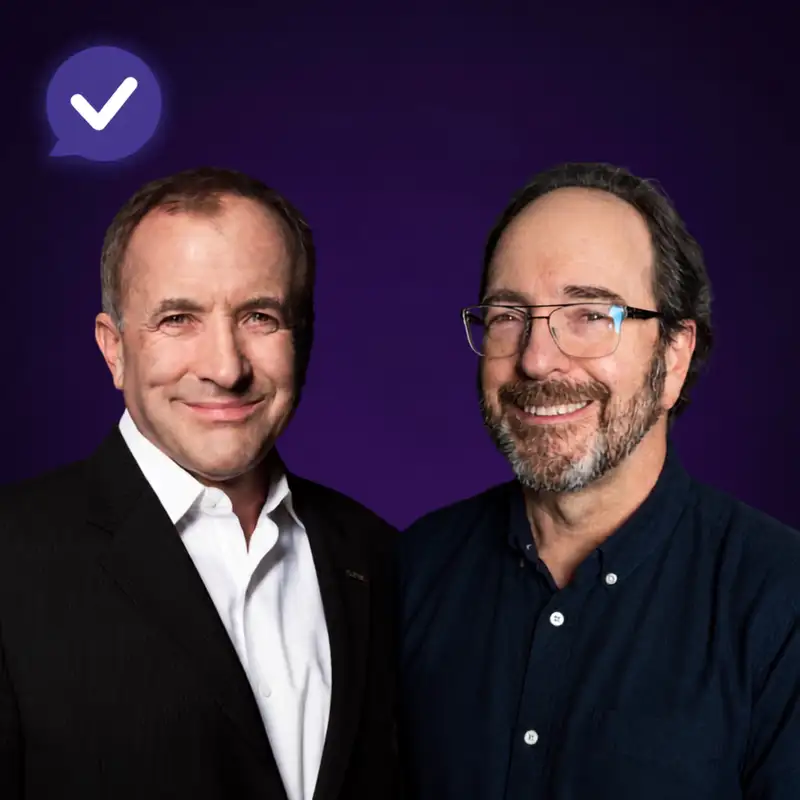
Welcome to the honest. Take the show that goes past the headlines to find out what's actually true about Israel and the people covering it. I'm Ben Chertoff. I'm joined today by Jim Meggs and Michael Shermer, two of the most experienced conspiracy debunkers in the business. And we're going to unpack how the 911 conspiracy theories that were investigated, tested and put to bed 20 years ago have come back with a new villain.
Yep. Israel.
00:01:03.570 — 00:03:39.180 · Speaker 2
Let's start out by saying the quiet part out loud. It's a little bit absurd that we're here 25 years after nine over 11. We should be talking about the people we lost. Instead, we're going to spend the next two hours explaining again why the towers fell the way physics said they fell, and why a shipping company's office move is not evidence of a mossad plot.
That's the sad part. Because this was settled. It was investigated, it was tested, it was published, and now it's back. Only now it's got a new villain. 25 years ago, the story was that the government did it today. Increasingly, the story is that Israel did it. Same claims, same non evidence. New target.
So if you're gonna untangle that you want two people who have actually done the work and I've got them both. Jim Meggs was editor in chief of Popular Mechanics, and in 2005 he did something almost nobody in journalism was willing to do at the time. He took the nine over 11 conspiracy claims seriously enough to actually test them.
He put his staff on it. They went to hundreds of sources engineers, demolition experts, accident investigators, aviation specialists and took the most persistent myths apart one at a time. That became the March 2005 cover story and then the book debunking nine over 11 myths, which is still the definitive account.
Jim is now a senior fellow at the Manhattan Institute and a columnist for the Wall Street Journal's Free Expression newsletter, and he writes about all of this at City Journal and Commentary. I should also disclose Jim was my editor. I was on that team. I ran the fact checking department at Popular Mechanics, so it will be revisiting some of our own work here.
And Michael Shermer is the founder and publisher of skeptic magazine and executive director of the Skeptic Society. He wrote a monthly column in Scientific American for 18 years, and he's written two books that matter most for this conversation. Conspiracy Why the Rational Believe the Irrational and Denying History, which is about Holocaust denial, how you recognize pseudo history and how you argue with it in the open instead of trying to make it go away.
Here's a fun detail when Popular Mechanics published its nine over 11 report back in 2005, it cited Michaels Scientific American writing on arguing from anomaly. So these two men have been in the same document for 21 years. They've just never been in the same room until now. Michael Shermer, welcome to the Honest Take.
00:03:39.220 — 00:03:40.620 · Speaker 3
Thanks. Thanks for having me.
00:03:40.620 — 00:03:43.380 · Speaker 2
And Jim Maggs, also, welcome to the honest take.
00:03:43.420 — 00:03:44.620 · Speaker 1
Great to be here, Ben.
00:03:44.820 — 00:04:25.350 · Speaker 2
Thank you for being here. Now I have. As I was saying before, the smartest guys in the room to talk about 911 conspiracy theories. Jim, I want to start with you in 2012. Tucker Carlson called 911 truthers parasites, he said on camera, in order to imply that there's a conspiracy behind nine over 11, you ought to have some evidence and you have none.
You should stop now. Fast forward November 2025. He puts out a five part documentary saying that the official story is a lie and intimating, not too quietly, that Israel did. Nine over 11. You wrote the takedown of that in City Journal. What happened to Tucker Carlson?
00:04:25.870 — 00:05:01.280 · Speaker 1
That is way over my head. I think many of us who used to respect on the conservative side, you used to respect Tucker Carlson as a smart, charismatic commentator. And I think I was on his show a couple of times and he, um, he took a turn. And it was it driven by the reaching a certain audience that is passionate and financially supports him.
Um, is it something inside of him? Some. Some moral turn? It's hard to say, but I like the old Tucker Carlson a lot better.
00:05:01.840 — 00:05:07.760 · Speaker 2
Jim, can you walk me through what his claims were and where those landed?
00:05:07.800 — 00:07:54.110 · Speaker 1
Yeah. And, Ben, you and I have a lot of history here because we worked together starting 20 years ago on one of the first. And to this day, it's still really the only comprehensive, uh, analyzes of the core claims of the brothers, which have evolved quite a bit. But they but they maintain some of the same characteristics.
And one of the techniques that conspiracy theorists use is they throw a lot of claims out there. They don't feel they have to defend every single one. So, for example, if you claim there were bombs in the World Trade Center towers, it wasn't really the impact of the jets. Jet fuel doesn't burn hot enough to melt steel.
As you know. As Rosie O'Donnell said. And that was one of the claims we we looked at in our Popular Mechanics analysis, which focused only on physical claims about physical reality that were either provable or disproven. We didn't get into big, elaborate geopolitical theories about whether the US is a malevolent player on the world stage or anything like that, and I think that was important because at bottom, every theory has to have some contact with reality.
So what Tucker does in this new series is minimize the places where he makes really specific claims that he has to defend. He although he'll sometimes accept a notion that maybe there were bombs in the bill in a in a building. As you may remember, when conspiracy theories move past the Twin Towers and on to the somewhat more baffling collapse of World Trade Center seven, which really wasn't very well understood for a long time.
So conspiracy theorists tended to glom onto that and say, well, you know, I'm no conspiracy theorist, but, you know, that was something strange happened there. And it turns out it wasn't really that strange. It was just had never happened. Building never falling down in exactly that way before because it had never, you know, been built like that or burned like that before.
So what Tucker does is he goes through, um, um, a number of these claims. He also spends a lot of time with a number of former people in government positions who make vague, broad claims, for example, that, you know, some of our foreign allies must have known, Israel must have known somehow they, you know, they failed to warn us, or maybe they were in on it.
He leaves it all pretty amorphous, so that by the end he can weave this idea that that of course, there was a big conspiracy, but I don't. But he doesn't have to lay out in detail how it really functioned, or what exactly the conspirators conspired to do, or who they were.
00:07:54.990 — 00:08:26.150 · Speaker 2
And at the end, well, not at the end. But he quotes former CIA officer Michael Schur saying that the Israelis are always for the Israelis. First, they don't like the United States, except for the most part, our money. And I think you got that pretty clearly. The message there is Jews equals money in those five parts.
Um, was was there anything beyond any firsthand witnesses, anything, any physical evidence or the substance?
00:08:26.190 — 00:11:45.060 · Speaker 1
They say it was a lot of they say there were in the episode on World Trade Center seven and a couple of the spots he does tangle up. He does get into some of the evidence. People who follow this for a long time, for example, will remember the obsession that truthers have with thermite. You know, thermite is a combustible compound in a mix of iron oxide and powdered aluminum that can that can combust at a high temperature.
Sometimes it's used for things like destroying weapons caches and stuff. So there was a paper published in a supposedly peer reviewed scientific journal that claimed that traces of thermite had been found around the World Trade Center, and that somehow thermite was the tool used to bring down the towers.
Now that's migrated to World Trade Center seven, because wiring conspiracy theorists often have trouble explaining how the, you know, thousands and thousands of pounds of explosives and hundreds of miles of wire and, you know, people busting through sheetrock and wiring explosive charges to to building structural elements, how all that could have happened in busy office buildings with people coming in and out all day long.
Uh, that's kind of hard to explain. So people turn to this thermite theory instead. They loved the idea that it was supposedly peer reviewed. And, um, and of course, nobody knows how you would bring down a building with thermite because no one has ever done it. It wouldn't be very practical. So presumably it would be easier, but in some ways it maybe it would be a whole lot harder.
No one knows. But that vagueness sort of serves them. And so he does get into a few details like that. He also makes some specific claims about foreknowledge. For example, there was a weird incident where a BBC reporter, uh, she says in the middle of the afternoon on that terrible day, she says something.
Well, a World Trade Center, World Trade Center seven has collapsed. That that was not true. She was echoing some false information. A lot of people must have expected it to collapse because it had been burning ferociously all day long. Um, but it actually had collapsed. So instead of instead of writing that off as a mistake, you know, there are no mistakes in the world of conspiracy there.
There are no accidents. Nobody ever misreported. If they say something that serves your interest, even if it later seems to be wrong. You know, they knew exactly what they're doing. So Tucker concludes, well, clearly the BBC had been tipped off in advance, and it kind of hit me like the absurdity of some of these theories.
It's like, yeah, you're a global conspirator. You're trying to, you know, to bring down the American empire or you're trying to or prop up the American empire by giving us an excuse to go to war. It's this vast, top secret explanation. And you make sure to include the BBC. I mean, it's just sort of bizarre and but but then he says, and they weren't the only clearly they weren't the only ones who were in on it.
It's like, well, you haven't proved that they were in on it. The reporter made a mistake under the stress of the worst day, the worst, most stressful day of her life. And and you think that that proves that various governments and others around the world were in on it. The conspiracy theories are full of those kinds of leaps of logic.
00:11:45.580 — 00:12:12.380 · Speaker 2
Yeah, Jim, you describe that in the story as kind of like a hiker crossing a stream, like hopping rock to rock, completely ignoring this river of evidence underneath them. You know, these anomalies. Rock to rock. And, Michael, you've written about this arguing from anomaly. Um, what is the fallacy of that thinking, and why does it work so well on intelligent people?
00:12:12.940 — 00:14:44.800 · Speaker 3
Well, that's anomaly hunting, we call it. And so any major event with, you know, big media coverage and so on, everybody focuses on their attention, on the details, and you can always find weird things that happen in any particular event. Now, most of the weird things that happen day to day are just completely ignored because they're not important, you know?
But you just take JFK, you know, how do you explain the, you know, the bullet did this or you know that Oswald got the job at the Book Depository. You know, they just keep going. They have a list of, you know, like 100 weird things associated with the JFK assassination. Right. And so, you know, nine over 11, you know, draws that kind of attention as would anything like the death of Princess Diana.
You know, cause of death. Drunk driving, speeding. No seatbelt. You know, it happens 50,000 times a year in the United States alone, right? Uh, automobile deaths. And those are the three primary causes. And, uh, but she's a princess. Right. So we call this the, um, proportionality bias. That is, the size of the event should be matched by a cause that's equally big.
And, you know, JFK cannot have been taken out by this lone nut. It has to be the CIA and the FBI and the KGB and the Mafia and the Russians and the Cubans and LBJ. And, you know, everybody was in and out. They all met at Madison Square Garden. You know, uh, I mean, that's what it would take, uh, and, you know, nine over 11.
You know, are you telling me 19 guys with box cutters. Come on. There's no way, you know. It just has to be, you know, a big, massive operation. The Bush administration had all these operatives secretly gyms, you know, mentioned this kind of rapid fire factoid anomalies, right? Well, in in when we were debating the creationists, we used to call this the Gish Gallop.
Duane Gish would debate a evolutionary biologist. And this is in the day of slides, you know, in your debate, you got I got my slide tray of 50 slides. And so he would go first and go, here are the reasons I doubt that the evolutionary theory is true. And then he just, you know, here's this fossil and here's this find, and here's this weird animal, and here's the left elbow of the frog.
If you can't explain this boom, boom, boom, boom, boom. And then, you know, after 20 minutes, the guy, the host goes, okay, you're up in the evolutionary biologist is like, well, this takes me a whole semester to explain all of those things, right? How am I going to respond to this? And so the audience sitting there is like, oh my God, I didn't know about all these things, right?
And you put them all together. It sounds devastating, but in fact it isn't.
00:14:45.120 — 00:14:58.520 · Speaker 1
You know, Michael, I was on a back when we released our first iteration of the of our nine over 11 reporting in Popular Mechanics. I was doing a lot of radio interviews, and somebody arranged to have Alex Jones, um,
00:15:00.000 — 00:17:33.870 · Speaker 1
you know, call in, and he did exactly that. You know, it was one thing after another. I worked for the Hearst Corporation, which was involved with, you know, William Randolph Hearst, yellow journalism, the, you know, the Spanish-American War. No, no, no, no, no. And just, you know, this, this sort of scattershot you through.
If you're not really informed, you know, you can understand why a regular observer would just think, well, some of that something has to be true. You know, that's a lot of claims. And, uh, and I think that idea that the I think your idea about the anomalies is something I hadn't really thought about in that way until after our report came out.
You wrote a really insightful article about it. I think it might have been in your Scientific American column. And and you raised this point about how the argument from anomalies is, is typical with creationists and, and various, um, you know, what you call crank theories of physics. People think they've found some exception to a widely supported viewpoint, and that one exception is or two, you know, a couple of little anomalies is enough to bring down this whole edifice.
But one of the secrets is they don't talk about the edifice or as you know, as I said, when I was sort of channeling your thinking in my City Journal piece about the Tucker Carlson series. It's like the rocks in the stream are those anomalies? They focus on those. They don't want you to think about the river.
Of of well-supported, Persuasive facts. You know, the fact that there are thousands and thousands of eyewitnesses to the nine over 11 collapse. They always find just the one person here, the one person there who reports something a little different or something anomalous because it was such a confusing, hectic day.
I mean, one thing that at one point that day, somebody reported their firing rockets from new Jersey. Well, you know, if I was a firefighter out there and there was hell was raining down all around me, I would believe anything's possible. Who knows? And I was surprised that never came out. And probably well, now they never came out in the nine over 11 conspiracy theories, you know, but it was the understandable mistake that people make under stress.
And by focusing just on those things, these these arguments can be very persuasive. And I even found out myself sometimes I would spend late nights digging into these, these conspiracy websites. And after a while you kind of go and you go down the rabbit hole, you know, and and your head starts to spin. You start thinking, well, oh, well, you know, and then you sort of step back and give it a little bit of rational thought, and you realize that it's a very seductive way of thinking.
00:17:34.630 — 00:17:59.550 · Speaker 3
Yeah. The other strategy there, just the last point on that is a negative evidence. They never focus on your own explanation positively about what you think happened, but only the negative parts, the anomalies, the things you say they can't explain. Then when you're put on the spot, you can you can just say what nine over 11 truthers say, which is I'm not saying I know who did it or exactly how they did it, I'm just saying.
So I call that just asking questions. It's called jacking off, just asking questions.
00:17:59.990 — 00:18:14.669 · Speaker 2
Tucker has become I mean, that's become his whole shtick. It's like, I, I'm no expert. I don't know this and that. But here's this claim that I'm saying is absolutely true in presenting as fact. Michael, you talk about the, the
00:18:15.950 — 00:18:17.949 · Speaker 2
the notion that extreme
00:18:19.230 — 00:18:22.470 · Speaker 2
what is equal was extreme.
00:18:22.630 — 00:18:26.240 · Speaker 3
Equally extraordinary claims require extraordinary evidence.
00:18:26.640 — 00:18:27.520 · Speaker 1
Carl Sagan.
00:18:27.560 — 00:18:30.520 · Speaker 3
Carl Sagan, yes. Actually, going back to. David Hume. But yeah.
00:18:30.560 — 00:18:31.000 · Speaker 1
Yeah.
00:18:31.040 — 00:18:41.760 · Speaker 2
Right. But that's but that's the idea that you should have to be able to prove your thing as opposed to just pointing out this weird stuff. Can you explain go into a little bit more about the difference there?
00:18:41.800 — 00:19:50.040 · Speaker 3
Yeah. So, you know, this actually goes back to Hume and his idea that you should proportion your beliefs to the evidence. And other people have said it. Sagan repeated what somebody else had said more clumsily. But, you know, as quotes always migrate up to the most famous person who said it and said it most cleverly.
So it's usually Mark Twain or Yogi Berra or something like that. Right. Anyway, so but it's but it's a, it's a sound principle. So it's not an extraordinary claim to say, well, the CIA and DARPA developed some new, um, you know, high, high tech stealth technology for jets. Yeah, I hope they're working on that stuff because, you know, that's their job, right?
But to go from that to and this is an extraterrestrial alien spaceship. Okay. Hang on. I've seen the U-2 spy plane. I've seen the SR 71 Blackbird. I've seen the stealth bomber fly over my house on the over the rose on the Rose parade, January 1st. Okay, I know those are real. Show me the spaceship. Okay. And then I'll believe.
Right? And it's like, well, it's top secret, it's classified. And. Okay, so I'm that's that's the proportionality there. You just just show us.
00:19:50.520 — 00:21:47.900 · Speaker 1
You know, Michael, your example of the person who gives this long narrative of things in the, the provable world and then just slips in the the extraordinary claim is something I've seen in a lot of conspiracy theories. You know, the they'll tell a story. They often go back in history to the Tonkin Gulf Resolution, which was, you know, later a, um, a claim that the North Vietnamese had fired on our ships and it was blown out of proportion to become a justification for the Vietnam War.
So. So, you know, they'll have some examples like that. And, um, and then they'll and then the assumption will be, well, we did it that time. So that should make it more believable that we'd do it this time or in. Tucker Carlson's documentary, he spends a lot of time talking to these experts who go on at great length with legitimate complaints about the failures of our government, especially the the the lack of, you know, the CIA handing over vital information to the FBI to track some of these, uh, these terrorists that they were keeping an eye on, and the fact that our government really did drop the ball, those are legitimate concerns and and should have gotten, you know, some of those were flagged in the nine over 11 Commission report.
But but I think even more thorough investigation would have been called for. So and then you you but then you move from the, from this set of of facts that are can be established to this extraordinary claim that it was all done on purpose, you know, and that it was it was a master plan coordinated from somewhere.
And that's they. And if you set up your your stuff in the foreground enough, I think a lot of listeners will just make the leap with you not even realize they're making a leap. They'll they'll think, well, yeah, that kind of makes sense when in fact you're making an enormous jump in logic.
00:21:48.100 — 00:23:00.510 · Speaker 3
Mhm. Yeah. The the fact that X is true doesn't mean Y is true right. I mean they could be right about those stories and they are true. You know, the Gulf of Tonkin or Watergate or you know, the Iran-Contra or MKUltra or Cointelpro. I mean, there's all these stories I write about in my conspiracy book of what the FBI and the CIA were really doing in the 1950s and 60s 60s.
And it's crazy, you know, the whole church Committee hearings that came out in 1977 about the JFK assassination also covered all the other stuff that the CIA was doing. It's like, oh, we were doing what? Or they they they lied about Roswell. That's right. They did. They they said it was a weather balloon.
It wasn't a weather balloon. It was Project Mogul. It was a high altitude balloon with surveillance equipment, listening for upper atmosphere Soviet nuclear tests. And of course, they're not going to tell everybody in the 1950s and 60s. That's what we were up to. Right. It's a top secret. Okay. But that doesn't mean the aliens are being hidden by the US government today at area 51 or Wright-Patterson or whatever.
It only means. Yes, they did that. That was bad. Understandable. But that was then. This is now. Okay. You know, so each each case has to be taken individually. Show us the evidence.
00:23:00.550 — 00:23:10.990 · Speaker 1
You know, science isn't about trust. That's not a word you use in science. Science is about evidence. If you're in a position of authority. Don't ever make it look like you're hiding something.
00:23:11.070 — 00:23:46.760 · Speaker 2
I want to walk back to the seedy underbelly of the internet here. Um, Jim. The The Nexus of the Popular Mechanics story in 2004 was a full page ad in The New York Times about a book called Painful Questions, written by I think it was Eric Huff Schmidt. He he also trafficked in Holocaust denial. And then there's that, the seismic spike claim that we took apart that was from Christopher Bollen, writing in the American Free Press, which was Willis Carter's paper.
00:23:46.960 — 00:23:49.520 · Speaker 1
And yeah, not to be confused. Not to be confused with.
00:23:49.800 — 00:23:51.160 · Speaker 2
The current free press, which.
00:23:51.200 — 00:23:54.800 · Speaker 1
Is quite ideologically more ecumenical.
00:23:55.800 — 00:24:09.440 · Speaker 2
Exactly. But, you know, an anti-Semite and a Holocaust denier. How aware were you of the anti-Semites kind of lurking under these rocks when when we started looking into this?
00:24:09.480 — 00:27:10.990 · Speaker 1
Not at all. I mean, I mean, or just barely, I, I literally I saw that ad in the paper. I thought, huh, that's interesting. A full page ad in the New York Times, and the ad listed a series of questions that seemed quite sensible, like, how come I'm paraphrasing because I don't have it exactly in front of me. But, you know, you know, jet, one of them was jet fuel doesn't burn hot enough to melt steel.
How did the buildings fall down? You know, why didn't why didn't our air. Um. A defense forces intercept these planes and shoot them down, and and, uh, why did why was the hole in the Pentagon so small? It was way too small to be made by. I believe it was a 777 jet and so on. And he was like, wow. Well, you know, those are sound like the valid questions.
And we're popular mechanics. Uh, you know, we've been writing about how buildings are made and what happens in fires and how jets crash and, and stuff like that. For 100 years. Well, there were no jets. Wouldn't it be about magazine started? But you'd get my drift. And so, you know, why not just basically take these specific claims and fact check them the way you would fact check an article.
So it didn't require any enormous expertise. It just required diligence to to hire. We hired a team of reporters. And then you helped lead this effort. Uh, you know, you you brought in, um, a number of very, you know, top notch reporter slash fact checkers. And we just started running down all the claims, calling people, looking at documents, talking to experts just the way you would anything something that the the that the conspiracy theories almost never do is actually reach out to experts and and learn.
And it was so fascinating to see how simple mistakes, simple uh, claims could be misinterpreted, always ratcheting in the direction towards the conspiracy. Yeah, I remember the the idea that there were seismic spikes. There was a claim that that the explosions in the, um, the World Trade Center were, were so intense that the it was picked up, the alleged explosive explosions that it was picked up by a seismograph at Lamont-Doherty Observatory.
Well, that's right across the river from where I'm sitting right now. I can practically see it. And so instead of just looking at what they said and looking at their chart, that they that they blew up, we we called them and the scientists, they were like, oh my gosh, I'm so glad you called. People keep asking about this.
And we just tried to set the record straight. Doesn't show that at all. That's not right at all. It shows the collapse of the building. That's gradual. Uh, you know, the seismic image. They did pick up the collapse of the buildings, but, you know, in a gradually, you know, escalating cascade of vibration that was totally consistent with the building collapse.
But they couldn't get the truth out there because this false claim was circulating.
00:27:12.150 — 00:27:12.390 · Speaker 2
Yeah.
00:27:12.430 — 00:29:03.560 · Speaker 3
When you know who used to place ads at newspapers. The guy named Bradley Smith in the 1980s, he placed ads in college university newspapers about the Holocaust. You know, like like here are some of the questions that you know that are legitimately debatable. So why don't we have a debate? I'll give $100,000 to any college that will host a debate with, you know, one of my people and, you know, your history professor or whatever.
I don't think anyone ever took him up on this, but I remember the ads. Yeah. You know, it's just a ploy to get people. You know, it's a debate strategy. Really. You know, kind of challenge people like that. On the other issue of errors. Yeah. Everybody makes errors. The errors are all over the place. So one of the detections of fraud is if the errors all go in one direction.
So you know, with scientific fraud for example, I mean it could, could it be that the guy was just sloppy in his lab notes. Yeah. Okay. But if all the errors go in one direction, then you think, okay, this is not just error. Right? Richard Evans wrote a good book on this call lying for Hitler. He was Deborah Lipstadt, expert witness in the trial, when she was sued by David Irving for calling him a Holocaust denier, which was weird, because I called him that, too.
But. But I'm not Jewish, and she is. So, you know, there's that element. But he you know, he showed that, you know. Yes. Irving made errors. Any historian like, you know, they in that trial, they went through every single thing Irving ever wrote, every footnote he ever had. And there's errors all over the place.
But that would be true for any historian, right? You made a mistake there, there, there. And so but his all moved in one direction and that's how they proved it. So I think that's the problem with the nine over 11 truthers. They're you know, they're always picking the errors made. But you know this guy said this.
It turns out that wasn't true. Yeah. But every error they identify always moves in their direction. That tells you there is a it's an ideologically driven belief.
00:29:03.720 — 00:30:18.689 · Speaker 1
Yeah. And Ben, you asked about the. Was I aware of the anti-Semitism that kind of underscores this. So I wasn't really and and you know, as I explained, we started out really just trying to focus on the facts and, you know, on a, on a keep it in the Popular Mechanics turf of a verifiable fact. But one thing that really struck me as we got into it is at that time people forget this.
Now, at that time, the nine over 11 conspiracy theories were really embraced on on the progressive left. Like, you know, these articles would appear in progressive left wing progressive weeklies, you know, in Seattle and elsewhere. And but if you went to the source, the people who were originating a lot of the material that gets got repeated the most, it was people like Christopher Bollen and others who were associated, as you know, as you said, with with these long standing racist, anti-Semitic organizations.
And I thought, like, well, that's funny that the that people who consider themselves, you know, you know, extremely liberal, progressive, open minded, tolerant people are recycling claims made by professional racists and Semites and and
00:30:19.770 — 00:31:53.420 · Speaker 1
because they liked the conclusion that, you know, George Bush was evil. They were they showed no skepticism towards this stuff. And I think it helped, you know, a lot of things that contributed to this rise of anti-Semitism today. But I think that the, you know, conspiracy theories are a little bit like a mind virus.
Once once it gets in there, it makes you more likely to believe other, other exotic claims. And, uh, and all of these theories about what, uh, that there's some vast entity really controlling events. I mean, you know, I feel like so many of them just come back to The Protocols of the Elders of Zion, the, you know, the famous faked anti-Jewish document.
I just have to remind people it is fake, by the way. If anybody is just anybody just confused on that point, right. Um, you know, you have to these days, you have to clarify these things. And, uh, so it was it's kind of like people could be born and be raised in an environment with no anti-Semitism at all, but kind of but it's like a it's like a black hole whose gravity pulls them in once they're in the world of conspiracies, because so many of them come back to that, that there's some secret global organization, that it's pulling the strings behind the scenes.
And, and so I feel like, you know, you know, maybe some of the roots of this stuff were planted back with the the enormous popularity of these theories in the first wave of, of fascination with nine over 11 conspiracy theories back there in 2005, 2006, oh seven, those years.
00:31:53.740 — 00:32:12.790 · Speaker 2
Yes. That was my first introduction to the horseshoe theory, which of course, we're seeing in full effect with with Hassan Piker quoting the same things that Candace Owens is saying. And it's because it it propels the same, you know, at the base anti-Israel anti-Semitism. Um,
00:32:14.110 — 00:32:25.790 · Speaker 2
so, Michael, you wrote the book on Holocaust denial. Are these the same? Are these. Is this just like, uh, these people just share a mailing list, or.
00:32:25.950 — 00:32:26.270 · Speaker 3
Is this.
00:32:26.270 — 00:32:28.110 · Speaker 2
The same ecosystem?
00:32:28.270 — 00:34:46.610 · Speaker 3
I think it's yeah. I've thought a lot about this. There's a kind of a strategy that they seem like they all use. You know, we're going to use the same techniques. The Holocaust deniers did exactly what the creationists were doing, for example, you know, never say anything positive about your own position.
Just challenge the the other the other position, you know, quote people out of context and make it sound like they're supporting what you say versus what they actually said and, and so on. And I think it's just a natural way of thinking about how am I going to challenge the mainstream dogma? And, you know, here's half a dozen strategies that seem to work without having to actually have read somebody else's techniques.
Right? I was going to say, like in nine over 11 truther circles, there's two ideas like hop and my hop. So hop is let it happen on purpose. You know, this was the debate George W Bush actually orchestrated. He made it happen on purpose, mayhap. Or did he just know about it and let it happen on purpose? Layup.
And this was also applied to Franklin Roosevelt and the bombing of Pearl Harbor. You know, did he make it happen on purpose or did he let it happen on purpose? Well, neither. Right. You know, Roosevelt needed an excuse to get the United States into the Second World War. Pearl Harbor, was it? Bush was looking for a reason, uh, you know, to avenge, um, you know, that his father's war didn't get finished up the way it should have in Iraq in the 90s.
So what are we going to do? And then 911 happens and he's like, okay, now I can do something and no one's going to, you know, challenge me. And so I call that capitalize on what happened on purpose. Cow hop. That's it. Capitalize what happened on purpose. Right. So of course, you know, 911 and the oil and all that stuff, you know, that's why you did it.
No, but but, you know, in terms of U.S. foreign policy, it is good to have an excuse to do the things you'd like to do as a president. Right. We see this with, you know, Trump does it. They all do it. And you know, I so if you're going to criticize Bush, there's plenty to criticize about you know, in terms of U.S. foreign policy, uh, you know, about, uh, you know, what happened in Afghanistan versus Iraq, you know, okay, we can look back at that.
But to let him off the hook and go, no, no, no, it's none of that. It's actually this other thing, you know, this this secret conspiracy. It's like, no, you're missing the bigger picture here, I think.
00:34:47.169 — 00:37:32.670 · Speaker 1
Well, that my hop ly hop distinction is something that the kind of emerged as we, As we worked on this project, as you remember, Ben. So we did our original cover story that came out in, I believe, February of 2005, and most of us had had gotten to the magazine not that much longer, which of course became part of a conspiracy that James Meggs, you know, took over the magazine and fired a lot of the staff, you know, and, you know, a true fact.
But, um, you know, sometimes and and but they don't say that. I replaced it with a lot of some of those people with a lot of real, cutting edge magazine professionals who were good reporters. But, um, this, this evolution from made it happen on purpose and with a lot of very specific claims like that. A missile hit the Pentagon to layup, showed something that, since I've kind of learned, is characteristic of a lot of conspiracy theories, you might start with really concrete, provable, disproven claims.
But if you're one of the smarter conspiracy theorists after a while, it's, you know, it was hard to defend the idea that a missile hit the Pentagon, which was one of the first big ones that, um. That French writer wrote the book. The Incredible Fraud, I think is translated. Traveled all over the world giving lectures about that in the first couple of years after nine over 11.
But there are all these pictures of the wreckage of the plane. There's so much evidence of, you know, that they they found, you know, the landing gear and human DNA and all kinds of stuff inside the Pentagon. Uh, so it became hard to defend some of those points. It became hard to defend the idea that they wired the entire buildings with bombs.
So some of the smarter theorists will keep moving further and further away from from hard facts that can be proven or disproven. So the beauty of the lead it happened on purpose is you don't need facts anymore. You know, you just have to say, well, they had all this look, they had the me, they had the means and they the conspiracy theories also really love jargon that makes them sound like they're super.
They're insiders, you know, legally or they use a lot of, you know, like, you know, false flag operation and, you know, a lot of jargon From, from the world of security or law. So, you know, they had the means, motive and opportunity to to make it happen. And once you accept that, then they don't need to to really, really prove anything.
And and you also see that in how the focus of 911 conspiracy theories gradually moved from the Pentagon and the Twin Towers to which we, you know, there's, you know, we have pictures and a lot of evidence of what happened to the more mysterious World Trade Center. Seven Robert F Kennedy Jr a few years ago made a you know, he said, well, you know, there's something weird that I'm not a conspiracy theorist, but something weird that happened.
I think he said building nine. But, you know, he meant building seven. Uh, I mean, he didn't have to know any of the facts, but he knew he was right. That right.
00:37:33.070 — 00:37:34.670 · Speaker 3
As in World War 11.
00:37:34.710 — 00:37:49.720 · Speaker 1
Yeah. And and then. Yeah. Oh, yeah. And then the, the thermite thing is like that, like they went from making these really bold big claims. Some people said those weren't actually airplanes that hit the building. They were tankers or, you know, or other things.
00:37:49.760 — 00:37:50.640 · Speaker 2
Or holograms.
00:37:50.800 — 00:38:18.120 · Speaker 1
Or holly to to the most like, we're literally collecting a few grams of dust off of the windowsill. You know, a half mile from the World Trade Center and claiming that these tiny particles of iron oxide and and little flecks of aluminum are positive proof, you know, of exactly how the building came down.
It's like, wait, there was a giant dust cloud that covered of a collapsed building that covered lower Manhattan.
00:38:19.600 — 00:38:49.210 · Speaker 1
Can you. What are the odds? It would have a little bit of ordinary rust and a little bit of shredded aluminum in it? I mean, you know, and yet and yet people seize on that, you know, as, as a really, really compelling proof because they've backed away from the bolder, more, more tangible claims. They're literally, you know, talking handfuls of dust or, or just nothing, just a vibe that, you know, I don't like Bush.
He must have done it. You know, when it comes to the let it happen on purpose theory.
00:38:49.850 — 00:39:13.690 · Speaker 2
That's also what's happening now. I feel like it's evolving, especially as we move into this. Israel did nine over 11 thing that the Mossad did. 911 there's no evidence that's well, okay. There's dancing Israelis, which has been disproven. Guys who work for a moving company who saw 9/11 happening and predictably, as anybody would watched it happen.
00:39:13.730 — 00:39:56.940 · Speaker 3
Have you guys heard it? Have you heard of this book called The Three Christs of Ypsilanti? This was written in 1958 by a psychiatrist at the mental hospital at Ypsilanti, Michigan. And he had three different mental patients, each of whom said he was Jesus Christ. So he thought, well, this will be interesting.
I'll get them all in the same room together and see how they respond. Right. And each of them said, well, you know, the other two. Are there a bunch of fakes? These people are crazy. You know, I'm the real one, right? So I was thinking about that with, you know, the concept of your line of demarcation between science and pseudoscience.
Right. So the smarter nine over 11 truthers, they look at the no planners like, well, those people are crazy. I mean, holograms, come on, you gassed the patients. I mean, the the the the.
00:39:56.980 — 00:40:40.580 · Speaker 1
Well, Michael, let's let's take a second one, because not everybody is that well briefed in this. There was literally a theory. And it was it was in the first version of the, um, of the big movie. Um, Ben, you were saying. I'm sorry I blanked on it for a second. It was in the first version of Loose Change that the the jets were all sent to some airport, that people were all disappeared or gassed or something like that.
I mean, it was this what did they call it, the Bumble planes theory or something? I mean, it was the most fantastical, outrageous thing, but it was it was in currency of what was being argued at the time. So. So with that background, sorry, I just I just want to make sure people understand just how out there and ridiculous some of this stuff was.
So go ahead.
00:40:40.620 — 00:41:17.220 · Speaker 3
So but all of us have to draw the line of demarcation somewhere. On any subject, like, what's it going to take to tip me over into, you know, accepting this theory is true or else I'm just not there. Right. In terms of in terms of the anti-Semitic streak, I did see that fairly early because I had just come off writing my book about the Holocaust, and I was like, oh, here we go again.
You know, the Jews, right? Or Israel or Mossad. You know, Mossad is a pretty bad ass intelligence agency. They've done some some big things. Right. But that doesn't mean everything. You think that that's weird that happened is due to Assad, right? They didn't kill Charlie Kirk. That's the latest one.
Right, right.
00:41:18.380 — 00:42:12.030 · Speaker 2
It's. Yeah, it's moved into, uh, yeah. Israel killed Charlie Kirk. And then when the Iran war started or the the Epstein, you know, the Mossad and Epstein were connected. And then when the Iran war started, it turned into Operation Epstein's fury. I mean, it's just everything now is going back to, you know, there's this massive rise in anti-Semitism with absolutely zero evidence.
I wonder if that's is is that the consequence of being in a world now where we have so much information at our fingertips, this stuff is so easily, you know, falsifiable and checked, even llms these days as as unreliable as they are. You can put most of these theories in there and get a pretty good fact check and debunking.
I mean, is that why we're moving into this arena where it's just as as you said in your book, Michael, people are saying.
00:42:12.550 — 00:44:45.540 · Speaker 3
Yes, people are saying yes. That's right. Well, so we know from the study of conspiracy theories, it's a very old topic. You know, people have been thinking about what powerful people are doing behind closed doors since, you know, the Roman Empire days and or even before that. And so there's nothing new about conspiracies.
Um, what's new is the the speed with which they could spread. I mean, the JFK assassination conspiracies, you know, in the 60s, 70s and 80s, they're just meeting in small hotel rooms, and they have their little mimeographed newsletters and, and, uh, you know, self-published books. And there was just nothing to it, you know.
And then Oliver Stone comes along with his, his film, and then the internet takes off and, you know, all these self-made movies and web pages. And now all of a sudden, you know, millions of people are involved, and and you could do that now overnight. I mean, Loose Change was the first viral video, as far as I know, that really took off like that.
I mean, and he had numbers that, you know, any Hollywood director would die for, right? I mean, uh, he didn't make any money on it, but, you know, still, you see the spread of it. So there's an interesting thread in the study of conspiracies and conspiracy theories and by scholars, that is, when does the phrase that's a crazy conspiracy theory take off.
And that's really right after JFK. And there's some evidence that maybe this was slightly directed, you know, by the FBI. Let's call this anyone who believes this a crazy conspiracy theory. And so now there's I just got I haven't read it yet. There's a huge book about, you know, the history of the concept of conspiracy theory.
Where does that come from? And the problem is, is I write about, you know, there are conspiracies that really happen, two or more people plotting in secret to do something nefarious or immoral or illegal against the third party without their knowledge. Okay, that happens all the time, right? But that doesn't mean every conspiracy theory is true.
The conspiracy theory is about possible conspiracies. So then you have a signal detection problem. Is it is it a signal in the noise or is it just more noise? And then you get in the psychology of it and all that. But what I'm trying to do is move people away from this idea of calling somebody a crazy conspiracy theorist.
Like with the lab leak hypothesis, that was never actually a conspiracy theory anyway. No one was accusing the Chinese of a bioterror weapon. It was just a bio error, which is not really a conspiracy. It's like people fuck up. Well, they do that all the time, right? This is normal. And so I always thought that was kind of a weird to call that a crazy conspiracy theory?
A racist conspiracy theory against the Chinese? You know, it was never that. So that was that was that odd one. Um, anyway, so I think that's an important distinction to make.
00:44:45.860 — 00:46:40.190 · Speaker 1
Yeah. And I think that's a really a good point. I mean, we you're not going to win people over by telling them they're dumb or, you know, they have no right or they have no expertise, you know, to investigate something. It's a free country. People should be should feel free to ask questions and investigate things.
And as we saw, the lab leak is a good example. There were a handful of scientists I was just emailed chatting with the scientist Alina Chan yesterday, who was very bravely as a young postdoc at Harvard, MIT's Broad Institute, you know, waded into this issue when no one else would touch it, at great risk to her career.
She was going up against the consensus of all the leading scientists in the field. And she was right. And she she exposed some really important questions about the the likelihood she never said, oh, it's the it's open and shut, but the very strong likelihood that the virus leaked out of the Wuhan lab. And we want to encourage that.
You know, we don't want to we don't want to encourage things like, you know, um, Doctor Fauci thinking he could shut down legitimate questions just by calling them a conspiracy theory. So people like you and and me, Michael, we we do have to be careful to to not just, you know, uh, be dismissing this stuff, um, and, and to meet people where they are.
I like your idea of just asking people, you know, in good faith to give their, their evidence instead of, you know, trying to trying to shout, shout them down. But, but but I think it is a, um I think it is getting harder to do that as we get more polarized in people are in their little algorithmic rabbit holes where, you know, if you have a certain worldview You keep getting fed information that confirms the those those views, and you keep getting spun deeper and deeper into that rabbit hole.
00:46:40.830 — 00:46:50.070 · Speaker 2
Yeah, that's one of the things I'm very concerned about is our lack of a common truth that we, the relativism of
00:46:51.310 — 00:47:02.070 · Speaker 2
experience trumping actual fact. Michael, you wrote about that in your newest book, In Truth. Can you talk a little bit about where you think we're headed with that?
00:47:02.550 — 00:48:41.170 · Speaker 3
Well, again, back to where we started with independent journalism. I like this as an antidote to the bias, liberal bias and mainstream media. I do know when some of these independent journalists write about something. I know a lot about that they make more mistakes. And the problem is, is that, you know, most of them don't have fact checkers or editors.
That's a bit troubling. When I write for a big newspaper or whatever, you know, half a dozen people go through what I write and they mark it up and they send it back. And I got to fact check this and double check that quote. And, and I got to cite this and so on. And it's and it's bothersome in a way as a writer is like, you know, I got things to do.
I'm kind of busy here and like, okay, actually, maybe this is good because actually I got that one wrong. Right? There's nobody doing that for these independent journalists and that, you know, now, I think Free Press has made the transition to before they got by even they, they had enough money to hire people to actually fact check stuff.
So their articles are, are reliable but less so on others. So I do worry about, um, you know, the fact checking of this, the I use the LMS, I use Gemini and Super Grok pretty much every day. And they I think they usually get it right. But you got to look you got to double check the sources, you know. Right. Read it.
Like read it. Really? That's the source. Yeah. Okay. How about, you know, YouTube. Uh oh. New York Times. Okay. Or Wall Street Journal. Okay. All right. So I'd like to see something a little more solid there, right. So that, you know, I don't know what's going to happen there. I think we'll, will. There'll be market solutions to the problems as we develop.
You know, fact checking, more fact checking sites like PolitiFact or Snopes or US or whatever, you know. Just more, more people jumping on these things in real time.
00:48:41.290 — 00:50:04.820 · Speaker 2
And what's troubling, too, is that these, you know, Reddit and then the LMS, they're sucking in information from things like Wikipedia, which we now know is so easily. Well, not easily, but it is. If you have enough people and you're coordinated enough, you can manipulate it and literally rewrite history, which you know, is mildly terrifying.
Um, my my real worry, my other real worry. And this is something that we struggle with at honest reporting every day, is that when some of these ridiculous claims come out, it it's a question. Do we do we even give this any credence. You know, do we even look at this? Because in looking at it, it is in some ways amplifying it.
And I remember when we were, when we were doing the Popular Mechanics story and we were talking to the FAA, and it took months of talking to them to get them to actually go on the record, because in those days, there standing policy was we don't engage with conspiracy theorists because there's no winning.
Yeah. So I don't know. This is a question for both of you who are, you know, really professional debunkers in this where where do you guys draw the line between when it hurts to, to take these things on and to where it actually will help?
00:50:05.100 — 00:50:56.910 · Speaker 1
You know, when we launched the nine over 11 work at Popular Mechanics, I wasn't really thinking so much about those questions. I learned a lot as we went along and and learned probably from experience, that it can be sometimes, you know, that sort of, um, like, yeah, let's have a debate about this issue.
Um, uh, you know, and then you're confronted with the Gish galloping conspiracy theorists, and they're throwing out a lot of stuff. Um, that so fast that, you know, somebody can make a claim in a sentence that would take 3000 words to debunk. And that's one reason we expanded our mechanics reporting into a book length version.
And then I think for the 10th anniversary of nine over 11, we, we we updated that book. It's still I still available. And I highly recommend it for, for people who want to get to the bottom of of this at least, you.
00:50:56.910 — 00:50:58.390 · Speaker 2
Know, link in the show notes.
00:50:58.430 — 00:51:04.390 · Speaker 1
Yeah. At least you know where these debates were, were at that at that time. But it is a,
00:51:05.470 — 00:51:17.750 · Speaker 1
um, but it can be counterproductive, you know, to, to enter into a debate. We did one TV show. The the left wing, uh, uh, show. Democracy Now!
00:51:17.990 — 00:51:18.710 · Speaker 2
Oh, wow.
00:51:18.830 — 00:51:19.230 · Speaker 1
Okay.
00:51:19.390 — 00:51:20.310 · Speaker 2
I don't remember that.
00:51:20.350 — 00:52:18.150 · Speaker 1
Yeah. This is, um, you paid Amy Goodman. You played a role in this? Yeah. The the the the respected left wing, uh, broadcaster Amy Goodman. Um, and because people would ask us, oh, do you want to debate, you know, Alex Jones or this one or that one? And we would say we're not doing debates. Our work stands on its own.
You're welcome. After you're done with us to go talk to whoever you want to talk to. But but, uh, you know, we we put a team of ten or whatever number of reporters on this for several months. And, you know, I don't want to spend half my time responding to, you know, one person's charges. But, um, behind the scenes, we later learned that Amy Goodman had had a, had a one of her producers was a big truther.
And so he, he arranged to have the filmmakers from Loose Change on the show. And, Ben, actually, you were monitoring their stuff and you came into my office and you said, did you know the guys on Loose Change said, they're going to be debating the Popular Mechanics guys. And so.
00:52:18.390 — 00:52:19.670 · Speaker 2
Right. I do remember that. Yeah.
00:52:19.710 — 00:54:14.490 · Speaker 1
So our executive editor, David Dunbar, who did such yeoman's work on this project and really steered it through the the Shoals of all the different ways it could have gone, gone wrong and kept it really focused on hard facts, provable facts. So he and I were going on the show the next day and we said, oh, well, she'll be pulled out.
Oh no, that'll look terrible. Like we're afraid to do these yahoos. Uh, and and so we went, it went on and, um, and as the show went on, they did that gish galloping thing. They were probably in that version of Loose Change. There were probably 25 concrete claims about what had happened. And we had in our work.
We had debunked every single one. So instead of arguing us about why, no, no, you really could why are the buildings, you know, or whatever they, they, you know, they they came up with five new things like, well, what about this woman who says she saw da da da da da? And they were like, you know, never even heard it.
I mean, that's a new one. I guess we could look into it, but that there's always something new. There's you can always, you know, appear to win a debate by just bringing up yet the latest wrinkle and just abandoning like, like I said in the hiker sort of hopping from rock to rock across the river, you know, you just abandon your old position and land on a new one, but with just as much conviction that you must be right.
You know, never admitting like, jeez, 25 of the claims that we based our viewpoint on, they've all been demolished. You know, maybe there's something wrong with our core viewpoint that typically doesn't happen. At least it doesn't happen with the hardware people. I do think there are people in the middle who can be persuaded, and I think a lot of people were persuaded by, by our work.
But I you know, I don't have much confidence that you can persuade the, the diehards. And so I'm still a little torn, you know, do you sometimes risk calling more attention to an issue? Michael, I'm kind of curious. Do you have a lifetime experience with this? I'm kind of interested in your experience.
00:54:15.210 — 00:56:29.600 · Speaker 3
Well, first of all, we're not going to convert the, you know, hardcore, uh, conspiracist that we're after. The undecided voters, which is the vast majority of people have not made up their mind about that. So for us, we decide, you know, what to cover or not. Uh, you know, based on how popular is it? How important are people talking about it?
Is this a culture war issue? Is this something important? I mean, people send me articles all the time that are just super obscure, have nothing to do with anything, particularly that anyone cares about. And it's like, well, you know. Yeah, it's kind of interesting, I guess, but who will read it, right?
So it has to be something like, oh yeah, I heard about this. You know, I saw Tucker talking about. Yeah. What's the answer to that? Right. You know, so I was thinking, um, a couple stories here for you. Well, so first of all, like Richard Dawkins famously said, explain why he doesn't debate creationists.
It looks better on their resume than mine. You know, the nine over 11 truth thing. It was pretty fringy right at the start, but it caught on fairly quick. So I thought, yeah, okay. So when you guys came out with yours, like, yeah, we got to do something. Skeptic. Yeah. This people are asking about this. And I remember reading, uh, when I first encountered the Holocaust deniers, I started looking at the literature.
You know who's written about this? Not many people. And then Deborah Lipstadt wrote about it, but her take was more like, well, they're, you know, they're anti-Semitic and they have these motives like, yeah, I know, but what's the answer to these questions? They're they're making, you know, they had this document they sent me like the 19 Unanswered Questions about the Holocaust by historians.
I went to some Holocaust historians and said, yeah, I know, but what's the story here about why the door doesn't lock at the gas chamber at Mauthausen? What's the what's the deal here? And no one seemed to know a lot of these things. I thought, I'm going to get to the bottom of this. Not that I think they're legitimate arguments, but that somebody who's just curious, like, yeah, I'm sure the Holocaust happened, but what is the answer to this question about why there's no blue staining on the bricks and the gas chamber at Auschwitz to Birkenau?
And so, you know, yeah. Okay. What is the answer to that? Right. So that's what my book and I in history does, you know. Yes. Here's all their motives in free speech, all this stuff. But here's the reason they're wrong, right? This is why they're wrong. This is why the nine over 11 truthers are wrong. This is why the JFK assassination, you know, the CIA did it.
This is why they're wrong. Now we can change our mind. Just show us the evidence. But anyway, that's my take.
00:56:30.800 — 00:57:14.760 · Speaker 2
Yeah. Science especially. And you mentioned that, um, when you were just starting to answer that the whole point of science is to question itself and to continually evolve and never really have a, you know, a point of certainty where nobody's 100% sure how does. I mean, that's one of the more frustrating things dealing with conspiracy theorists is that uncertainty and that, um, you know, the fact that one day, you know, a theory can be true and then can be disproven.
That is, is seen as like The opening into which these guys kind of drive themselves.
00:57:15.720 — 00:59:12.140 · Speaker 3
One problem. If we could talk epistemology for a moment, is the difference between scientific questions that we could get an answer to through an experiment, or a lab or test or something like that. It's repeatable versus a more of a history or legal type judicial question. Did he do it or not? Right. It's a one off event.
It already happened. We're not going to replicate it. The guy we locked up, is he the guy that did it? You know, there. Then it becomes, you know, eyewitness testimony. What are the credentials of this person? Those things do matter. You know, to me, for the UAP people, I always talk about the credentials of the pilots.
It's like, what were the credentials of the pilot that shot down the Chinese spy balloon? I don't know. Yeah, of course you don't know. No one cares because we have the balloon, right? So. But when we don't have the US space, we don't have the spaceship. Then the credentials of the person that said they saw it.
Matters. And that puts it into this more. How truth is found in the legal system, which in which case you have two competing lawyers, the adversarial system and the peer review peer reviewers, the judge or the jury. And the goal of the of the lawyer is not to find the truth, the goal of the lawyers to win. That's it.
That's the only case. I thought Barry Weiss did a nice interview with Alan Dershowitz last year. She asked him, how many of your clients were guilty? He goes, all of them. I'm an appellate attorney. They've all been trying to get to me. They're guilty. That's it. My goal is just to get them off somehow. Some technicality.
Right? It's crazy when you think about how that system works, but in a way it has to be because it already happened, right? So 9/11 happened. We can't replicate it. So, you know, who is it that said that they saw this? That kind of matters in terms of science, like what Jim is talking about. Yeah. Okay. Can thermite actually do this?
That's a legitimate scientific question. But did they actually do that? Historically, that's more of a kind of historical or legal type question.
00:59:12.980 — 01:02:03.040 · Speaker 1
You said something. Been there about the the our understanding of the scientific method, that no theory is ever completely confirmed. And, you know, we all have that. Hopefully we all got some of that classic kind of enlightenment education in, in, um, in high school. I worry that there's less and less of that, but I think there's been a pernicious effect on our understanding of how science works.
And it, uh, it dates back to, uh, Thomas Kuhn, uh, a philosopher of science who wrote a really influential book, I believe it was 1964, called The Structure of Scientific Revolutions. And he was the guy who, who really organized this idea that a scientific theory holds sway for a period of time when it seems to explain the relevant evidence and and can be useful in helping scientists do their work.
So the Copernican excuse me, the pre Copernican theory that the the um, that the you know that that the sun and everything rotates around the earth. It worked for a while to explain to explain, um, what was going on in the skies, but it became quite complicated to explain the retrograde motion of planets and stuff.
So Tycho Brahe and Copernicus and and others began becoming skeptical of it. And, and Copernicus proposed, you know, the heliocentric model. So that would be your classic example. Or Darwin, you know, would be another classic example of a scientific revolution where the old system worked for a while, but it starts breaking down, and then, uh, and then some pioneering scientist kind of breaks through.
He rejects the old paradigm and proposes a new paradigm. And this is where that term paradigm shift comes from. So, uh, this book was not much notice for the first couple of years. And then it caught on like wildfire. Not so much among scientists, but among people in the humanities. And I heard Thomas Kuhn give a lecture in the 80s when I was in college, and the audience was full.
There weren't I don't think there were a lot of physics majors there. There were a lot of of people in like, you know, studying Fukuyama and Derrida, you know, in the in comp lit department because his, his, his idea, which is obviously is obviously true in its narrow sense. But people took it as a model for all science.
And in the world of education, people started saying, well, you know, we now know that every scientific theory ultimately is going to get overthrown and rejected. So we don't really need to teach kids that these these scientific facts because it's all kind of contingent on on culture. Everything is going to going to get changed and overthrown.
And this was an incredibly corrosive idea and incorrect and went way beyond what Kuhn actually said. So I'm sort of on your turf here, Michael. But, yeah, I'm sure.
01:02:03.040 — 01:02:03.360 · Speaker 3
You can do.
01:02:03.560 — 01:02:04.040 · Speaker 1
Better than I.
01:02:04.040 — 01:03:26.490 · Speaker 3
Do. Such a great example. Because all the fringe, the theories of everything, guys, you know, they always. Well, you know, there were these paradigm shifts, and that's what I'm proposing. Right. And they said they laughed at the right. They laughed at the Wright brothers like they laughed at the Marx Brothers.
So what? Right. I mean, but the deeper problem is, yes, of course, anomalies do build up. But when there's a shift, usually it's not a complete overturning of the old system. I mean, Einstein did not replace Newton. Newtonian mechanics works just fine for most physics experiments. And, you know, if you want to get a spacecraft to the moon or whatever, mostly Newtonian mechanics will get you there.
If you want to fine tune it down to the meter where you land, okay, you need to use some, you know, some relativity theory or whatever. Uh, and so usually it's a building on. Right. So people like Michio Kaku and other popularizers of physics have on their web pages. Like if you have an alternative theory of physics that you're writing me about.
Please go to this page and answer these questions, which says, basically, your alternative theory has to explain all this stuff that the mainstream theory already explains and the anomalies that you're worried about. Right? You can't just say I the stream and the pebbles, right? So you can't just ignore the stream, you know, you got to account for that too, right?
So that's always a problem, I think. Um, but.
01:03:26.530 — 01:05:37.710 · Speaker 1
You know, my fear is in the, in the general public are the, the we don't want people to have, you know, um, just blind obedience to anything that, you know, science or, you know, public health officials or anybody says. But I think that partly because of the way that even people who've never heard of Thomas Kuhn, this this concept is filtered through our education system, this kind of it's and it's gone hand in hand with the kind of postmodern relativism on the college level where nothing is.
Is real. Everything is a social construct, even gender. You know, everything in our world is is manufactured by society, enforced by different instruments of power. Once you see the world that way, then it's very tempting to not pay a whole lot of attention to the, you know, the physical questions about, you know, you know, specifically about nine over 11 theories and, and especially if you think it's all enforced by some kind of power structure, then it's very easy to mesh this kind of anti-scientific thinking with, with left wing, you know, with a left wing ideology that says, well, who has power?
You know, who's got you know, who has, you know, well, the Bush administration has power, Israel has power. Power is bad. Therefore they're there. They have to be the bad guys, somebody else. Some oppressed group has to be the good guys. And I want to side with the good guys. So I think today what's changed a little bit since the early days is the people who are some of the people who are embracing this.
It strikes them as a moral, um, as a kind of a moral argument. They're not that interested in the tangible facts, but they are interested in deciding who's virtuous and who's bad and wanting to be on the right side. That used to be a real sort of far left thing. Now it's being picked up by the by the populist.
Right. So I'm a little pessimistic about our ability to get back to what I consider solid kind of enlightenment values of, of, of, of science and the need for verification and evidence and, and responsible arguments. So I please talk me out of my, uh, my pessimism.
01:05:37.710 — 01:05:48.990 · Speaker 3
No, I think that's right. People are so anxious to virtue signal, uh, and moralize. You know, Pinker always points out the problem is not that we're not moral enough. We're too moral. Everybody's moral.
01:05:49.030 — 01:06:51.280 · Speaker 2
Well, and we deal with this every day at honest reporting, where we're dealing with people throwing around terms like genocide and war crimes and all these, you know, calling the crime of crimes. And if you if you try to refute that, you know, if you try to say, talk about these, you know, the cover of The New York Times where they put a baby that looks terribly emaciated.
It turns out that it was because of a congenital disorder and that, you know, the other people in the other frames from the same shoot are clearly not emaciated. But if you start talking about that, you sound like, like a, like a monster, but it's like so it becomes incredibly frustrating to engage in this at all.
And, you know, I feel like we have to, at least from where I'm coming from, a lot of this is, you know, helping people understand that they're not crazy. You know, that that. Yeah, these like, there is no conspiracy. You're not nuts.
01:06:52.570 — 01:06:56.689 · Speaker 1
That, that emotional, that moral into it. I often
01:06:57.850 — 01:09:52.190 · Speaker 1
think of this as moral intuition. These are not fully developed ideas. These are not ideas that are challenged by being placed in a rational framework. They're they're like impulses. They're like instincts. And, and, you know, the, the instinct to be helpful to the oppressed and, you know, want to protect people.
Those are good instincts, but they can be hijacked for bad ends. And I think with a lot of what we see on college campuses, the the anti-Israel mania is a really good example for this people. They start with they're actually, you know, um, I just remembered, you know, we we got a lot of comments on our website if we first put that story up and they were all like, you guys, once, once the revolution happens, you guys are going to be lined up and shot with, you know, because of hiding the truth about the.
Yeah, but one guy wrote. He said, well, thank you for doing this. He goes, I've always noticed that these kinds of arguments, some people start with a search for the facts and they determine the facts, and then they they make a moral conclusion from that. Other people start with their moral conclusion, and then they assemble the facts that seem to justify it.
And that's what the conspiracy people are doing. And it's like, wow, that's really it in a nutshell. So today, with this whole Israel debate, it's so hard to win these arguments because people are starting with the moral intuition. It's an incorrect one, but it's it's supported by, you know, all the progressive education, you know, all the lingering impact of Foucault and Derrida and all these, these thinkers who even people who don't remember their names and never read them, are influenced by by this style of thought that that sees Western power as the, as the kind of universal evil.
So when they come to this debate, Well, the colony, you know, there's a colonizer and there's the colonized. And colonizers are always bad, even if they were, you know, refugees from from other Arab countries, you know, which is about half of Israel's population. Um, and, and the oppressed people are always virtuous and noble and can do no wrong and have no real agency.
And so once they think that they're going to go around looking for facts, it'll support it. So if they see that picture in the New York Times, there must be somebody, the New York Times who said, wait a minute, this picture doesn't show what you think it is. I don't know, maybe they just didn't want to ask. The question is this is this photo valid?
Because it was so useful to their ideology? And I worry that the. Now as we get back to the nine over 11 conspiracy theories, well, you know, yeah, Israel probably did nine over 11. I wouldn't put it past them that that is one more thing that people can kind of put in their knapsack of arguments why Israel is a uniquely evil country in the world.
And and I'm just not sure how we're going to argue these people out of it. I mean, I don't know if they're going to be that interested in a discussion of like, well, how does thermite work anyway?
01:09:52.270 — 01:10:00.630 · Speaker 2
Right. It starts to become like, you know, turtles all the way down, but with conspiracies where this nine over 11 conspiracy is now supporting another conspiracy.
01:10:00.750 — 01:11:51.170 · Speaker 3
I call these proxy conspiracies, that is. I don't know if they actually did it, but it's the kind of thing they would do. Right. So, you know, just, you know, does the populace, whatever the percentage was, actually believe that Hillary Clinton was running a pedophile ring out of a pizzeria? You know, probably not very many people actually believe that, except that one guy, Edgar Welch, who went to the ping pong pizzeria in Washington, D.C., with his gun and and asked where the basement was, where the kids are.
We don't have a basement. There's just people eating pizza. Like what? Anyway, um, but the answer I think they give is like, yeah, maybe that one's not true, but, you know, those Democrats, you can't trust them, right? They would do something like that. Right. Everybody does this. And, uh, you know, it's kind of a stand in for something else.
I also use the O.J. trial. You know, O.J. was acquitted by the jury on a conspiracy theory that the police planted the glove, bloody glove, and the other blood spatter and all that stuff. Evidence. But in fact, they did do that sort of thing back in the 50s and 60s. There was an ESPN doc series called O.J. in America and attract the migration of African Americans to Southern California post World War Two.
And then the clashes in the 60s between the African-American community and the police. And it was pretty bad. You know, there were a lot of, you know, kind of racist assholes in the police force at the time. And they did plant evidence. They did do things. You know, I don't know if this this perp did that particular thing, but we know he's a bad guy.
So we got to put this guy away. And they did do that. Right. So there's enough of that, that by the 90s, the jury's thinking. Yeah. I don't know if, you know, the Fuhrman really planted the bloody glove behind the house, but, you know, it's the kind of thing those police, they did do bad things. So we're going to the little jury nullification.
We're going to stick it to them. You know, kind of thing you mentioned.
01:11:51.650 — 01:12:03.650 · Speaker 2
You know, virtue signaling just a while ago. And you talk about tribal conspiracies, right? Or tribal conspiracies in your book. Can you explain that, that concept? Because it seems to be that that is that's what's going on with the lot.
01:12:03.810 — 01:14:07.340 · Speaker 3
Well, yeah. For for a lot of those political ones that have a political taint to them. Yeah. So, you know, this is what our team believes. And, you know, I don't know about the other team, but most of us do that anyway, just kind of in general, you know, who our friends are, our tribe, our religion, our political ideology or economic ideology.
A lot of that happens for conspiracy theories, most. But there's a general larger problem here with with cognition. Most of us don't know about most things because who has time, right? So there's studies about this, you know, kind of funny, funny examples like could you draw a bicycle? Almost everybody goes, yeah, of course I could draw a bicycle.
Okay. Here's a pad of paper and pencil. Go. And you see, people are like, um, wait, where are the pedals going? You know, they can't they don't, you know, or you know. Are you in favor of NAFTA or against it? You know. North American Free Trade agreement I'm against it or I'm for it. Okay. What is it? Um, well, you know, it's this.
I forget who's in it and I forget what the details are, but you know, but I'm against it, right? And, uh, or the other example, you know, do you accept Darwin's theory of evolution? You know, almost all college students go. Oh, yeah, of course. All right. Explain it. How does it work? They don't know. You know, they all.
The giraffe stretches his neck, and the baby giraffes have longer necks. No, that's not it at all. So really, they're signaling? Yeah. Okay, the scientists usually get it right. So. Okay, I'll just say I agree with that. Right. Or my team believes this or whatever. Because who has time to fact check all these things, you know, was the 2020 election rigged?
How would I know? I've never been to that polling station in Arizona, where you see the videos that are kind of grainy, of people bringing boxes in the back with a truck backed up to. Yeah, I don't know, but you know, who knows? Attorney general Bill Barr and the Department of Justice, and he's a lifelong Republican, voted for Trump twice.
And he said, I'm going to get to the bottom of this. He looks into he goes, we didn't find any fraud. I'm like, okay, so I can offload the work that I would I don't have time to do. But, you know, I don't really want to do it. And it's good that, you know, so we do a lot of our thinking about how the world works based on other people or institutions that we trust.
01:14:07.420 — 01:14:55.430 · Speaker 2
We've all trafficked in this world of conspiracy debunking, and I think we've all been accused of now being part of the conspiracy, which is, you know, the ultimate end of it is that we're all, you know, being paid off by the Zionist occupational government or whatever. Um, how do you talk to somebody? Is it is it even worth it to, to try to like, because somebody here is listening and has family members who believe this 911 conspiracy stuff and and it's going to end up, you know, during the holidays at a table with somebody.
Um, how do you how do you, how do you talk to the this conspiracy without sounding condescending and with any, you know, hope of changing a mind?
01:14:55.590 — 01:14:58.190 · Speaker 1
I sometimes struggle with not being condescending.
01:14:58.750 — 01:14:59.430 · Speaker 3
That is.
01:14:59.470 — 01:15:31.390 · Speaker 1
I mean, so when. So one thing that surprised us, and it was a real learning experience for me when our first report came out, was how quickly all the people who said were just asking questions were outraged that we answered their questions right. And and immediately, immediately overnight, you know, we were part of Mossad.
We were this there was a time that if you Google my name, the first thing that came up was it might have been a Christopher Bohlin article. Uh, James B Mays is a member of Mossad and.
01:15:31.590 — 01:15:32.870 · Speaker 2
At the same firm and.
01:15:32.870 — 01:17:43.980 · Speaker 1
A representative of the Illuminati, you know, And yeah, you got it big time. Um, and, you know, so it was, it was a little scary. The death threats were scary. Uh, but it was also kind of comical. But one thing I always was, I always wanted to sit down and just say, okay, you know, have you ever met anybody who works on a magazine or works in any kind of job?
Imagine I come in as editor of a magazine. I hire a bunch of people that I've never met before, but for the most part, you know, they're only a handful were, you know, were were were former colleagues of mine. And then what I do, I get them all in a room and I say, hey, guys, I've got a project. We're all going to work together to cover up one of the greatest crime in American history.
And we all have to keep the secret for the rest of our lives. Like, is that how you think the world works? I mean, this isn't a Dan Brown novel, and, you know, and I kind of, you know, and I would sometimes say that to people when I gave talks to small groups and stuff, it's like, look at me. Imagine how I like if you think the explanation you think you can reject our our months and months of research into this by just saying, well, they're part of the conspiracy, then how would I do it?
You know, and you know how like, oh, well, you're part of the Hearst Corporation. They made you do it. Yeah, but how would I make these young magazine editors, in fact, checkers and photo editors all go along with this. Why wouldn't somebody go running in terror from the building and turn us in? Um, so. And, you know, that's not really an answer, but but I think a lot of these things really become absurd if you take them down to that level of, you know.
And, Michael, as you've often referenced, you know, many of these conspiracy models, even the LED had happened on purpose, would involve thousands of people. Like, how is it that no one's ever spilled the beans on any of this? Wouldn't you want to tell the truth if you were involved or you knew about it and there aren't any good answers to that.
And I think that maybe gets through to some people. But as we said, I don't think you could. Maybe it's the it's a persuadable middle that you know. But I think we have to aim for and, and and, you know, and not get too deep into endless arguments with the, the diehards.
01:17:44.180 — 01:18:06.500 · Speaker 3
Yeah. We entered our film. You can't handle the truth with, uh, with one of the agents asking, well, what if people talk? I mean, how are we going to. And then our guy pulls out this, uh, this little folder, and we're like, oh, my God, is this what I think it is? Yes, it's an NDA. Oh, well, that settles it, because no one in the history of the world has ever violated an NDA.
Well, we're in the clear, then.
01:18:08.700 — 01:18:43.460 · Speaker 2
I did a back of the envelope calculation earlier because I always wanted to figure this out. How much would it cost if you're paying somebody off? And so first you have to figure out how much, you know, it would take to pay somebody off for a lifetime. And then, you know, and then just it just grows and grows because the amount of people who would have to be involved is astronomical.
Then you got to pay off the people who are paying off the people because. And so like it was something like $100 billion in like the conservative estimate to do this. And it's like.
01:18:43.580 — 01:19:30.190 · Speaker 1
And imagine the records. I mean, you know, I, you know, I mean banks track deposits and you have to pay taxes. You know, if somebody's getting, you know, 5000 a week, you know, in secret, that's not something you can hide. Um, many of these things fall on these kind of practical things. But I feel like a lot of times people in the conspiracy world, they have one foot in the practical and they want a piece of evidence.
They think it's, you know, they think they can, they can, they can claim it. But they also want to live in this world of where anything is possible, where, you know, where we just know there's bad people in the world and they're evil and they have enormous resources. And so, you know, we don't have to know, as you say, Michael, we don't have to explain exactly how they did it.
We just know they do these kinds of things.
01:19:30.230 — 01:19:49.550 · Speaker 3
That's right. Yes. Well, it's good to remember that, you know, Harvey Weinstein had quite a few of those women signed NDAs and paid them off, and they still talked. So, you know, come on, people do not keep their mouth shut. It's just not how the world works. And, uh, yeah, I mean, last week, uh, Trump lifted the NDAs,
01:19:50.590 — 01:20:31.240 · Speaker 3
uh, disclosure agreements that people had signed in the government. And he made it clear that you now is not only okay to tell us where the alien spaceships are. If we ask you, you have to tell us. We need to know. And if you don't tell us, you're in trouble. And you would have thought that the UAP community would be excited about this.
Okay, finally. Yeah. Now we can have true disclosure. Oh, no no, no, they're they're they're just insistent like, no, that's not what that means or. No, no, it's still classified or no, no. It's like so you don't really want the answers. You really like the the pursuit, right? Not the. We're going to go there and end this once and for all.
No, no.
01:20:31.240 — 01:21:25.010 · Speaker 2
It almost it almost sounds like the, the, the apocalyptic cults where it's just like, oh, actually, it's going to happen next year. That's right. We calculated the date wrong. Yeah. But there's, you know, there's a David Robert Grimes, uh, physicist published, uh, like ten years ago, I think, but a theory that, um, it takes he has a whole he has a, he has a whole equation.
For how long? It'll take a conspiracy to come out based on how big it is. And I think, like, ten years is the longest you could possibly do it if you have, uh, what if you have fewer than a thousand people, then, you know, it's the maximum is ten years that it could possibly be held. So, you know, the the number of people having involved in nine over 11 would be astronomical.
So that it hasn't come out as almost, you know, right there, prima facia.
01:21:26.010 — 01:21:58.370 · Speaker 1
When people started making fun in the arts, when people started making fun of the truth, there is. And on TV, sometimes that was a breath of fresh air. You know, it wasn't enough in itself because a lot of that stuff has circled back around. But I do think it it like, I think I don't personally want to be demeaning somebody who holds these ideas.
I think a lot of people hold these ideas in good faith, but it is. But it is kind of helpful to break that societal taboo that, yes, you know, it's it's okay to laugh at ideas that are patently ridiculous.
01:21:58.410 — 01:22:21.890 · Speaker 2
I was just thinking, Jim, you you had a I think it was in your essay, you had a line about, you know, World Trade Center seven was was brought down the you know, the motive was to destroy evidence of the attacks that was hidden in World Trade Center seven. And then it's just like, well, why didn't they just take it out and shred it like.
01:22:22.100 — 01:22:23.220 · Speaker 1
Yeah, there was a.
01:22:23.380 — 01:22:24.540 · Speaker 2
Easier ways to do this.
01:22:24.580 — 01:23:19.700 · Speaker 1
There were, you know, there were some government offices there, including a branch of the CIA. So, you know, on the one level, wow, that looks incredibly suspicious. You know, and so often these things is like, wow, what are the odds of that coincidence? Well, pretty good actually. Yeah. You know, but but you know, every, every if you look at every, uh, every conspiracy theory, there's always weird coincidences as, as you said, Michael, you know, about a lot of the JFK stuff.
But I think if you took a different day, if JFK had stopped on a different town where he didn't get shot, you'd also see weird coincidences. A lot of why is this guy in town? Why is this guy related to the Mafia in town on that particular day? What are the odds? Um, but he's got everybody's got to be somewhere on a particular day.
And, um, and so, you know, some of these times, these points are going to intersect in surprising ways that we don't we don't notice. So, you know,
01:23:20.820 — 01:23:33.900 · Speaker 1
my sense is, is that people are, you know, they gravitate to the the argument that that emotionally resonates for them. And, and I think we're, you know,
01:23:35.060 — 01:24:00.380 · Speaker 1
when it comes to the, the these arguments, if it's emotionally resonant, they don't resonate, they don't even stop to ask themselves like, well, why would they have to knock the whole building down? And what if they knock the building down? But the files weren't destroyed, you know? Well, then we send a special team in special suits to burn.
You know, it's like. Yeah, or just nobody's going to notice if you load up a couple of file cabinets on a dolly and take them out to a truck and drive away.
01:24:01.260 — 01:24:20.630 · Speaker 3
Exactly. Yeah. It's like if JFK, JFK had not been shot, had just been wounded, or if it was the mayor of Dallas that was assassinated by Oswald, would anybody still be talking about this? No, this would have been a case closed. You know, Reagan was shot by John Hinckley Jr, but he didn't die. And Hinkley turned out he was crazy, right?
01:24:20.670 — 01:24:36.190 · Speaker 2
Michael, in your book, I think you I think it was Justice Warren, you quote saying that had had the JFK assassination been anybody else, any normal person with the exact same amount of evidence? It would have been an open and shut case.
01:24:36.230 — 01:25:24.840 · Speaker 3
Yeah, it was a bullock actually made the point. Vincent Berlioz's book on this. Yeah, it's so good. But I think he might have been quoting, um, Justice Warren. Yeah, yeah. Anyway, the evidence is overwhelming. It's just, I mean, you just pile it up. It's just obviously happened. But again, because it's JFK, you know, it must be something else.
Even Trump, you know, releasing, you know, to his credit, releasing all these files. There's still no smoking gun. We have everything now on JFK. Still nothing there. And and they haven't gone away the nine over 11 or the JFK conspiracies. They're still contending Oswald Oswald had help. Okay. We've seen everything.
They've been hanging on to those files. Right. So that's why I think disclosure is really more of a pursuit. Like we don't really want disclosure because then the game's over, right?
01:25:25.360 — 01:25:52.680 · Speaker 1
And that's why disclosure is so important. You know, that's why transparency and honesty at the highest levels of our government is so crucial. Because when you you know, and again, I'm a little obsessed with this, um, this Fauci stuff because I started with the assumption that he and others were just well-intentioned public servants, servants, maybe just struggling in good faith to handle an unprecedented situation.
And I think that's true for most. But but there was a group at the top who looks pretty bad.
01:25:52.720 — 01:25:53.520 · Speaker 3
It is.
01:25:53.520 — 01:27:01.330 · Speaker 1
Genuinely bad. And part of what makes it bad is, you know, their attempts to to to denigrate anybody who, who raised the lab leak problem to, to freeze out scientists who were looking into it, to bamboozle the press, to lean on social media companies to to censor this stuff is misinformation and and it has a blowback effect.
It's so much worse than if you just came clean at the outset, you know, including saying things like, we don't know yet. We we don't know. You know, we're um, we're not sure where it came from. We're looking at everything. Let's get, let's get let's ask everyone who's worked with Wuhan to, you know, come in and tell us what exactly happened.
They didn't do that. They did the opposite. And it's going to reverberate for years. And there are situations where, like the CIA is not forthcoming or the, you know, the intelligence services, uh, or if there's ever a sense of, of deception or hiding things, it's it it only serves to promote these conspiracy theories and, and, and feed people's legitimate sense that they're not being told the full truth.
01:27:01.850 — 01:27:02.530 · Speaker 3
Yeah.
01:27:03.210 — 01:27:21.980 · Speaker 2
Okay. We have I have kept you guys forever. Now, I want to ask you both one final question. Um, What is one thing you understand now that you didn't before you started digging into these conspiracy theories, specifically the nine over 11 stuff? We'll start with Jim.
01:27:22.220 — 01:28:52.070 · Speaker 1
That's a good question. It wasn't real. As I said, it was a real education for me. And and I think what I didn't understand is the powerful psychological motivations that people have for holding these, these views in. In my foreword or afterward to the to the first book we did. I quoted the famous historian Richard Hofstetter, who was examining some sort of far right kind of John Birch conspiracy theories back in the 1950s.
But he said he described the kind of person who likes to, to believe these things. And he said, you know, he always lives at a hinge point in history. He's this is a person who's on the barricades of, of, you know, of, of history. And it's so exciting and thrilling to feel like you're the wised up person who sees through the illusions that bamboozle everybody else?
You know, now we have the metaphor of like, the Matrix movie. Like you want to be the person who, you know, takes the red pill and, and really sees through this fantasy that they've woven for us. It's a very personally compelling worldview, and it pushes people into places where it's hard to reach with rational arguments.
Not entirely impossible, because I think sometimes people kind of grow out of this stuff. Um, but unless they just spin in deeper. So I'm not completely without hope. But but you do have to understand the powerful social and psychological dynamic going on here. It's not just about, you know, getting all your facts in order.
01:28:52.750 — 01:29:05.310 · Speaker 3
Yeah. I have a quote in my conspiracy book about, um, the fear that people have, not that it's the, you know, lizard aliens running the world or the Illuminati. It's that nobody's in charge.
01:29:06.470 — 01:29:08.630 · Speaker 2
Gentlemen, thank you so much for joining me today.
01:29:08.710 — 01:29:09.470 · Speaker 3
Thank you.
01:29:09.510 — 01:29:10.430 · Speaker 1
Thank you. Ben.
01:29:14.870 — 01:31:00.640 · Speaker 2
I asked both of them. One final question. What do you understand now that you didn't before you started digging into all this? Jim reached back to the historian Richard Hofstetter, who described the conspiracy minded believer as someone who always lives at a hinge point in history, the wised up one who sees through the illusion that's fooled everyone else.
And Michael said that the real fear underneath it all isn't that some shadowy group is running the world. It's the fear that nobody is. Put those two ideas together and you understand why the stuff never dies. A conspiracy theory isn't really an explanation. It's a story when that makes the world feel ordered, one that makes the believer feel chosen.
So here's what I want to leave you with. If you've watched a friend or a family member get pulled into this or felt the pull yourself. The answer isn't to shout and it isn't to look away either. It's what these two men have spent decades doing. Lay out the evidence, all of it in the open, because the facts are on our side.
This is no conspiracy. You're not crazy. Everything we talked about is linked in the show notes, the newly updated edition of debunking 911 myths. Jim's columns at the Wall Street Journal's Free Expression newsletter and City Journal and Michael's books, plus skeptic magazine at skeptic. If this conversation was useful to you, do three things for me.
Subscribe wherever you're watching or listening to. Leave us a review on Apple Podcasts or Spotify. It's genuinely how new people find the show, and three follow Honest Reporting on X, Instagram, Facebook and TikTok. I'm Ben Chertoff. This is the honest take and we'll see you next time.
Creators and Guests