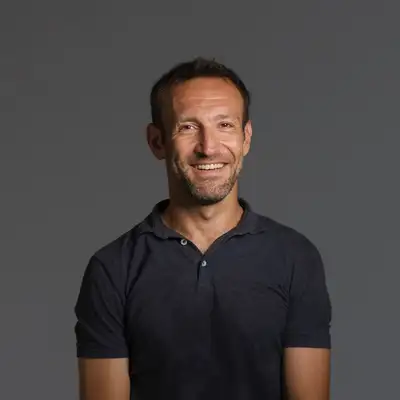
Pride and Prejudice: How Antisemitism Captured LGBTQ+ Spaces | With Eve Barlow
THT Ep12 Eve Barlow X Audio.txt
English (US)
00:00:00.000 — 00:00:16.320 · Speaker 1
These are people who are elitists, who are at the top institutions in in these states, and they are actively excluding Jews from public life and using Gaza and Palestine as the misnomer to do so.
00:00:18.800 — 00:00:42.040 · Speaker 2
Welcome to the honest. Take the show that goes past the headlines to find out what's actually true about Israel and about the people covering. I'm Ben Chertoff, and my guest today is Eve Barlow, who has chronicled the quiet inquisition inside queer and progressive spaces where the price of admission is now leaving your Star of David and your Zionism at the door.
00:00:44.440 — 00:02:06.660 · Speaker 2
It's pride month, and at a queer women's sauna night in Barcelona, two married Jewish women walked in wearing stars of David and were interrogated, surrounded and thrown out to the chance of free Palestine. Not in Tehran. Not in Gaza. In a room full of queer women. A space built on the promise that no one gets turned away for who they are.
The movement that taught the world that the closet is a form of violence, that hiding who you are does real damage, is now asking Jews to pick which part of themselves they're willing to hide. Eve Barlow knows these spaces from the inside. She was the deputy editor of the NME at the time, the biggest weekly music magazine in the world.
She broke bands, she wrote the cover stories, she built LGBTQ coverage from scratch at GQ. She was at the beating heart of progressive culture, MeToo, diversity, visibility and every justice cause of the last decade. And then around 2019, she started saying one thing out loud that the anti-Zionism rising around her was anti-Semitism, wearing a new coat and the world that had let her in turned on her.
She named her newsletter after what they did to her. She called it blacklisted. Eve. Barlow. Welcome to the honest take.
00:02:06.860 — 00:02:08.060 · Speaker 3
Thank you for having me.
00:02:08.100 — 00:02:19.660 · Speaker 2
So let's start very specific with an incident that just happened that you've written about recently. Two married Jewish women walk into a women's sauna night in Barcelona.
00:02:20.380 — 00:02:22.100 · Speaker 4
Why did you ask me that question?
00:02:22.580 — 00:02:26.180 · Speaker 5
Because I don't know. Someone tells me that.
00:02:26.500 — 00:02:27.980 · Speaker 4
Because I'm wearing a Jewish star.
00:02:28.180 — 00:02:37.140 · Speaker 5
But because I. I'm not against the star I have. The question is not smooth. It's honest.
00:02:37.700 — 00:02:39.180 · Speaker 4
They're kind of the same thing.
00:02:39.340 — 00:02:51.420 · Speaker 5
Not really. We don't condone genocide. We don't either. No, no. You know, either we don't condone you because it's not pushing free Palestine. Oh.
00:02:51.700 — 00:02:52.820 · Speaker 4
You've got to be kidding me.
00:02:52.900 — 00:02:57.690 · Speaker 5
Free Palestine. You're not welcome. Go. What's your name? We will return your money.
00:02:58.810 — 00:03:04.170 · Speaker 2
Can you walk me through what actually happened and how? That's indicative of a larger space here.
00:03:04.610 — 00:03:05.410 · Speaker 5
Sure.
00:03:05.610 — 00:06:51.610 · Speaker 1
Um, and I could. I should also add that I spoke to the couple over the weekend myself, the Jewish couple who contacted me and were interested in speaking further about what they experienced. So they actually live in Barcelona, and they've lived in Barcelona for six months, and they're both pro lesbians.
They're married to each other. They're both American. One of them is American, Israeli. It looks to me from an analyzing all the body language and what's going on that someone is someone is told the organizers that these two American looking Jewish women with stars were were coming into this event, and someone's alerted a group of them and they decide, I think strategically to get the trans identifier to to begin the interrogation.
Because in the oppression hierarchy that we'll talk about in this podcast, the trans is the most oppressed. So there is least capacity to push back. And there's the biggest plausible deniability of this isn't what you think it is, because we're the oppressed fighting the represent the representation of oppressor, which is you, white, American, Jewish star wearing.
Are you Zionist? So the interrogation was, you know, we don't have a problem with the stars, and we have a problem with Zionists. There was another individual that suddenly appears who is now very astute in English language and is basically smugly smirking and telling the two Jewish women that Zionism and Judaism is not the same thing actually, and enjoying it and relishing in this, you know, policing and identifying for two Jewish women who know exactly who they are, who can self-identify themselves.
I mean, the hypocrisy of a self-identifying community telling a minority that they can't self-identify as Zionists, and what it means to them is, you know, I don't need to tell you how excessive that hypocrisy hypocrisy is. Now, the more significant thing about this to me is that for years we have met with a challenge talking not just to non-Jews about anti-Semitism, but me as a lesbian Jew, talking within my own community about how the queers for Palestine is not to do with an ignorance.
It's to do with a learned, weaponized, elitist Ideology and this scenario, as the identities of the three main perpetrators were revealed, was a perfect encapsulation of exactly what I'm saying, because one of these women is a. The first one was a trans biology teacher. I mean, wrap around that in a, in a school, and one of them is a doctorate at the University of Barcelona in sociology, and the other one is a lawyer, a queer parent and an author.
So these are not people who bypass intelligence and swallow propaganda and just ignorantly start targeting Jews, not understanding what they're doing. These are people who are elitists, who are at the top institutions in in these states. And they are they are actively excluding Jews from public life and using Gaza and Palestine as the misnomer to do so.
00:06:52.370 — 00:06:53.210 · Speaker 6
Is this.
00:06:53.250 — 00:07:08.490 · Speaker 2
An outlier? Is this just a bad night in the city? Or, and you kind of answer this question already, or is this a representative image of where a chunk of the LGBTQ culture is now in regards to Jews?
00:07:09.250 — 00:07:23.890 · Speaker 1
Oh, yeah. Unfortunately, I have to tell you, and I've done a lot of research in this, um, particularly in the last year, I've been writing very extensively about the betrayal and the act of exclusion of the LGBT
00:07:25.010 — 00:09:41.230 · Speaker 1
community. Um, um, this is not just one bad night in Barcelona. This is endemic among every single city with an LGBTQ plus organized presence. Um, every single center community center organization has been targeted with the queering of the space and the subsequent, um, lassoing of an extreme leftist ideology that twins itself with jihadism and jihadist propaganda and Gaza has become, um, completely intertwined with the umbrella, uh, the umbrella of the, you know, the rainbow, um, rainbow cause and what it is politically motivated to pursue and to create activism around, um, this is not an anomaly.
And the the hardest. You know, I, I'm privy to a lot of access to stories, private stories, private testimony from either peers, friends, total strangers. I am not in myself. I'm very conscious of not creating a hierarchy of victimhood among our own people. Um. I'll just say that I think among the most vulnerable of us are lesbian, gay and bisexual and trans Jews because we are not only experiencing the due hatred that all of us are experiencing.
We are experiencing an ostracization and a betrayal from a tribe that we were drawn to and taken in by as family, because we had already experienced a societal ostracization because of our sexuality. Um, so it's it's a double betrayal and because it hits the most intimate part of our lives. Um, it's very trauma inducing, and it hits at an identity, like a
00:09:42.390 — 00:11:34.090 · Speaker 1
an identity crisis that can be very isolating and difficult to deal with. And, um, I've heard a lot of very, very dark nights of the soul stories from fellow LGBT Jews, uh, that it's very, very concerning and understandable. And it's very important for all of us as a Jewish community to understand the mentality behind this hate and to know it's not coming from ignorance.
It's coming from a desire for the bully, the bully to become the bully, and to finally kind of feel that power of what it's like to be the one doing the excluding because they feel, you know, impinged by the oppression that they've been, that they're being told to focus on, you know, focus on your oppression, focus on how society has excluded you as opposed to what the real meaning of pride should be, which is focus on how empowered we are and how far we've come.
Because we've we've created so much victory in the space of civil liberties. And, you know, how can we extend that globally? How can we? You know, it's so funny because there's so much focus on Palestine. There is actually a way to focus on Palestine that could be part of the moral core, the original moral core of the pride movement.
It's been totally inverted. What we should be doing as a movement is advocating for LGBT rights in Gaza, for Gazan people. And instead of doing that, we're you will not me. But, you know, the LGBTQ plus community is, um, basically acting as a handmaiden for Hamas in a social justice global community.
00:11:34.530 — 00:11:54.439 · Speaker 2
I want to get into the mechanics of all of that in in depth. Um, Before we do. I just for those who aren't familiar with you, I, um, you describe yourself as a journalist, a Zionist, a feminist and Scottish. The last one is obvious, um, how
00:11:55.480 — 00:12:09.840 · Speaker 2
you weren't always doing advocacy for, uh, for for Jews and LGBTQ Jews especially. But how did you get here? Like, give me the the CliffsNotes story by for.
00:12:09.840 — 00:13:37.120 · Speaker 1
So, yeah. Uh, calamity of public shaming and ridicule. Um, is the is the CliffsNotes version? I yeah, I spent the first ten years of my professional life being a music and film journalist and critic. I was, um, you know, I didn't grow up around journalists. I had no access to the media industry. I just kind of.
I just grafted away, and I was a hustler, and I was really passionate about music and film and, uh, you know, in not an abnormal way, but in a way where I really I wanted to sort of like, cast normal life aside. And just how could I live in this dream of just being able to talk about the stuff that I love so much about the world the most every single day?
And some crazy people gave me the opportunity to be able to do that and let me in the door. And once my foot was in the door, it was not getting away from it. Um, so I used to specialize in new music and breaking new bands, and I lived and worked in London for the first like five years of my career, and I moved to I was I was the deputy editor of the New Musical Express, which was at that point the biggest music magazine in Europe and actually the biggest, the biggest weekly music magazine print globally.
00:13:37.120 — 00:13:38.230 · Speaker 2
Yeah, there was huge.
00:13:38.590 — 00:20:35.600 · Speaker 1
Yeah. And, you know, just a historic brand. Um, I broke a bunch of artists while I was deputy editor there and had the time of my life, and then, uh, left the magazine in November of 2014, and I moved out to Los Angeles, where I'd been spending a lot of time because I had broken a couple of acts that were based here.
And I just, you know, I needed a change of scene. And when I came out here, I became somewhat of a word slot for every single, uh, media outlet, because at that time, money was being hemorrhaged from the media industry at large, particularly print media. And print media was. Fingers crossed. Hoping and praying that the internet was just like a five second thing that was going to, you know, magically disappear at some point.
Didn't happen. Um, and my, uh, I became sort of like everyone's woman in L.A. and then by extension, everyone's women in America. And I started to be sent around the country to freelance in music, in film, in fashion and modeling and R in general. And I became like a much more renowned cultural critic and cover story writer for many titles, including Elle magazine, The Guardian, BBC New York Magazine, LA times, LA weekly, GQ, uh, Time Out New York, the list goes on and on and on.
I was very, very busy and I became a cover feature writer. I became very renowned for the art of conversation and doing long form pieces where I got like the exclusive access to top A-listers, um, going behind the scenes on movie sets to, you know, Preview major motion pictures that were coming out, blockbusters and spending a lot of time on the road with bands.
I mean, I was doing my dream job and it was unbelievable. And I was also doing a lot of social justice adjacent things in that realm, because social justice has started to become like a main character in cultural journalism. So through the choice of stories we were doing, we were increasing visibility for black and brown artists.
We were very much increasing visibility for LGBTQ plus artists. I did GQ's British GQ's first ever interview with a trans male model, which was a huge deal. I think this was in 2015 or something. A model called Ashley. British GQ, a men's magazine, had never featured a trans man before at that point in time.
Um, I, I, I grew An LGBTQ plus vector at GQ magazine in America from basically scratch with my gay male editor at GQ, and we did all manner of young LGBTQ plus artists that people had never heard of, and we made them stars of the magazine. Um, and I was also doing a lot of work around my, my creator career, which was increasing visibility for women everywhere on magazine covers, um, headlining music festivals.
You know, my biggest bugbear that I used to get when I was a 22 year old, basically like glorified tea maker in the offices of these old school music magazines, was like, oh, like Eve, with their feminist agenda again. And I would just be like, I don't know. I just discovered this new artist called Grimes on SoundCloud yesterday.
That's not that's not part of my womanist agenda. I think she just makes really cool music. You know, can we put it on the stereo, please? Instead of like, Graceland for the 45th time this week? So it was, you know, I was doing a lot of work with telling women's stories, and that was a huge that was that was such an that was such important work for me, because I always promised young women that I was, um, that I was mentoring, that when I got to a position of power, so to speak, that I would proliferate women's voices.
Um, so then in 2019, when I got this idea in my head that I could start fighting Jew hatred or teaching my captive audience about the dangers of anti-Zionism that was prevalent in specifically Jeremy Corbyn's election campaign in the UK, that so many bands and fellow journalist peers and photographers were giving their faces and their names to um.
And it was a very existential moment for British Jews who were very aware of Jeremy Corbyn's leanings and this anti-Zionism that was becoming more mainstream in the UK. When I decided I was going to start speaking about the Jewish experience and what was dangerous about anti-Zionism, and taking back the term Zionism and explaining it to people.
I really thought, well, leaning on all of these social justice wins that I've had over the years, and not all of the ways in which I've supported all of these minority communities that I love and champion. Um, maybe some people will listen to me. And at that point in time, there was a split of the sea, and some people just thought I was absolutely bonkers, like hysterical, centering myself in something conspiratorial like, you're not scared because you're a Jew.
Like who's scared because they're a Jew, you know what I mean? It was very there was a lot of gaslighting. And on the other hand, there were some people who expressed a deep seated secret relief that finally there was someone that they admired and could relate to who was saying the the thing, the taboo, the thing that was not to be said that felt like the scariest minority victimization that was not allowed to be uttered.
Like every element of me, my lesbianism, my, my, my womanhood, like, you know, all of that was up for discussing. I never felt fear around talking about misogyny or unequal treatment because I'm a woman. I never felt fear around talking about being a lesbian at that point, because at that point it was almost like shameful to say that you were a heterosexual like that, right?
You know? Um, but I knew I was very aware when I started to speak about Jew hatred, how taboo and risky it was to discuss anti-Semitism.
00:20:35.840 — 00:21:00.960 · Speaker 2
I listened to a podcast that you did in. I was either 21 or 2022, and you could have been recording it. Now, in terms of the anti-Semitism, it was so incredibly prescient to what's going on. And like, did you when did you see this really started? Was it 2019 or was it before that? I mean, did we miss something?
Yeah.
00:21:01.000 — 00:26:00.030 · Speaker 1
Um, yeah. It wasn't prescient like it was. I was experiencing the volume of it back then because I was just not in whatever echo chamber everyone else was in, where they were like, there's no anti-Semitism. I was like, oh, no, there really is. There's a lot of it. Um, I think it's just taken people a long time to wake up to the reality, but I.
I didn't just leave the UK because I wanted a career change and I loved my visits out here in LA. I also wrote about it at the time, the undercurrent that I really didn't want to say too loudly and became braver about saying as time went on, I left the UK because I saw the writing on the wall. I was living in Shoreditch.
My last flat was on Commercial Street behind Spitalfields Market and I was seeing, um, Jewish. I was, I was seeing the pushing out of Jews happening in the City of London and in East London, where migrant communities were coming in in droves and outnumbering. You know, I mean, I'm not going to say outnumbering Jewish people because Jewish people have been outnumbered in the UK for many, many decades.
But, um, the BDS movement collided with this mass migration that was happening. And for instance, I was going to the local Tesco supermarket by, I think it was London Bridge, so like City of London, and I was going to a very main City of London Tesco branch and I keep kosher, and I was looking in the kosher aisle for like lunch meat and it was all removed.
And I remember saying to the teller, where's the kosher lunch meat? And they said, um, oh, we're not, we're not selling products from Israel. So I went home and I researched the brand of the lunch meat that I had been buying. It was like cold coffee or something. And it's manufactured in Kent. So the meat was not coming from Israel.
And I knew that whether it was the ignorance of the Tesco staffers or not, they were by proxy of thinking they were boycotting Israeli products. They were just boycotting Jews. I mean, there was no more overt example of how BDS is just anti-Jewish and not anti-Israel. And then over the course of a couple of months in East London, I noticed those kinds of things, the prevalence of BDS.
I noticed it in my work environment. I noticed it in the NME when suddenly, you know, at morning meetings, it was being suggested that, oh, who should write an opinion this week? Like, maybe we should get Bobby Gillespie from Primal Scream, a band from Glasgow where I grew up that has a very small Jewish population that someone like Bobby Gillespie is never going to come across in his life.
And from the other side of Glasgow. And why don't we get Bobby Gillespie to write a piece about why, um, BDS is a good thing for, you know, for British politics. And I was like, do you know what BDS me? You know, I was the only Jew in the office. I was the only person who understood this issue. And I didn't feel like I had the I had the capacity to be heard on it.
So that was happening at work. And then on my walk home at night, I started to just see, like casual swastikas that were being graffitied in the middle of city in East London, which is not which is a very like racially diverse area. So I was like, who? Like what demographic are posting swastika graffiti, you know?
And so it felt like I had a spidey sense that there was something going on with the migrants, with the BDS, etc. I couldn't put my finger on it at that time. I could feel that I no longer felt safe, did not want to be there, knew it wasn't going back in the bottle, and my gut was like, get the hell out of here. And that's why I left.
Um, and that's when I noticed things. But when I got to America, I was so. I was so caught up in the adventure of it all. And I so wanted to like, you know, master my craft as a freelance journalist and do that thing that you get to do when you come to LA, which is just like, I'm going to I'm going to like Madonna, like I'm going to reinvent myself.
I'm going to be a whole new person and like, meet new friends and expand and build my career and grow my name that I sort of just like I left it behind in the UK, I didn't. I was very aware that the problem existed here, but I was not. I wasn't thinking about it. I was like, oh, it's like there's a bit here and there, but I think.
00:26:00.030 — 00:26:00.630 · Speaker 6
It was.
00:26:00.790 — 00:26:01.430 · Speaker 1
For us.
00:26:01.470 — 00:26:03.710 · Speaker 2
I still think it was a lot less than it.
00:26:03.710 — 00:26:04.470 · Speaker 7
Was last year.
00:26:04.510 — 00:26:10.070 · Speaker 2
Especially in LA. Like even LA, I feel like trails New York in it. I'm in New York now. Yeah.
00:26:10.190 — 00:27:13.900 · Speaker 1
And they have menorahs in the CVS. And I was kind of like, I've never lived in a country. Like I was like, is it? This is like Jerusalem. I've never seen this. I've never seen menorahs in a in a chemist before or a drugstore other than when I'm in Israel. So I felt I just ignored. I just thought I wasn't even ignoring anything.
I was just getting on with my life for a couple of years and really enjoying it. And it wasn't. I didn't really think about anti-Semitism again until the Corbyn scandal in the UK again was not. And by the way, when that went to bed or I went to bed temporarily, took a nap after Corbyn lost that election in a landslide loss in December of 20 of 2019.
I remember being on the phone with my childhood best friend Ben Freeman, who's also an author and advocate on Israel and against anti-Semitism. And I remember as like talking that night, and there's this like sense of relief like.
00:27:15.690 — 00:27:20.530 · Speaker 1
Glad that's over, you know. And, um, lo and behold,
00:27:21.890 — 00:28:09.690 · Speaker 1
4 or 5 months later, we're stuck in lockdown as Covid and George Floyd is killed by the police and the BLM riots start. And I was I was watching. I was watching the repeat, the repeat of the pattern behavior of, oh, they're vandalizing synagogues in the in the Fairfax District, um, on Pico. And it says, fuck is real and fuck Jews.
And it's coming from a social justice movement. It's coming from people who would have supported a Jeremy Corbyn style politician here. And I knew, oh, this is far from over. This is this is only just getting started. And here we are five years later. Six years later. You know.
00:28:09.810 — 00:28:56.200 · Speaker 2
Yeah. Um, so let's get into the specifics here, with the LGBTQ movement's queers for Palestine gets dunked on all the time, especially by our side chickens for KFC. They get thrown off the roof. I mean, there. It's almost become a trope from our side. Yeah, our side being the the Jews who see what it is and know what it's like in in the states that they're purport to be supporting.
But like, where does that queer identification come from? You know, this is a group that would legitimately not be accept accepted. Rather in in Gaza, in the West Bank. Where does that what's the the intellectual lineage there.
00:28:56.280 — 00:32:47.160 · Speaker 1
Yeah. So I addressed this in a piece I wrote for the Sapir Journal at the end of the year. Um, queers for Zion, where by it was the queering the queer theory that came in in the 70s. that was rooted in Marxist ideology and the idea of a binary between oppressor and oppressed. Where to be queer and to be part of the community was no longer just about same sex attraction and fighting for equality and civil liberties.
It's now a political identity, and it's about fighting colonialism and anything that's deemed to be a colonial structure or a colonial idea, including ideas about gender binaries, is to be dismantled and to be done away with. And in that obsession around centralizing the concept of colonialism, we are also antagonized by anything that represents a colonial structure geopolitically.
So where, of course, and you speak to this, I like how you say that it's almost become a trope in our in our community, because I look at it sometimes and I do see that it's very easy to dunk on the LGBTQ plus community because we are a minority and it is absolutely ridiculous and inverted. And it's such an overt example of the upside down ness of it all, but it only it's antagonizing the situation further, and it is drowning out the middle ground where we could have a conversation about why this is even happening.
That middle ground has disappeared. So you now have a split between an LGBT world that I would say I'm a part of, that very much rejects queer theory and the queering of the movement and an LGBTQ+ world that is existentially, fundamentally, politically driven before it's driven by anything else that serves the LGBT community.
So, you know, whereas if you look at what the LGBT world has been fighting for for the last few decades, we're talking about civil liberties. We're talking about same sex marriage. We're talking about child adoption, um, rights. We're talking about, um, protecting basically civil civil unions between gay and lesbian people and making sure that we have the same rights and dignities as any other heterosexual couple, um, vis a vis all elements of family life.
And we're also talking about ensuring that there is access to medical care, ensuring that there is no discrimination in the military, like very, very clear cuts, civil liberties and human rights. Um, when we look at the LGBTQ plus umbrella world, we're looking at a world where civil rights play second fiddle to, like I said, ideology and this kind of religiously fanatical politics.
Um, and one of the things that I always point to when people try to label me as queer phobic or transphobic or exclusionary of our rainbow child brothers and sisters and everything in between, right? What I always say is, if there's no policy that you're advocating for, um, as per your identifier, then
00:32:48.200 — 00:32:53.160 · Speaker 1
what are you doing in this community? For instance, Q
00:32:54.320 — 00:33:37.790 · Speaker 1
A stands for asexual. What legal policies and reforms do we have to make for asexuals in society? There are none. There are no policies that an asexual needs. The movement has moved away from rights to something that I think is defined by the word validation, that now you need a movement and a group of people to validate your existence.
Because this movement and this cult is now about feelings and not about tangible rights and, and facts about our existence. So I am
00:33:38.910 — 00:35:36.010 · Speaker 1
I say all this to say that this, this academic elite idea that started seeping into the movement in the 1970s has now become mainstream in the movement and has become the dominant purpose for why people participate in the movement, including many people who, Frankly, I don't recognize as lesbian, gay, bisexual or trans.
Um, because they're not. They're not. They're not any of those four categorizations of people, in my view. Um, and I, I, I've seen we've seen this grow more and more and to be really cynical but also accurate about it. I think it's happened because where does all the money go? That's been funding the movement after all of the rights have been ascertained and achieved, what is funded next and who is funding it and what is their aim in funding it?
Because as far as I can see, the community is now starting to eat itself. It's not it's not a it's kind of lost sight of protecting the rights that we've already fought for. And we're already seeing a pushback statistically against gay rights now. It's it's been pushed so far in the direction of the political ideology and the leftism and the radicalism that now some of the rights that have been established are being lobbied to be taken away, and the eyes of the LGBTQ community are completely off that ball because they're not, as I said, invested in equal rights.
And, and, you know, legislation. They were invested in this kind of like pie in the sky idea of feelings and validation and political advocacy.
00:35:36.770 — 00:37:03.320 · Speaker 2
You wrote something you the superior piece that you wrote. Brilliant piece. There is one section that just like, jumped out and you had written that the LGBTQ community, and I'm going to quote as best I can, has never been able to shed marginalization as a fundamental feature of its political identity, perennially drawn towards other movements that will reaffirm, reaffirm that identity.
And you called it a matter of subconscious political pathology. And I can't help but think then, about post-colonial theory, or at least how it has the post-colonial theory that has filtered down into campuses and into the progressive circles. The idea of like you're either oppressed or you are the oppressor.
And you talked about how, yeah, how how the, the, the LGBTQ community's, after so many years of fighting so hard, has really gotten acceptance, at least in the US. Um, and that that kind of presents the problem of now that you are no longer the most oppressed. You know, you're no longer oppressed than what happens.
The same thing happened to Jews, right? We were incredibly oppressed and then became successful and are therefore now the the oppressor. So like I guess my my question is, after that big Ted talk right there. Um,
00:37:04.480 — 00:37:13.240 · Speaker 2
is that the framework that you see there? Is that a defect of the post-colonial theory? Is that something that that the the movement can get out of it?
00:37:13.240 — 00:41:50.870 · Speaker 1
Absolutely is. And what I would add to what you said is there's a lot of deflection going on, because where is this theory being taught in elitist institutions? Many of the people who are claiming to be oppressed are. And I'm not saying this from my perspective because I'm proud and not self-hating. They are what the theory would deem to be the peak oppressors.
These are people, middle class people, extremely privileged, who are you know, I said the other day, I've never I never expected in my lifetime to see so many middle class, run of the mill people trying to find new ways to be oppressed like this is what a lot of this is. Not even just in the LGBTQ plus community.
We see it in the full feminist community as well. Like suddenly women of a certain age and social strata are obsessed with, you know, virtue signaling Palestine and wearing Kafirs and making this their entire Instagram directive. Like it's it's it's mind boggling. But it's it is it's pathological. It's psychological and it's, it's rooted in deflection and in guilt.
Because what our Western education systems have failed with us for the past several decades is that they have been weaponizing. And Douglas Murray, I don't think there's anyone more brilliant at having distilled this down at great detail in length than Douglas Murray. Western educational institutions have basically been Brainwashing people with being antagonistic towards the countries that they come from, and having a toxic relationship with their own nationhood histories than embracing the successes of our nations and the West, and thereby creating this allegiance and this fetishizing and this fixation on third world cultures that do not want to assimilate with ours at all, and would remove every single thing that makes our lives comfortable, um, liberal, free and progressive.
Um, so you are correct. It's it's exactly what you describe. And the panacea to your second half of your question to this is really to invert the Motivation of the group. Away from self punishment. Self-hating towards what we call pride in the real sense. Pride and pushing. Not framing success as oppression or something to envy or hate.
Celebrating success. Returning to aspirational living which has been downplayed and inverted for, I would say, several decades now. People played down their successes. They try and pretend that they're not from the background. They're from. They're made to feel shame about their families. You know, um, evolution over time.
They cosplay revolutionaries that are fighting against fascist governments when there are fascist states that are on the other side of the world and overruling people who don't have any internet access and don't have half of the privileges, we have to be heard. I mean, the free speech wars are frankly insulting.
We have more free speech than any other country in the world. You're in America and the liberals. I mean, I wouldn't even call them liberals because they're not true liberals. The progressives and the leftists among the Democrats are hell bent on insisting every day they are a free speech. We don't have the right to criticize Trump's administration, which is just personally, personally untrue.
Um, but we're not living in an economy of facts anymore. We're living in an economy of feelings. And that's been that is also disseminated from the theory that you speak to.
00:41:51.070 — 00:42:10.070 · Speaker 2
It's it's amazing to see people, you know, the celebrities on the biggest podiums in the universe claiming that they're being censored. Like even Chuck Yeager recently claiming that he has no freedom of speech when he has one of the largest audiences in the world.
00:42:10.510 — 00:42:20.230 · Speaker 1
Um, I mean, I can't go a day without. I don't follow Channel Yeager. I don't follow anyone who follows him. But I literally cannot survive 24 hours without.
00:42:20.230 — 00:42:21.110 · Speaker 7
Inescapable.
00:42:21.430 — 00:42:23.630 · Speaker 1
Everything Google has to say.
00:42:24.670 — 00:42:25.910 · Speaker 2
Yeah, yeah.
00:42:26.110 — 00:42:27.190 · Speaker 6
He's he.
00:42:27.870 — 00:42:29.670 · Speaker 2
Exactly. He's everywhere.
00:42:29.950 — 00:42:31.430 · Speaker 1
And his wonderful nephew.
00:42:31.710 — 00:43:22.620 · Speaker 2
Um, yeah, exactly. Um, so the activists themselves there is as as you pointed out, there's this like, you get a moral superiority from being the victim. The more oppressed you are, the more moral you are the glee that you pointed out before. At the very beginning, when we were talking about the the Barcelona incident that that smile on on one of the women's face as, as she's pushing out these Jews.
There is that it is that self-evident, like ethical superiority. Um, there it brings an immunity to, you know, the sense of being immune to being propagandized to how do you get how do you reach that audience who thinks that they can't? You know, that they hold the moral high ground.
00:43:23.100 — 00:46:01.430 · Speaker 1
You can't, you can't. They're in a cult. It's gang mentality. The way that they have socialized themselves is that they've connected to other people via who they hate, who they perceive as overpowering them, who they need to bring down. It's about destroy, destroy, destroy, set things on fire and ruin people's lives.
Dox people, stalk them. Um, just destroy everything. Eat everything. Right. You can't get through to those people because they are. They have been. So they have been conditioned to behave in a pack. And I. You know, I'm not an expert in psychology, but I don't know how you break a pack up. Um, I'm sure there is a clinical psychologist who studies this, uh, in sociology and can.
And maybe even the woman who studies sociology at Barcelona has a PhD in it. Who chuck these people out. Maybe she can answer the question for me. I don't know how you dismantle hunting packs. And that's what they are. They're hunters. They're hunting people. That's what they did during that incident.
That's what they're doing to us every day online. You know, if we could peel back the layers of the internet, we would see how so many of the people who attack us with hate every day are organized. These aren't just like random people operating in silos. This is coordinated. These are campaigns that are coordinated.
There is a lot of smearing going on that's coordinated. Until you have experienced the sheer amount of digital hate, stalking and harassment that I that someone like me has experienced through years of this kind of advocacy in various different, um, avenues of, um, disinformation wars. And, you know, as a public figure and a journalist.
Um, I'm, I'm very aware of the book and, um, I'm not afraid to talk about. I mean, I still get anxious talking about it because it's like the monster no one really wants to look at. How much do we really know about the capacity of the internet and the capacity for people to do really harmful and evil things to us via the internet?
Very, very little we can imagine, but we haven't been informed. And you only become informed of what's capable just online. When you're subjected to something and you know, without going. I'll just say that I'm someone who's informed due to my history. Um, and I,
00:46:02.910 — 00:47:26.499 · Speaker 1
you know, that's just the internet. That's just how people are behaving online. But as we've been arguing for years, what happens online is not happening in a silo. It's also informing how people behave out in the world. So now you see, for example, in London, my friends, who would insist that these weekend marches with Palestinian flags and thousands, up to 100,000 people marching down, you know, pop like Pall Mall every single Saturday in London for months on end during the war that these were just free speech marches.
These were just people expressing their concerns about a war and people like you and I saying, no, these are hate marches. These are marches that enable the proliferation of slogans, of lies, of propaganda, of normalizing hate. Um, and, you know, we're told that that's not the case and we're constantly gaslit.
The issue is that, you know, people are learning behavior, they're learning permissiveness. They're learning that they can do this stuff in broad daylight and get away with it. And the. And there is strength in numbers. So if I'm out here with my friend, um, you know, speaking hadiths that are
00:47:27.900 — 00:48:22.770 · Speaker 1
uninterrupted on interpretable to the British mother tongue and, you know, like, I'm not going to say native Brits, but, you know, a lot of, a lot of British people who don't understand, um, Arabic. And you're doing that in broad daylight with your friends, and you're wearing Hamas headbands and flying the flag of the Islamic regime, and no one's arresting you for it or telling you you can't do it.
Then you're ingrained in someone's brain that they can openly shout for the murder of Jews and pursue the action. That the violent action that meets the ends of those words. And no one's going to come and punish you. You're going to get away with it. Um, so, you know, we've just allowed the madness of crowds to go forward uninhibited, unchecked.
And that's why we're in the mess that we're in.
00:48:22.810 — 00:48:52.120 · Speaker 2
The pride movement has, like the founding belief that the closet is a form of violence, that hiding who you are does real damage. And now, you know, Jews are being told to take off their Magen David to enter these same spaces. How does that? Is isn't that just building another closet in this? Like, how is that not obvious?
00:48:53.400 — 00:49:09.439 · Speaker 1
Right? Am I right about this in my piece, uh, the the blacklisted piece that you mentioned at the very beginning about how, again, I said this at the beginning, the bullied becomes the bully, this
00:49:10.440 — 00:52:41.760 · Speaker 1
power dynamic that shifts in their favor, where now they can do the harm to others, what they have experienced, you know, or that the idiom hurt people, hurt people, they are psychologically broken. There's something damaged. Also, the pride movement is supposed to be about individuality, and now it's become about the so-called warmth of collectivism.
Okay, so if you're someone who wants to migrate around in packs hunting people, you're not. You don't have a strong sense of identity. You don't have a strong sense of who you are. You're not an individual. So yes, of course it's obvious that that's what they're doing. They know exactly what they're doing.
They're enjoying it because they feel entitled to enjoy it, because they feel like this is what we've been working for. You know, years ago when I was still in contact with people who behaved like this. That's what they would say. That's how they would speak, like in our lifetime. It's so weird. It actually almost echoes what you hear these, like, jihadi teenager thing on the streets of Paris over this weekend during these riots.
Like in our lifetimes, we are going to be the ones in power. We're going to get everything we want. We're like, we're going to rip it all down and rebuild and everything's going to be fit. You know, it's one thing to kind of want a utopia. It's another thing to talk about it with, with language and in a tone that is so violent and angry.
I'm like, this doesn't sound like like a really happy utopia. It sounds like. It sounds like you're, um, going around with a flamethrower. Like trying to develop your utopia. And I'm not sure what utopia is going to look like when you know, all of this beauty around us has been turned to ash. It's going to look like literal hell.
Um, you know, that is something that's very telling. There isn't. People talk about cognitive dissonance. I think for some people, maybe there is cognitive dissonance because they don't want to feel ashamed of what they're doing. But I think fundamentally, they know that they are coming at this in numbers, in packs, in groups, because what they want is vengeance, you know, And what jihad wants is vengeance.
And that's what we're their common. That's why they're friends. Because friends have common motivations until they realize that they're each other's enemies. Or one is the useful idiot of a greater enemy. And they're not thinking about that at the time because it's like it almost is like, you know, playground bullies when they join forces because they want to bully a specific target.
And then at the end of the day, they're both still bullies, and one of them is better than the other, and the other bully takes the other bully out at the end because only one bully can win. You know, it's the same thing that's happening between the LGBTQ plus world and the creeping Islamization of the West.
It's exactly the same thing. It's just that the LGBTQ plus world has not yet really. There's so motivated by by the power grab that they're not looking sideways at all. And when we get the power, we're going to be the first lambs to the slaughter. You know what I mean?
00:52:42.040 — 00:52:51.520 · Speaker 2
Let's talk about the as a Jew component of this. Um, so Matt Bernstein, Matt was XV x.
00:52:51.600 — 00:52:52.000 · Speaker 7
Max.
00:52:52.320 — 00:52:53.040 · Speaker 2
XIV.
00:52:53.120 — 00:52:55.840 · Speaker 7
Yeah, exactly 2.2 million.
00:52:55.880 — 00:53:26.400 · Speaker 2
Mostly young, mostly gay followers. And he's Jewish, and he's very open about that and uses that his identity to be overtly anti-Zionist. I mean, what does that say? Is that a matter of like, I have to choose one identity? Um, and he chose that one. It, it how does that come about? And what does that show? Uh, you know, some kid who's trying to figure out his own politics, who is a Jew and gay?
00:53:26.960 — 00:53:27.840 · Speaker 7
I mean, that.
00:53:27.840 — 00:53:29.160 · Speaker 2
Was like eight questions.
00:53:29.640 — 00:53:31.070 · Speaker 1
Baruch Hashem I.
00:53:33.270 — 00:54:02.149 · Speaker 1
Matt Bernstein is not in conflict with himself. He's not struggling. He's not on the struggle bus. He's chosen this. He knows what this air will will procure for him. Anyone who lies constantly and will just say something because he knows it will get him clicks. And by the way, it's interesting to profile these people.
Matt Bernstein comes from the world of gossip and celebrity gossip and tittle tattle. So
00:54:03.270 — 00:57:18.520 · Speaker 1
there's not a great let me just tell you, as somebody who has been a cultural journalist for, you know, the first half of my life, I never dove into celebrity gossip because first of all, celebrities don't interest me. But secondly, um, there's no art in celebrity. But secondly, uh, there is no purpose.
There's no like, there's no, like, purpose to that. Like there's just nothing. There's nothing to be gained. Um, and it's a great harm upon society, celebrity gossip. And I think that, um. I think that that is probably if you were going to line up all of the industries that are the most morally bankrupt.
Celebrity gossip is, is up there. You know, it's up there with them, some far more egregious things, but it's definitely up there and it's very harmful. So for someone like Matt Bernstein, if you're thinking about it psychologically to pivot from celebrity gossip, gossip or to intermittently weaving and out of, oh, like, you know, what's Kylie Jenner up to today?
And oh, babes, like, let's talk about the Strait of Hormuz. Like, you know, it's not that's not that is not accidental. That is deliberate. He is deliberately marketing himself as the as a Jew because he knows that there is a market for Zionist hate, and he knows that he can. He knows that he can profit off that hate for profit is so enormous in our modern age, particularly among YouTubers.
And there is not a YouTuber on the world in the world that doesn't understand that market either because they are participating in it or they're a target of it. So he knows he's not conflicted. Um, he reminds me of Zach Polanski. Uh, he's got the same psychology. Zach Polanski is the Green Party leader in the UK who is also an acid Jew and an anti-Zionist.
But there's a lot that's come out in the last few weeks and months, um, uncovering the shapeshifting of Zach Polanski over the years, um, schemes that he's run, things that he's lied about, uh, you know, false products that he's sold in the literal and figurative sense and in the metaphorical sense. Some people even claim that he used to be a Zionist.
I, you know, like not to name names, but I know somebody who used to know him and knew him as pretty, like, empathetic, like empathetic towards Israel and Zionism, not taking this hard line. Now he's taking a hard line because he wants to win a general election in the UK. He wants to be the future Prime minister, and he knows that one of the the most effective ways to gain power in the West right now is to be a self-hating Jew, to be a Jew that throws all the rest of us under the bus.
So these people are calculated. They know exactly what they're doing. They have no shame. And, you know, I don't like to pathologies someone from a literal armchair, but they are they have narcissistic tendencies. They don't care about anything other than their own profile, building their own brand and again, gaining power.
00:57:19.560 — 00:58:01.550 · Speaker 2
Yeah, it reminds me of Brad Lander here in New York. Right. Doing the exact same playbook. You know, one of the things I believe Bernstein accuses Israel of is pink washing, the idea that celebrating Israeli LGBTQ life gets dismissed as propaganda. You don't litigate that term, you flip it. If celebrating queer gains makes a country's gay life propaganda, then the then every pride parade everywhere is pink washing.
Um, why does only Israel get accused of this? I think I know the answer there. And what? What would Matt.
00:58:01.590 — 00:58:02.150 · Speaker 6
See.
00:58:02.150 — 00:58:08.310 · Speaker 2
If he were taken to if he went to, uh, Tel Aviv Pride, which is coming up.
00:58:08.510 — 00:58:09.870 · Speaker 8
I have a dream.
00:58:10.270 — 01:02:11.310 · Speaker 1
That I've had for a long time. And that dream is that we somehow just take a bunch of these Matt Bernstein's, and we blindfold them, and we, like, we make them think that they're going to Fire Island or something. Right. And and then they get on the plane and they land in the middle of Tel Aviv, and they're not told where they are, and they realize, oh, my God, I'm in Utopia.
Like, like, where am I? This is the best. This is everything I've ever dreamed of. And then they're told that it's Tel Aviv and they. I mean, I don't know what happens to them at that point in time. I've not got that far in the plot, but, uh, but yeah, that's that's the thing. Pink washing. I mean, it's the same as all of the other libels that are, um, you know, you said you already know the answer.
All of the other libels that are uniquely targeted are somehow the only Jewish country in the world. No other country gets any level, any level of microscopic analysis in every facet of public life, more so than the one tiny Jewish nation that does exist in. By the way. Not to be sniffed at. Probably the most aggressively homophobic area in the entire globe.
Like literally that slap bang in the middle of homophobia HQ right there in the Middle East. Um, so this is uniquely targeting Israel because Israel is the Jewish state, and there must be something up with the Jews. And, um, you know, it's conspiracy, it's conspiratorial. It's again fixation obsession over Israel and what it's doing and how it can't ever do anything right.
Um, even the stuff that it's getting really right has to be somehow wrong. Like, why do they recognize same sex marriage in Israel? I mean, what's going on there? Do they really like what? You know, it's it's these people are crazy. They think that they're not. They think that they convince themselves that they're not doing what they're doing, but they're doing exactly what they're doing, which is holding the Jewish nation to a different level of standards.
Then they're even slightly in the in the tiniest inkling, um, obliged to hold any other country to they don't give a shit about like, do they have any interest in what's happening in Indonesia? Do they ever like Google? Oh, I wonder what the laws in Chile are about. Uh, as regards this, you know, they don't they don't they're not interested in that at all.
They're just interested in what Israel is doing because Israel is where the Jews are. So, um, and not exclusively the Jews, it's important to say, but it's where it's where we have, uh, it's where we have self-determination. So the pink washing argument, I just, you know, I just immediately chuck it in the bin according to that, according to that, like, analysis and that rationale, because it doesn't make any sense.
You're going after a country that has proven itself. I mean, it really is fabulous. It's amazing that we can have a country that's made up of a lot, like there's a big sector of religious society, and despite that religiosity and that religious freedom, whether it's whether it's Judaism, whether it's Christianity, whether it's Islam, there are also all of these LGBTQ plus rights in Israel, and significantly more of them than there are anywhere else in the region.
Um, as in, everywhere else in the region has this many LGBTQ plus rights. Zero. Um, so yeah, it's a nonstarter of, uh, theory. And I don't even I care not to waste my breath
01:02:12.670 — 01:02:17.190 · Speaker 1
arguing with anyone That prescribes to it.
01:02:17.790 — 01:02:21.749 · Speaker 2
You are able to hold in the same sentence that
01:02:23.190 — 01:02:38.270 · Speaker 2
Israel is the has the most rights in the in the Middle East, in the area, for, for LGBTQ and also that there is room to grow. How how do you hold those two without one being weaponized against the other?
01:02:39.310 — 01:03:36.980 · Speaker 1
Easy, just as you would in any other democracy. We're not at you know, we're not at ground zero. We've developed a lot. We've got a lot of things that we need. And society is evolving. And do I think that there will come a day when you can get a wedding, you can actually get legally married inside Israel and have your wedding ceremony inside as real as a same sex couple?
Yes, absolutely. Because it's really to want that. It's what they want. That's what they're advocating for. They want that policy and they're going to get it. And people are going to get married in Tel Aviv on the beach. As same sex couples at some point in time, or on a moshav or wherever on earth they want to get married.
Um, that will happen. So, of course, I can hold both, because Israel is a democracy and democracies are built over time. And, you know, at 78 years young. Are we 79 yet or is that coming up?
01:03:37.100 — 01:03:38.740 · Speaker 2
78, 78.
01:03:39.140 — 01:03:52.139 · Speaker 1
78, 78 years young? And I think we've done a bloody good job of building a society and catching up and developing. I mean, we're talking about a society that is a world leader across so many industries
01:03:53.420 — 01:04:12.970 · Speaker 1
in such a minute, amount of time. Like, okay, so we haven't got round to legislating on that particular policy yet. We'll get there. We're getting there as we're getting to everything else. And also fighting an eight from war, by the way, that hasn't relented in the 78 years. So I think we're not doing that bad.
01:04:13.010 — 01:04:32.130 · Speaker 2
Your superior essay, quieres for Zion, ends with the idea that the Free Palestine movement needs the gay movement more than we need them. It's not lost on you or me that the Palestine could use a gay movement.
01:04:33.250 — 01:04:38.930 · Speaker 1
Yes. Now the scene desperately needs a gay movement. Um,
01:04:40.850 — 01:05:22.800 · Speaker 1
thinking about a gay person in Palestine gives me, like, intense anxiety. I saw, you know, I was one of the first Americans. I think I was at the first American conference that Emily Damaris spoke up of her first public speaking event in America. I think it was her first one. Was that Sam with Us a pride for Israel conference last November.
Emily came and she spoke, and the whole time she was on stage speaking about her time in captivity, I was just doing circles in my brain. Just like, how did we manage to protect her? Her sexual orientation, both in Israel and in the UK.
01:05:22.840 — 01:05:23.880 · Speaker 7
Was one of the.
01:05:23.920 — 01:07:35.180 · Speaker 1
Where she's from originally. How did or I didn't know if actually she was born in the UK or she was born in Israel, but her mother's British um, was advocating the was was lobbying in the UK government because she's technically a British citizen. So that's two nations that managed to hide her sexual orientation.
Like my thing would immediately have been, you know, if you have an Instagram account, how do you myself and again, to name check my friend Ben, I remember we said this about Emily when she was released. I mean, I don't mean to be though, sure, but I do have, you know, we all have a gay radar, and I, I definitely knew that Emily DeMar was was not straight.
Um, but when she got out and it came out that she was out. Um, Ben and I said to each other, oh, my God, could you imagine if we were kidnaped into Gaza? Like they would they would see immediately from our social media exactly who we are. And they just they'd just behead us. You know, we'd be done. Um, I think it's frankly, I think it's an absolute miracle that no one found out that Emily is approached openly.
Lesbian women. And when she came to speak, you know, she spoke so much about how this woman has so much chutzpah. I mean, it was it was crazy to hear that, how she goaded the Hamas terrorists that were watching her with, like, questions about what they would do if they found out one of their family members were gay.
And I was like, I am we to poke the bear? Like, I mean, like, really real. And she she said that at one point she was being held in captivity in a family home in Gaza at the beginning, and the family kept asking her if. If she was married. And they would be like, why are you not married? You seem like really great marriage material.
Like, you know, you're like, how are you not married? You're such a catch. And she would just say that she has two big brothers and they're very, very, um, they're very controlling and possessive. And they do not let her go on dates with anyone. And, I mean, the whole audience was roaring with laughter. Like to have that level of humor about such a torturous, um,
01:07:36.220 — 01:08:04.699 · Speaker 1
fearful experience. But every second she was in Gaza, her, you know, and this goes back to my point at the beginning about not trying to create a hierarchy of vulnerability. Right? I'm not trying to create that. But the fact of the matter is that on the face of it, Emily was more vulnerable in captivity than any of the straight hostages.
And it's like what I said at the beginning that again, not trying to create a hierarchy of vulnerability, but we are
01:08:05.890 — 01:08:52.250 · Speaker 1
we as gay Jews are more vulnerable to some types of attacks of Jew hate. Because, you know, in Australia, there's been this case that was spoken about just after the Bondi Beach murders, um, where young Jewish teenage males are being lured via Grindr to go and meet people, and then they're being filmed on camera, being beaten up by by immigrants.
And this is this is what makes us more vulnerable, is that we're exposed in in a world that a lot of our straight allies and straight brothers and sisters don't even see or don't even know about. You know.
01:08:52.410 — 01:09:10.480 · Speaker 2
There's somewhere, I hope, a queer Jewish kid listening right now who's been told that they have to pick either their people or their community. What does it cost them to be visibly both of these things in Pride Month? And what do you say to them?
01:09:12.560 — 01:09:13.200 · Speaker 1
Um,
01:09:14.480 — 01:09:16.839 · Speaker 1
you know, we have to be
01:09:18.600 — 01:09:23.279 · Speaker 1
I don't want to invalidate anyone's experience. It's an incredibly painful time
01:09:24.680 — 01:09:35.960 · Speaker 1
being openly Zionist and openly LGBTQ plus equals targeting abuse. Harassment. Stalking.
01:09:38.240 — 01:10:01.480 · Speaker 1
Hate. You know, you're open to all of those things. Um, but that's the price you pay for true pride and for not allowing abusers, losers, people who are not individuals, people who are part of a hunting pack collective because they can't stand on their own the way that.
01:10:01.480 — 01:10:02.470 · Speaker 9
You are doing.
01:10:03.670 — 01:11:16.259 · Speaker 1
As someone who's done nothing wrong, who's just proud of every part of your identity, who isn't willing and frankly, can't carve up different parts of themselves to suit different rooms at different times. That takes integrity. And by the way, integrity is a dying art form in the world that we currently live in.
It takes guts. And that is what on the you know, on the reverse of all of that horror and terror and fear and isolation is what you gain because you gain an unapologetic sense of who you are. You become brave by example. You become a leader by example. You become a shining light in a world full of darkness, and a person who can light the way.
For someone who might not have the strength that you are expressing when you are standing proudly in your identity, in all of its multitudes, no matter how much hate or how much you know. Harassment you get for doing so to me, I don't have a choice. I never had a choice. I don't see
01:11:17.380 — 01:11:57.700 · Speaker 1
I'm not a Matt Bernstein, I. I would never lie about my character or brand myself in a way to make myself more amenable to a public. I am a genuine article, and that gives me the freedom to speak. That gives me the freedom to think, that gives me the freedom to move. Exactly as an, you know, an individual in the Western civilized world should be able to.
That's what our people fought for. That's what Jews fought for. That's what the original Rainbow Pride people fought for. That is being true to what we stand for. So
01:11:59.330 — 01:12:01.810 · Speaker 1
Go forth. Be brave. Be bold.
01:12:02.410 — 01:12:02.890 · Speaker 7
Mm.
01:12:04.290 — 01:12:08.210 · Speaker 2
Where can people find out more? Read more of your work.
01:12:08.970 — 01:12:36.530 · Speaker 1
Um, I have a bestselling Substack called blacklisted, and you can subscribe to that at http colon. Forward slash, forward slash Eve Barlow substack.com. Um, and I have two social media accounts. One is on X at Eve Underscore Barlow and one is Instagram. It's without the underscore just Eve Barlow. And that's basically where I live all the time.
01:12:37.370 — 01:12:39.850 · Speaker 2
Eve Barlow, thank you so much for joining us today.
01:12:40.090 — 01:12:41.410 · Speaker 1
Thank you so much, Ben.
01:12:41.490 — 01:13:53.040 · Speaker 2
Pride began as a celebration of how far people had come in a single generation the families, the marriages, the rights nobody thought possible. Eve's argument is that somewhere along the way, it got inverted. A movement that was about celebrating victory became a contest over who is the most oppressed.
And in that contest, the moment a people succeeds, the moment it stops being the victim, it gets recast as the oppressor. That's the trap she sees closing around Jews too successful to be pitied, too proud to be forgiven. Her answer isn't to shrink. It's to refuse the trade, to stand in all of it and dare anyone to make you choose.
Eve Barlow writes the best selling newsletter, blacklisted. Links are in the description. If this conversation made you think, do me one favor, leave the show a rating and a review wherever you're listening. It's the single biggest thing that helps new people find us. And if you're not already subscribe, hit the notification bell and follow Honest Reporting on Instagram x TikTok and Facebook.
I'm Ben Chertoff. This is the honest take and we'll see you next time.
Creators and Guests