Broken Mirror: Internalized Antisemitism, the Non-Jewish Gaze, and Why Jewish Pride is the Answer to Jew Hate | With Ben M. Freeman
THT Ben Freeman X Audio.txt
English (US)
00:00:00.400 — 00:00:23.080 · Speaker 1
Jews who are proud, who are illiterate will be more likely to fight Jew hatred. They'll be more likely to teach their friends about what it means to be Jewish, to explain Jewish experience and identity. So Jewish pride to me, is the root to fighting Jew hatred. The greatest achievement of the Jewish people is not Israel.
The greatest achievement of the Jewish people is the Jewish people, and Israel is a major manifestation of that.
00:00:25.920 — 00:00:43.280 · Speaker 2
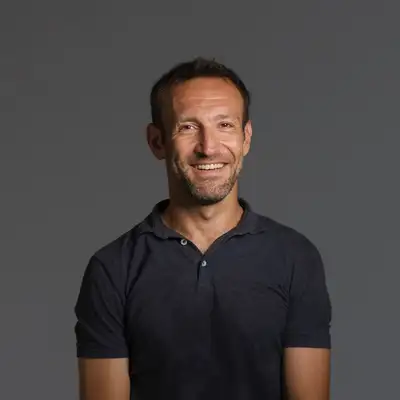
Welcome to the honest. Take the show that goes past the headlines to find out what's really happening with Israel and the people covering. I'm Ben Chertoff, and my guest today is Ben M Friedman, who says the Jewish people have spent so long fighting for the right to exist that they've forgotten how to be proud that they do.
00:00:46.480 — 00:01:42.590 · Speaker 2
He grew up a gay Jewish kid in Glasgow, which means he had to come out not once, but twice, first as a gay man and then years later, as an unapologetic Zionist Jew. Because the progressive spaces that celebrated his sexuality turned on his Judaism and his Zionism. They would accept him on the condition that he left part of himself at the door.
And out of all of that, he wrote a trilogy. It starts with a diagnosis that Jews have internalized centuries of shame. It moves to reclaiming the story, and it ends with his boldest claim yet a scholarly case that the Jewish people are not colonizers of anywhere, that they are by the United Nations own definition, and indigenous people returned home.
He is the founder of the Modern Jewish Pride movement, the author of the Jewish Pride trilogy, and his newest book, Jews and Indigenous People, is out now. Ben and Freeman, welcome to the Honest Take.
00:01:42.630 — 00:01:46.670 · Speaker 1
Thank you. Ben. I'm very happy to be here with you. The two Ben, the two. Ben's the Ben show.
00:01:46.710 — 00:02:05.300 · Speaker 2
So, Ben, you are, uh, a gay Jewish kid. Grew up in Glasgow. Uh, and you became the voice of Jewish pride. Can you take me back to the beginning? When did you first feel your Jewishness as something that you felt you had to hide rather than celebrate?
00:02:05.860 — 00:02:44.380 · Speaker 1
You know, it's really interesting, because I will say that growing up as a child in Glasgow, it was not that situation. I had a really supportive, wonderful environment, and I grew up really in a very strong Jewish community. For me, the issues began kind of much later in my life when I went to university and I went to the University of Glasgow, and it was incredibly left wing.
So really, what people are experiencing now on campus, I was experiencing a portal version of that over 20 years ago, really, Israel Apartheid Week I was failed in an essay and my either my first or second year because I would not say that Israel was the worst country in the world, and that was direct feedback given to me by a professor.
00:02:44.420 — 00:02:44.780 · Speaker 2
You were.
00:02:44.780 — 00:03:29.330 · Speaker 1
Failed. Yeah, I was failed. So it was a very hostile environment. And at that time, you know, Jewish kids were told very different to now Jewish kids were told. Keep your head down. Don't say anything. And I guess was just a little obnoxious and I couldn't keep my head down. It was just so unjust. And I had just been in Israel on my gap year.
My brother lived in Israel. My family were very Zionist. I knew that what people were saying about Israel was wrong. So I had to defend Israel. And I say that it was really the only out Jewish kids, but it was a very hostile environment. I remember taking part in a debate in our class on human rights, and someone on the opposing team said, Israel is the source of all the world's problems and is the worst country in the Middle East.
And this was just and the professor didn't challenge it. It was up to me to be like.
00:03:29.370 — 00:03:30.730 · Speaker 2
And this is years.
00:03:30.730 — 00:03:35.210 · Speaker 1
Ago, years ago. I mean, like 2008 years ago.
00:03:35.850 — 00:03:46.730 · Speaker 2
So you've talked and you just mentioned this to you. You've talked about having two coming outs, first as a gay man and then as an unapologetically Zionist Jew. Which one was harder?
00:03:47.250 — 00:04:16.030 · Speaker 1
I would say that coming out as gay was more challenging. Actually, if we look at it from two different perspectives, one is the external world and one is the internal world, i.e. my internal dialog coming out as gay was more challenging for my self-perception, my self-esteem. But coming out as a Zionist, being openly Jewish is definitely more challenging in the wider world.
I think now it is more challenging. This is my perspective, more challenging to be a Zionist Jew than it is to be a gay person.
00:04:16.070 — 00:04:19.230 · Speaker 2
Has it gotten worse, do you think, since your time in university?
00:04:19.269 — 00:04:56.260 · Speaker 1
Infinitely worse. Yeah, and that was the beginning, and it really was incredibly challenging and very traumatic in some ways. But it has got infinitely worse because at that point it was still on the fringes. You know, Glasgow was a very left wing university, but now it's mainstream. You know, we see people who are our heroes, people in the public eye, institutions, academics who we should be trusting.
They are espousing the same anti-Jewish hatred. And that's really what it is. It's, you know, I don't really like it when people say anti-Israel because it's not this is all Jew hatred. Um, but it is very mainstream now. Whereas when I was a kid it was much less it was much less overt.
00:04:56.300 — 00:05:07.380 · Speaker 2
Can you define plainly for me what is Jewish pride, which has been one of your marquee things beyond the hashtag? How is it different from just fighting anti-Semitism?
00:05:07.460 — 00:07:02.640 · Speaker 1
Because it's not about fighting anti-Semitism. It's actually not about Jew hatred. It's not really about the non-Jewish world. It's internal focusing. So I you know, my elevator pitch is that it's a movement to educate, inspire and empower Jews to see their Jewishness as a source of pride and never shame.
But what does that look like? So I have three kind of main pillars. The first is inoculating Jews against the shame of Jew hatred, because one of the byproducts of Jew hatred is that we are shamed. It impacts us psychologically. It's not just not just. It's not only pogroms or Shoah or October 7th or displacement or, you know, oppression.
There is a psychological cost to being a Jew in the non-Jewish world. And it forces us often to make ourselves smaller, to diminish herself. So I want to build a barrier, inoculate Jews against that. The second is really the thing that I harp on about the most is that Jews are the only ones who get to define Jewish identity, right?
non-Jewish perspectives on Jewish identity, to me, are illegitimate. And then people say to me, well, what about allies? Allies should still be parroting Jewish perspectives, right? They should not be speaking over us. They should be speaking on our behalf. After listening and understanding our ideas of of who we are or how we experience the world.
And then the last one is really, you know, people say this to me, I was actually talking about this the other day, that it's possible for a Jew to parrot non-Jewish perspectives on Jewish identity just because it comes from a Jew. It doesn't actually make it a Jewish perspective. So the last is really an action point.
It's that we have to understand what it means to be Jewish through a Jewish lens. And the hell I maybe we'll talk about this later, but also the hell I'm going to die on is that Jews are not a religion. We're an arm a people with religion and the idea that we're a religion, it comes from Christianity. So Jews who would talk about ourselves as a faith or our religion, that is not, um, accurate.
That's one off, right?
00:07:02.640 — 00:07:17.720 · Speaker 2
Yeah. You talk about the Jewish gays and how we shouldn't allow others to define it, what you call rejecting the non-Jewish gays. Um, explain that to me. What how how does that work? What does that mean?
00:07:17.920 — 00:09:05.980 · Speaker 1
So first of all, we have to understand the power dynamic which exists between Jews and non-Jews. And we're talking about in the diaspora. Obviously, non-Jews are the majority. And there is always a power dynamic within societies between the majority and minority. That's kind of natural in Israel. There's a power dynamic here.
This is a Jewish country. A Jewish culture is dominant. non-Jews who live here will have to kind of navigate that in the way that Jews in the diaspora will have to navigate being Jews in the non-Jewish world. There is another issue, though, in the non-Jewish world is that the non-Jewish world hates Jews.
And I'm not just. I'm not really talking about individuals. Right? We're not talking about individual non-Jewish people. We're talking about societies and structures that have been created really against Jewish people or ideas of Jewish people. And so we see this situation where Jews in the diaspora are defined by the non-Jewish world.
And in my second book, Reclaiming our Story about internalized anti Jewishness, I talk about the broken mirror of Jewish identity. Because in this power dynamic between the majority and minority, we often see the majority defining minority identity. And that's the same for Jews and non-Jews in the diaspora.
So we have a situation where palatable Jewishness is created by the non-Jewish world, because we have to understand, with regards to Jew hatred that the Holocaust, the kind of annihilation ist example of that, isn't always the way it functions. Sometimes you can say, okay, Jews can live in our societies.
If so, that if is the creation of Juju and Badu. So what we need to do is free ourselves. We're not going to be defined by their broken mirror. We're not going to be subscribing to their ideas of Juju and Badu. Because let's be honest, in our leftist diasporic context in 2026 are Badu is a Zionist, so we have to reject that.
00:09:06.020 — 00:09:16.900 · Speaker 2
It's almost like a sense of being the dhimmi in the Islamic world that like I, you can exist as a Jew, but you have to take the specific position.
00:09:16.980 — 00:09:49.360 · Speaker 1
Absolutely. And that's that is one of the reasons I've made Aliyah is I don't want to be a second class citizen. I don't want to have to navigate a world which is kind of fundamentally constructed against ideas of who I am. And for Jews, you know, Jewish pride is about the Jewish world growing in confidence, understanding who we are.
So we cannot understand and understand ourselves through a non-Jewish gaze. How could we possibly do that? Because not only are they wrong about us because they're just not us, but also they're anti-Jewish. So it's it's another layer. It's another layer of complication.
00:09:49.360 — 00:10:14.040 · Speaker 2
So your central claim is that Jews have this internalized anti-Semitism. And you just touched on that, that we've absorbed the, the, the non-Jewish gaze and kind of made it our own and made that negative view, our own self-image. What does that actually look like in the day to day, especially for Jews who might not have really come to realize that or, and, and for non-Jews.
00:10:14.640 — 00:12:06.700 · Speaker 1
So I define or I've identified three examples, three manifestations of internalized anti Jewishness. And I'm really paying homage to nach and 3D. So I have my own 3DS. So it's diminishment denial and deployment. So diminishment is probably the most common. And it's when we diminish ourselves we we say things like I'm Jewish, but I'm Zionist, but we don't advocate for ourselves.
We actually think that Jewish culture is less than non-Jewish culture. And it's, you know, I walked here today and I walked down Moses Mendelssohn Street, and I read about Moses Mendelssohn a lot in the second book, and my mentor and I, Winston Pickett, had like a lot of conversations about Moses Moshe, because I really went hard for him, because one of the things he said was translating the Torah into German, was putting Judaism one step further towards culture.
And I'm obviously paraphrasing, but that's really offensive. Like, we belong to an ancient civilization. So that's one example of just thinking that we are less than our Jewish culture is less than, and we have to shrink and diminish ourselves. Denial is, uh, was more common, probably historically when Jews would convert to other religions.
It's the denial of one's Jewishness. And we see it. We see people who deny their links to Judaism. We see people who would say, okay, I'm not Jewish because I don't practice, right. Which again, is utilizing a non-Jewish perspective because it's the idea that we're just a religion. And then deployment is really what we see.
Um, with anti-Zionist Jews, they use their Jewishness. They deploy their Jewishness as a weapon. And that is certainly growing. But the most common one is diminishment, that we make ourselves smaller. I used to say to people, I'm Jewish, but I'm Zionist. But and I would say that while working for a Jewish organization, while being an active Jew, my brother was serving in the IDF.
My sister had made Aliyah. I was a big old Jew, and I was still saying that to people.
00:12:06.740 — 00:12:09.420 · Speaker 2
What was the but it was.
00:12:09.700 — 00:13:48.400 · Speaker 1
I'm just like you to my non-Jewish uni friends. I'm Jewish, but I'm not different to you or I'm Zionist, but I'm not a crazy person. I'm just like you because I wanted to be accepted. I didn't want to be marked as different. But we are different and everyone is different. It's not just that Jews are different.
The French, the Arabs, the Indians were all different. We all belong to specific cultures. But I didn't feel comfortable owning that. I wanted to diminish myself, to be just like my non-Jewish friends. And then there is also other examples of, you know, we alter our physical appearance. You know, the nose job is kind of a Jewish trope.
And listen, everyone can do what they want with their own bodies, but it is quite challenging to separate anti-Jewish perspectives on the physicality of Jews and the personal decisions we make and how we feel about our bodies and ourselves. I mean, I used to want to get a nose job. This was something that I was going to do.
And I think that's the case for a lot of Jews, because we grew up in a world which teaches us, oh, to look a certain way is not attractive. Mhm. And I became a Holocaust educator. I wanted to be Aryan because that was the world that we grew up in, which told us this is the way to be beautiful, this is the way to be attractive.
And Jews are not only often, not always, but often outside Eurocentric beauty standards. But there's all of these tropes attached to Jewish physicality. There's a book by a Jewish writer called Sandra Gillman, and it's called The Jews Body, and he talks about noses, he talks about feet, he talks about faces and all of the ways that Jewish physicality is racialized.
And maybe we'll talk about this a bit later. But there's an interesting thing about categorization, such as race. Because race does not exist, there is no biological function for race.
00:13:48.440 — 00:13:50.400 · Speaker 2
There are arguments that Jews predate race.
00:13:50.400 — 00:14:42.270 · Speaker 1
We absolutely do. But what is true is groups are racialized. So it's either the genetics or the physicality is used as a source or a point to create a hierarchy. And that's why race as a category was created. It wasn't just about putting people in nice little boxes and understanding or we're different. It was to say, no, there's a hierarchy here.
So we are racialized, like our hair, our noses, our bodies, our lips. We are racialized just like every other or many other communities. But it's interesting because of how the American racial binary has impacted our understanding of ourselves, because the focus has in recent years been on color. And, you know, you and I would pass as white.
So therefore people would think, oh, racialized is not a part of our experience where it absolutely is. I used to want to get a nose job because I was told Jewish noses are ugly. That was the the message.
00:14:42.310 — 00:14:57.870 · Speaker 2
And then you look at, uh, the movie Exodus, and I'm borrowing something that Marty Friedman brought up the other day that, you know, Paul Newman is the hero in Exodus. And that was for a long part the the, the story of Israel is to show this like we're just like you.
00:14:57.910 — 00:16:10.580 · Speaker 1
Yeah. It was the same with Holocaust education. We'd show videos of these little kids in Germany or Holland or France, and the message would be to the non-Jewish children that were being educated. They're just like you. But actually, what about the shtetl kids? What about the kids in Iraq? That from the father or the kids in North Africa?
Or the kids from, you know, much further Eastern Europe? No, it's even if it's irrelevant. We have value in ourselves. We are a specific group of people, and we, of course, share commonalities with our non-Jewish friends and neighbors. And we're also specific. And it's okay to own that. We don't need to diminish it.
Right. And I understand why we do, because to be distinctly Jewish has not been safe for us, right? It's something that we want to run away from. But actually, that is a survival technique. A has not worked because we live in a post-Holocaust world. After this kind of post-Holocaust period where Jew hatred was much less overt.
It's risen its head again. So it hasn't worked. It's also not healthy. We should be raising our children. We as Jews, as adults, should be feeling proud and understanding that we belong to a wonderful civilization. We're a miracle, and we're just as good as any other group of people.
00:16:10.660 — 00:16:19.820 · Speaker 2
There's also been the argument that the assimilationist track and the assimilationist strategy has worked in the short term, but never pays off in the long term.
00:16:19.860 — 00:17:17.000 · Speaker 1
Of course, assimilation. Assimilation is our enemy, right? Integration is important, right? Like in Britain, that's where I come from. We were British. We said a prayer for the king every Shabbat and synagogue, at bar mitzvahs and weddings. It was a prayer for the president of the State of Israel and the Queen right back in the day.
Um, we should integrate. If you live in a place like I'm. I've made Aliyah. I'm going to learn Hebrew. I should integrate into Israeli society. Because even though I'm Jewish, I'm not an Israeli. Well, I am now, actually. But you know what? I'm right. Yeah, my culture is right. That's growing. But assimilation, the idea of giving up your identity is completely.
It's also just a tragedy. And it doesn't work. It has failed us all these and and particularly for American Jews who would define themselves solely or primarily through the idea of being American. Um, so many people have woken up to think, oh, that was never true. Because if your belonging can be taken away, if it's conditional, it's not true belonging.
00:17:18.240 — 00:17:41.230 · Speaker 2
You're. I want to talk about the Holocaust. You're being a Holocaust educator because that's you've written the line that we've turned our trauma into identity. Um, and that is a provocative thing to say about a community built around memory and the idea of never again. Can you unpack that? What is the danger of using the trauma as our identity?
00:17:41.550 — 00:18:51.540 · Speaker 1
Of course. And the caveat I will make is that when I make statements like that, I'm not there, actually don't. From my perspective, they're not laced with judgment. I understand why the Holocaust looms so large in all of our lives and our identities. However, I also think it's fundamentally negative to base your identity on a tragedy and so much Jewish education post Holocaust and also really like from the 90s, right?
This wasn't the case immediately after the Shoah, but from the 90s onward, so much Jewish education was really about the Holocaust. Even with Holocaust education, when it's facing non-Jews, there was an idea that this is going to help people understand Jews better, stop people being anti-Jewish. It doesn't.
It makes no impact. And so in that regard, it's failed, but because we've expected too much of it. Holocaust education is supremely important. I used to take trips to Auschwitz. People, especially Jews and non-Jews. Of course we should learn about it and understand it. But it cannot be the basis for our identity because we belong to an ancient civilization, right?
That we today are two Jews in 2026 having a conversation about Jewish identity. That's the story of Jewish continuity. It's not the story of Jewish tragedy.
00:18:52.260 — 00:18:58.900 · Speaker 2
How do you unpack the internalized anti-Semitism? How does somebody unlearn that? What's the first step?
00:18:59.020 — 00:20:31.600 · Speaker 1
It's hard. It's really challenging. And it's like it's like other forms of internalized hate. And with this regard, I say we're not special. We're human beings. We're experiencing the world. We're a minority experience in the world. You know, internalized homophobia and internalized anti-Black racism exists.
These are well-established phenomenon in other communities. What we have to do is have a public conversation about it. But the conversation has to be with empathy and without shame. Like I said about that statement about the Holocaust. We're not in a position to judge. People do the best that they can in the situations they find themselves in.
For the most part, we can, you know, especially the Jews who diminish, right? They're navigating a world. It is a challenge to be a Jew in the non-Jewish world. So when we have the conversation, it's not about saying to people, look at what you've done. Look at what you've said. I don't feel any shame about the fact that I said, I'm Jewish.
But I was a young, isolated kid at a very left wing, very non-Jewish university. I was doing my best, and sometimes our best isn't great, but we're still doing our best. So we have to help people understand that they are responding to a phenomenon. It's not really about them or their feelings or successes.
It's about how they navigate the world. So it's kind of like taking people by the hand and inviting them on a journey. But it's a real challenge because the people who really need to be understanding, internalized, anti Jewishness often wouldn't understand that they would maybe exhibit manifestations of that.
Right. Then there's another component, which is the deployment the anti-Zionist Jews. Right. Let's see.
00:20:31.680 — 00:20:33.560 · Speaker 2
This is the third D. Third having third.
00:20:33.800 — 00:21:10.400 · Speaker 1
Yeah. Right. Third D so it's funny, you know, when I was writing the second book again, my my mentor Winston Pickett, would he always pushed me to be empathetic because my work's about solutions oriented. Right. It's not about saying we all hate ourselves and it's terrible. No, it's to say this exists.
Let's think of ways we can move past it. And my feelings have changed. I mean, you asked about change post October 7th. My feelings have changed on this. I think that we need to be, as a community, very clear on our boundaries. There are some conversations which are not appropriate or acceptable in Jewish spaces, and it really grinds my gears.
There was this conversation happening.
00:21:10.480 — 00:21:12.160 · Speaker 2
Say, where do you draw those boundaries.
00:21:12.720 — 00:23:04.610 · Speaker 1
When something comes from the non-Jewish world? It's really not that complicated. There was this conversation raging a reform. Maybe it was. There was a reform conference happening about with reform rabbis. And there was one rabbi who said we should not be ordaining anti-Zionist rabbis. Which is, of course correct.
And someone else said, well, we're, you know, a broad synagogue and we have to have room for discussion. That's ludicrous, because by drawing boundaries is not saying we're not allowed to have diversity of thought. We are a broad synagogue, but the synagogue has walls. If a possession comes through us or comes at us from the non-Jewish world, and it's a non-Jewish possession, and I'm not talking about cultural exchange.
I'm not talking about taking something non-Jewish, like the Seder. The Pesach Seder was not a Jewish, uh, experience. The Torah says, teach your sons it. Matsumura. The Greeks had a symposium, and they lent. And they drank all this wine and they discussed. We saw that, and we were like, that's cool, we're going to borrow that, but we're going to make it Jewish.
The internalized piece is the opposite. It's being something is being made non-Jewish. So if there's a perspective which comes from the non-Jewish world, which is also anti-Jewish, then no, that's unacceptable. It is. We should not be ordaining rabbis who are anti-Zionist. We should not be be positioning anti-Zionism within the Jewish community as an acceptable position.
We should be framing it as a form of internalized hate. And it's not to say that we can't have diversity of thought. Not everyone has to think the same way about Israel. You can criticize Israeli policy. You can even not feel that attached to Israel. But that's not the same as advocating for the destruction of the only Jewish state.
And that sits on the land, the indigenous land of the Jews. And I think actually, you know why? My perspective has changed. I think that there are certain key, not everyone, but certain key anti-Zionist Jewish leaders, that we should hear them, that we should excommunicate. And I will say terrorism is not one.
00:23:04.610 — 00:23:08.130 · Speaker 2
Of whom just one in the past 24 hours when we're taping this.
00:23:08.170 — 00:23:41.360 · Speaker 1
Precisely. And it's not to say that someone's not Jewish. It's to say that someone's not part of the Jewish community and they can come back. They can make up. I will also caveat and say, I know that there's no legal mechanism for this anymore. We don't have a Sanhedrin. It's changed. But ideally. Yeah. I think we should say to like Peter Beinart.
Sorry, you've strayed too far. You're doing too much damage to be considered part of our tribe. You have you have excluded yourself. If you want to come back, we will welcome you. But this is you're espousing non-Jewish anti-Jewish ideas. And just because you're a Jew doesn't change that.
00:23:41.400 — 00:24:01.960 · Speaker 2
There is in and we're talking about ordaining, um, anti-Zionist rabbis. There is in the in the ultra progressive Jewish spaces, this tend to move towards universalism. Yeah. Um, does any other minority group face that same, uh, requirement?
00:24:02.680 — 00:24:55.310 · Speaker 1
You know, I'm not a member of every other minority group, but I can imagine. No, I can speak about the gay community, know like pride is a very I know it's become this kind of like universal holiday, right? Especially in Tel Aviv or Israel. But it's still a very gay experience, right? People are going and they're dressing up in clothes which they feel represents their identity.
No, it's it specifically us. And again, to refer to Moses Mendelssohn. This is a phenomenon from the 19th century that we were defying ourselves. We were trying to make ourselves like the non-Jew. And I will say, I was raised in a reformed synagogue. I would probably go to a reformed synagogue now. I was a member of a reformed synagogue in London.
So I think there was many wonderful things about Reform Judaism. But we also have to acknowledge that, I think at its core, Reform Judaism emerged as a manifestation of internalized anti-Jewish ness, the Moses Mendelssohn making ourselves, you know, like the non-Jew, one step towards.
00:24:55.510 — 00:24:57.030 · Speaker 2
Turning it into a religion instead.
00:24:57.030 — 00:24:57.790 · Speaker 1
Of 100%.
00:24:57.830 — 00:25:02.230 · Speaker 2
And going, going, making it like the the Protestants going to their church.
00:25:02.270 — 00:26:30.490 · Speaker 1
Absolutely. And it's, you know, and there are universal aspects of Judaism. You know, there are instructions in the Torah about how to treat the stranger. So actually, these kind of Western values stemmed directly from Judaism, but that has been forgotten. And we are we. We try to make ourselves like the non-Jew, and I think it's harmful and it doesn't work.
Because remember, all of this was happening in Germany in the 19th century. Still, 100,000 Jews in Germany in the 19th century converted to Christianity. And then the Holocaust happened in the middle of the 20th century. It doesn't work, and it's also an insult. We sit here as Jews because our direct ancestors understood that Judaism was worth fighting for, was worth preserving 3000 years of of history and heritage and civilization.
We don't, you know, like, let's refer to the Prince of Egypt. We don't want to be the weak link. Right? And again, I'm not saying that Reform Judaism is bad. It's not. But there should be honest conversations about the origins of these ideas, and then there should be a move to reject that and to say no. You know, we like the fact that we are progressive and that we are egalitarian and other things about Reform Judaism, but we're going to reject this idea that we have to be like the Christians or like the non-Jews.
It's fundamentally harmful. We are a distinct group of people. And again, very few other minorities, I imagine, are forced into the same position that we are fundamentally altering ourselves. It's it's immensely problematic.
00:26:30.530 — 00:26:45.650 · Speaker 2
It, um, Dara Horne has written about this pretty famously about the, the during the Hellenic period and the Jews who did reverse circumstances so they could. Yeah. So they could participate in the Olympics. And then what happened to all of them?
00:26:45.690 — 00:27:25.600 · Speaker 1
100%? And this is the thing, we as Jews, it's vital that we don't just pay attention to our specific time period. Um, there is a pattern taking place, and that was my second book. That was the first example in my second book, these Jewish men and boys who were reversing their circumcisions and, you know, 2000, 2300 years ago, which would have been immensely painful, I can't imagine, worked very well.
And it was just to participate in Greek culture because the Greeks again, let's break that apart. What did the Greeks think about circumcision? They thought it was mutilation. They had very specific ideas about male anatomy. And the Jew, the Jewish male who was circumcised did not fit that.
00:27:26.640 — 00:27:54.400 · Speaker 1
Again, it's trying to make herself like the non-Jew. We have a Jewish again, an example from the second book. There was a Jew called. His name became. He changed it to Johannes Pfeffer Korn, and he converted to Christianity. And then he spent his whole life demonizing Jews. He said, as a former Jew, I've read the Talmud.
I know what it says, and those guys are bad news. So actually there's no good Jew, because even when a Jew becomes a Christian, he still has to prove it's not enough. The goalposts are always being.
00:27:54.400 — 00:28:06.120 · Speaker 2
Moved, which is a which is a theme throughout history is the the convert Jew who then demonizes Jews. The the original blood libel was coined by a convert. Hmm.
00:28:06.600 — 00:28:22.020 · Speaker 1
Yes we are. Or we can be our own worst enemies because they're they understand really on some level that a Jew is a Jew is a Jew, and they're trying to rid themselves of it in the same way that a gay man might feel that way about their sexuality. Again, it's like we're not that special. I mean.
00:28:22.020 — 00:28:27.100 · Speaker 2
It also reminds me of the anti-Zionist Jews. Now it's exactly the same. So anti-Israel.
00:28:27.140 — 00:29:31.570 · Speaker 1
They're weaponizing their identity. They're trying to show. And it's really delicious because sometimes it's sometimes usurped. Sometimes you see online there was a a British Jewish woman who whose family are all Zionist. She's very anti-Zionist. And she said, guys, you know, we should make sure that we're not saying Jew.
We should say Zionist because it, you know, feeds this idea that anti-Zionism is Jew hatred. And then someone from, I don't know, either the Muslim community or the Arab world retweeted her and just said, like, f you, right? And it's and it's delicious and it's sad and also delicious because it's like you will never be good enough.
And and it isn't even just looking at it negatively. We should think about ourselves and the positivity and the wonder and the miracle that we are, without trying to always be accepted fundamentally by people who will not accept us. Like I wrote in my first book, we're in an abusive relationship with the non-Jewish world, and like many abusive relationships, you try, you try, you try.
And then they say, okay, I'm sorry and will change and the goalpost will be moved. And that doesn't make a difference. We have to understand the dynamic which exists between us and the non-Jewish world.
00:29:32.410 — 00:29:43.170 · Speaker 2
As a gay man, you walked into progressive spaces that embraced your sexuality but rejected Jewishness and your Zionism. What did that teach you about this conditional acceptance? Well, the.
00:29:43.210 — 00:29:44.090 · Speaker 1
The hate Jews.
00:29:44.210 — 00:29:45.170 · Speaker 2
That's right.
00:29:45.410 — 00:30:45.120 · Speaker 1
Yeah. And that's what I said at the beginning. It is easy. I find it easier now to be a gay man in the diaspora than I did to be a Jew. And it's funny because when I would say to people I'm gay, I've literally had these conversations. People say, well, well, what? What is your identity? Are you gay or are you queer?
Are you LGBTQ? Plus, are you homosexual? What are your pronouns? Know which you know. The trans experience has nothing to do with my experience as a gay man. It's. I'm a man. I'm a gay man. I'm not trans. I don't know what that experience is like. It's not something I feel connected to. But still, because of this umbrella, people were asking me what my pronouns were.
And it's fascinating to me because I would also say to often the same people, I would talk about my Jewish identity. I say, I don't tick white on the census. I've always ticked other unwritten Jew and they would say to me, but you are white. So. And I say to them, don't you see that on one hand you've given me such space to define my own identity, but on the other hand, with regards to my Jewishness, you feel comfortable telling me what I am, right?
That's the. That's the progressive world right there.
00:30:45.520 — 00:30:57.240 · Speaker 2
Your new book, The Jews and Indigenous People, takes the UN's own seven criteria for indigeneity and applies them to the Jewish people. Can you walk me through the strongest argument there?
00:30:57.680 — 00:31:16.590 · Speaker 1
Sure. So the UN have, as you said, seven criteria. There's one criterion, which is the sixth, which we're going to discard because it's trash and it's trash for all indigenous people, not just us. And it says that our minority, I'm paraphrasing, a minority has an indigenous group has to be a minority in their own land, which is absurd.
00:31:16.750 — 00:31:17.430 · Speaker 2
That makes no.
00:31:17.430 — 00:32:29.380 · Speaker 1
Sense. Makes no sense because it was born out of this post-colonial idea that my indigenous people are always minoritized, always oppressed, and, of course, often oppressed, perhaps more often than not oppressed. But we cannot say that oppression is an inherent part of the indigenous experience.
That's again rooting identity on the negative. So we discard that one. And sometimes people say to me, well, there, you know, we've always had a presence in the land of Israel. It's like, we're not even going to play that game. We're not playing the game to try and show. Well, actually, you know, we do fit that criteria.
It should be illegitimate. They should have six, not seven. So un, if you're listening, speaking to the camera, um, the others could have been written about Jews and one of them is and listen, it's funny when you it's funny when you write a book. You don't read your own work afterwards. So I've not read the book in a long time, so you probably will know the seven the other six criterion better than I do, but one of them is our connection to natural territories and land or whatever it is.
And we have a calendar that's rooted in the land. Our festivals are written land. We have laws specifically pertaining to the land. We're obsessed with the land. You know, Ethiopian Jews would arrive in Israel and they would kiss the ground. That wasn't just their experience. Maimonides wrote about coming to the land and kissing the ground and rolling around in the dirt, because what I say to people is we're, in fact.
00:32:29.740 — 00:32:33.820 · Speaker 2
Buried in the diaspora, buried with dirt from Jerusalem.
00:32:33.820 — 00:33:06.090 · Speaker 1
Which is astonishing, right? I only found that out when I was researching it is astonishing. So in that regard, we're going home. It's we're so completely and singularly focused on this land. And I make the distinction between Eretz Israel and Medina, Israel. Medina sits on Eretz Midianite, being the State of Israel, Eretz being the Land of Israel, even if it had been Uganda that was accepted.
Eretz Israel, the place where I know would still be important. It's it's not the borders, it's the the earth, it's the trees. You know, we have birthdays for the trees. It's completely focused on the environment.
00:33:06.090 — 00:33:07.130 · Speaker 2
One of my favorite holidays.
00:33:07.130 — 00:33:35.450 · Speaker 1
Yeah, it's. Well it's amazing. Yeah. But also there are there was another criterion which was you have to have a continuous language, culture and belief system. And this was actually the most fun to write because it was the most obvious language. It's like shalom, because even with Ladino or, you know, Yiddish or Judeo-Arabic languages, what script are they all exactly?
The written in Hebrew. Exactly. And the words are often Hebrew words that have been adapted to other, you know, geographical locations.
00:33:36.610 — 00:35:04.860 · Speaker 1
Language that was language. So shalom, Hebrew culture I chose. When you speak about culture, it's a challenge because it's so broad. But I chose the Brit, Mila, the circumcision and the mikvah, you know, no mikveh are being opened up in New York. This is still because the thing about indigeneity is not really genetics.
It's not just about coming from a certain place. It's certainly not about being first in a place. It's about a continuous connection to a place. Jewish men are still circumcised. You You're from America, where it's much more common. I'm from the UK, where it's much, much less common. Jewish boys are so circumcised because that's just what Jews do.
And then the belief system, this was a there was two, two sections for this and it was the Shema. So the idea that we worship one God, but also the second part of that, then this, this I added in because of our a response I had on Twitter when I was speaking about God. And I do not like the word secular in a Jewish context.
I don't think it's appropriate because Jews are a Jew who is an act of Jew, even if they don't believe in God. Still and still, what's the word still interacts with the idea of God. You know, my father passed away nine years ago. I say Kaddish for him every year. You know, that's the. And that's all about God.
You know, if you if you light Shabbat candles or light the candles, you're seeing a bracha, right? So you're you're referencing or interacting with that idea of God. So this idea of Jews being able to live without God or the idea of God doesn't really work. But anyway, um,
00:35:06.460 — 00:35:33.500 · Speaker 1
we say the Jewish canon is that God promised us the land of Israel. And I've spoken about this online and and secular Jews, to use that word, would say to me, don't talk about that. We only talk about archeology or this because we're not going to talk about the religion. And I was thinking, you're missing the point, because actually, the idea that we have an explanation of how the land came to be ours and it's divine, is very similar to indigenous tribes all over the world.
00:35:33.500 — 00:35:36.700 · Speaker 2
It's a defining characteristic. It seems like, of course.
00:35:36.700 — 00:36:41.530 · Speaker 1
So actually the what we, the classes, religion, inverted commas or God or Hashem, that's a part of indigeneity. So I add to the sin that God promised us to land. The land was promised to us. And people say online like you think the land was promised to you 3000 years ago. It's like, no, it's not just that, but that is a component of it.
It's a component of our relationship with the land. And one of the reasons indigeneity is so important is because it should, if it's understood correctly, afford you legal rights like the right to self-determination, territorial integrity, uh, practicing and teaching your religion. Teaching your language.
Jews should know Hebrew. There was a comedian I saw on Instagram, and he was talking about language as a tool for colonizers and English overseers all over the world. Our Arabic is all over the world, and he was talking about Hebrew, and it's like we can't even get our own people to learn Hebrew, right? We should speak Hebrew because how can we possibly interact with our indigenous texts, our heritage, our civilization, if we're not speaking our language?
Because if we're reading things through translation, something will always be lost.
00:36:41.850 — 00:36:56.490 · Speaker 2
You. We talked earlier about how Jews predate the idea of race, um, and how Jews predate the idea of religion as now. What? How do you define Jews? What? What are we?
00:36:56.650 — 00:38:27.310 · Speaker 1
We're an arm. I mean, Dara Horn has recently been talking about this, I think, in preparation for a new book where an arm which is a people because yes, when we when we try to fit into modern categorizations, it's a square peg, round hole. We have to acknowledge that we're a 17 people. We're an ancient people, our ancient contemporaries, where the ancient Egyptians, the Babylonians, the Assyrians, the Persians, they were the people we were like, not hanging out with.
They were often beating us in battle. But, you know, they were our contemporaries. Yeah. It's not the modern Western world, post enlightenment. So where are people? Where a nation, where a civilization? To me, civilization is really the term I enjoy because it's so it encompasses everything that it's it's real and it's distinct and there's so many components.
And when I'm explaining to people that we're not a religion, I talk about ancient Egypt and I say ancient. You know, I've seen the Prince of Egypt. They have gods, right? They have that song RA. I'm not going to sing it. But there there's, you know, they had gods. They also had monarchy and laws and culture and practices and food and all of these things and music which make up a civilization.
No one would ever refer to ancient Egypt as a religion. You'd say they had religion were the same. Judaism is not the name of the Jewish religion. Judaism is equivalent to Jewishness. It's all encompassing. The name of the Jewish religion is the Jewish religion. We do have a religion. We're not diminishing that.
But we are so much more than that because there's. And the problem is when we only define us through the lens of religion, there's so many contradictions that we have to accept
00:38:28.470 — 00:39:00.580 · Speaker 1
if we acknowledge that, like the idea that we're tied to a land. Religions don't have homelands. Yes, there are nations with state religions. That's not the same. That's not the same relationship we have. It's not just that Judaism is the state religion of the Jewish state. It's that this is the Jewish land in the way that the Maori would feel New Zealand or the Aboriginal tribes would feel their, their particular section of Australia.
It's we're a people and we have to get comfortable again being different and explaining that and understanding it ourselves and not fitting into these modern categorizations.
00:39:00.580 — 00:39:10.660 · Speaker 2
You reframe the phrase Eastern European Jews as Jews who lived in Eastern Europe. Why does that one word lived matter so much right now?
00:39:10.980 — 00:39:55.330 · Speaker 1
Because we were excluded from those societies. We were not Russian. We were not Polish. We were Jews living in those lands. And listen, it's maybe different today. You could be a British Jew. You could be an American Jew or a South African Jew, right? It is different. But in the period of the Ashkenazi Jewish civilization, sub civilization, let's call it sub ethnic civilization.
They were not Russian. I love Downton Abbey like I am British. And there was a storyline of our Jewish guy meeting Russian emigres who fled the Russian Revolution, and he said, oh, well, I was Russian, my family were Russian. I remember pausing it and saying to my ex, that's not true, right? They wouldn't also have considered themselves Russian.
They were excluded legally. They were excluded socially, they were excluded culturally.
00:39:55.370 — 00:39:57.410 · Speaker 2
Passport. Said Jewish. Yes. Soviet.
00:39:57.490 — 00:40:37.610 · Speaker 1
Exactly. You know, after the Russian Empire. Precisely. So, yes. This idea that the reframing of Jewish identity or stripping the nuance away from it is a very harmful thing. Yeah. My ancestors were Ashkenazi. They came from Belarus. Königsberg, which was a little Prussian part of Poland. And then Latvia.
Lithuania. They were not Belarusian, Prussian, Latvian or Lithuanian. They were Jews who lived in those lands. Those lands legally, that's the status they had. So what it's again, it's like the pride piece I don't want to say, oh, my ancestors were Eastern European because they were excluded by that.
They were excluded by those people, those societies. No, they were Jews living in those lands.
00:40:39.210 — 00:40:55.590 · Speaker 2
That reframes the idea of colonizer, obviously. Um, and you have tons of scholarship behind this. How is that been received? Does it? I mean, and does it does it even matter to a certain point, you know, to the non-Jew. How has it been received?
00:40:56.150 — 00:43:12.490 · Speaker 1
The non-Jews who read my work are allies because they're sitting down to read my work. Right? My books are long. The first one is particularly long. Yeah, they're investing time. And I've met people who are wonderful in her allies and even people I just kind of happen to meet by happenstance who say, oh, what do you do?
I'm an author. And they and I, they say to me, I've bought the books and they're open, and that's wonderful. And I really appreciate it. But my primary focus is speaking to Jews. And I will say that my work has I the second book, the book about internalized anti Jewishness. No one read it, so buy it. Which is really sad because it's a great book.
I'm really proud of it. But yeah, it's a hard subject. It didn't. Yeah. It wasn't nearly as successful as the first and the third. The first and the third have, have, have been successful because I think what I've done is a lot of the ideas I'm talking about are obvious. And Jews actually know all of this deep down.
Yeah. Maybe giving a new contextualization, a new history. But the feelings I think a lot of Jews already have. What I'm trying to do is just give Jews permission. Yeah. Identify as indigenous, understand our connection to the land of Israel through our own lens. And it's funny, sometimes people say to me, oh, you know, you focus so much on through a Jewish lens, but indigeneity is not a Jewish concept.
And absolutely that's the case. But we're a part of the world, not apart from it. And if there is a human concept which fits us, then of course, why can't we use it? And with Jewish pride, giving people permission to wear them again to read if they want to. But it's not even just about the external symbols, it's about how they see themselves.
Jews post October 7th, defining their identities primarily as Jewish. That's a really wonderful thing. And it's not to say that they're not also British or American or whatever. You know, we have many identities, but my identity is primarily Jewish. Like, that is my number one identity. And I don't think there's anything wrong with that.
So Jewish pride in the work I think, has given people permission to assert themselves, to be confident, to learn about Jewishness and to feel part of something. Because when you live in the diaspora, and if you don't live in New York, L.A. or London or, you know, these big Jewish centers, it's very isolating.
Yeah. And actually feeling part of this global people is extraordinarily emboldening and makes you feel free and makes you feel strong and powerful.
00:43:12.530 — 00:43:14.810 · Speaker 2
Did you feel isolating growing up in Glasgow?
00:43:15.210 — 00:43:44.290 · Speaker 1
It didn't feel isolating growing up in Glasgow because I lived in a super Jewish area. There were five Jewish families on my street, but I moved back there last year and it was very isolating. I had a few friends. They were Jews. The people that I was interacting with, I often had to deal with Jew hatred, often had to deal with ignorance.
So yeah, it became very isolating. And it's one of the reasons I made Aliya. I want to be in the Jewish state. I want to live with Jews and have Jewish culture be the dominant culture.
00:43:44.930 — 00:44:08.600 · Speaker 2
Back to indigeneity for a moment. Critics will say that you've dismissed Palestinian indigeneity too quickly. Um, that you argue that the only connection comes through the later conquest, which was undeniably a conquest. Um, how do you answer that without erasing a people who have genuinely lived here for generations?
00:44:08.640 — 00:47:18.130 · Speaker 1
So in the introduction of the book and the Jews and Indigenous people, I do have a section called The Palestinians, and I say this is not about them. Like, I'm not Palestinian. I'm not spending two years of my life writing about them. That's what I'm going to do for us. So I really said at the end of that section, I'm a Jew telling a Jewish story, and that's my right.
So I actually publicly don't, uh, opine on whether the Palestinians are indigenous or not. I have my views privately based on the criteria, because that's what it's about. It's also the case for us. If I had done the research and understood that Jews are not indigenous, okay, I need to speak to my publishers about writing a different book.
Right? It's not. You have to be slightly objective. So I've not done the research for them. If I did, then maybe I would have a kind of a concrete opinion. But what I would say about the problems regarding even the investigation into Palestinian indigeneity. And by the way, I have no qualms actually, in theory, about two people being indigenous to the same land.
There's no reason why that can't exist with a specific case. There's two different issues I can identify. Even before doing the investigation. One is collective identity. Because collective identity is supremely is a supremely important part of an indigenous relationship. It's like the Jews. It's not about Ben or Ben, it's the Jews.
That's why a convert becomes indigenous when they become Jewish, because they become Jewish and the Jews are indigenous. We have to ask questions about when to when did a distinct Palestinian collective national identity emerge? I would put it in the 1960s. Some people who are more, maybe more generous would put it in the 19th century.
That's still relatively new. So that's an issue right there. Like, what did they refer to themselves as? Was there a collective identity for the Arabs living in this land 500 years ago? And I don't have the answer to that. That's the question I'm asking. The other issue is lying. It's very difficult to.
It's also politicized. It's very difficult to really understand, um, what the Palestinian story is, because, frankly, the leadership and the official narrative is based completely on falsehoods. You know, they say stuff like, oh, we know we've done excavation work in Jerusalem and we found no evidence of Jewish civilization.
Right? It's like, well, then you're just a bunch of liars because you can like, it's the easiest thing in the world to find. And so that's an issue. So like when we're really when we're trying to do the investigation, what history are we utilizing. And the other thing, you know, you rightly said there are absolutely families who have lived in the land for hundreds, maybe even thousands of years.
But this goes against a collective identity. One family, that's their story. That's their piece of land that doesn't make the Palestinians indigenous, right? It's about the collective identity and the collective belonging. But I will say again, I've not done the investigation, so I'm not here to opine on it.
I kind of don't care if they are, if they are great, if they're not great, they're also here now. Even if they're not, they are still here and we need to deal with that. So it's not that indigeneity is the be all and end all. For me, it was about Jews understanding Jewish identity. Right? That's the course about who we are, not about who we are in relation to the Palestinians or any other people.
00:47:19.610 — 00:47:36.010 · Speaker 2
You could make the argument that Americans have been in America, or Europeans have been in America for 5 or 600, you know, where is that line? And but I don't think Americans have a peoplehood to that land specifically.
00:47:36.010 — 00:48:33.710 · Speaker 1
And that's a really good point to bring up because people ask about that. I'm not American. Obviously, you can tell by my dulcet tones. Uh, but, you know, we have Jewish Americans, Italian Americans, Asian Americans, African Americans. So what that tells us is the story of these specific groups did not start in the United States.
It started in Africa for African Americans. Jews, you know, originally in the Eretz Israel, Italians in Italy, for us before we emerged here 3000 years ago. Did the Jewish people exist? No, this is not an iteration. This is this is it. The iterations are merged with the diasporic communities. Italy. That's what.
That's what America is. It's filled with diasporic communities. But no, it's not a collective, uh, collective group belonging to a specific land. The whole point is that it's this melting pot of people coming from all over the world. We did not exist before we emerged here.
00:48:34.270 — 00:48:41.500 · Speaker 2
What do you say to the neo Buddhists? The Hannah Einbinder is the Molly crab Apple's who's who who pushed this idea of dichotomy.
00:48:41.540 — 00:50:58.680 · Speaker 1
I mean you saw me queerness. You saw me roll my eyes. Uh, they're they don't know anything. They're completely ignorant, willfully ignorant, and they're abusing their positions. And we have to understand. You know, anti-Zionism today is completely separate to anti-Zionism, which existed pre 48.
Right. Especially Jewish anti-Zionism. Those Jews were against an idea they were trying to do, really what Herzl was trying to do, which was find a solution to the Jewish question. And they thought, maybe we can be here, right? The socialists thought, okay, if we have a socialist utopia, then the Jews will be safe.
Everyone was trying to do the same thing. It's not that the Zionist, you know, they all wanted Jews to be safe. The problem is that all of the other groups were wrong. And how do we know they were wrong? Or why do we know they were wrong? Because of the Shoah, right? Because they were murdered. The Buddhist were murdered.
The socialists were murdered. Even the Zionists were also murdered. Right. It proved every one of those theories to be wrong. And it's absurd. It's fetish. The idea, you know, we can celebrate Ashkenazi, Mizrahi, Sephardic cultures, right? They're beautiful. They're important. They're part of the mosaic that make up the Jewish people.
But the fetishization, particularly of Ashkenazi culture, is completely historic. There is no relationship or very little relationship to the lives of the Ashkenazi Jews actually lived. Um, and it's political. They're trying to decentralize Israel from from Jewish life. And I will say, if you remove Israel from Jewish life, it's not Judaism, it's something else.
Because if we look at the Ashkenazi Jews, yes, they had different pronunciation, but they were using Hebrew words. They were speaking Hebrew as well as Yiddish. They were also, um, facing Jerusalem. They were they were living the same way that the Mizrachi and the Sephardim were living. It was just in a different location.
It's completely a historic. And it's really sad. It's sad. And this is one of the most tragic impacts of Jew hatred is not just what the non-Jewish world does to us, but it's how we perceive ourselves because of it. So that you have Jews who are the descendants of people who survived. Who understood again that Judaism was wonderful and important and understood.
I'm sure their connection to Israel, there's people who have rejected that because of socialization and pressures from the wider world, is deeply tragic to me.
00:50:59.320 — 00:51:12.920 · Speaker 2
You say it flat out. No asterisk. anti-Zionism is anti-Semitism. Yeah. Um, can you tell me where the line is, where criticism of Israel turns into something that's anti-Semitic?
00:51:13.280 — 00:52:43.020 · Speaker 1
You know, to to answer that question, I'm going to refer back to the hero, Natan Sharansky, who created the 3D test, which was asking, does a statement delegitimize Israel, demonize it and treat it with double standards? That's the line. It's absolutely okay to criticize Israel. It's absolutely okay to criticize the Israeli government.
It's also okay for people to do it in a way that I wouldn't agree with. Again, we're a broad synagogue. Jews don't have to agree on everything. The problem is, is that even people who purport to criticize Israeli policy have to be incredibly careful, because there is a 2000 year history, a 2000 year context being Jew hatred.
And this is what I say to people, Jews and non-Jews. If you want to engage politically and criticize policy and whatever, go for it. But you have to understand Jew hatred and you have to understand where that can bleed into even seeming, you know, innocuous statements about Israeli policy. Like, you know, people would say, well, saying that Israel purposely kills Palestinian children is a statement on policy.
No, that's blood libel, right? Or saying that Israel harvests organs. You know, you have to be incredibly careful. And I will say it so unfair. We have to do this. It'd be great if we could be free and just say whatever we wanted, and not have to be careful and considerate about the things we were saying in case they slide into Jew hatred.
But that's not the world that we exist in, because it's not the world that the non-Jews have created, right? There is a world that we have to be really careful. So I think the 3D test by Sharansky is supremely important. And but there's another layer to it again, which is the are you accidentally sliding into Jew hatred?
And people often do you see that all the time?
00:52:43.300 — 00:52:53.100 · Speaker 2
Accidentally. But isn't there an inherent hatred there, like a cultural anti-Semitism that has existed for.
00:52:54.340 — 00:52:54.940 · Speaker 1
Hundreds.
00:52:54.940 — 00:52:56.180 · Speaker 2
Of thousands of years?
00:52:56.220 — 00:53:22.500 · Speaker 1
Absolutely. But I guess there's a there's there's there is the distinction between the individual and the society. An individual may not feel anti-Jewish. They may not really consciously understand their the ideas they have about Jewish people. They've been socialized, perhaps in a certain way or most likely in a certain way.
So yes, and it can be individually accidental, like that person may not want to do that, but they may not understand that they're utilizing tropes which have circulated, as you said, for thousands of years.
00:53:22.540 — 00:53:38.800 · Speaker 2
Yeah. I mean, we were talking before we started taping about David Nuremberg and the the idea that if Palestine is everything, and if we are able to free Palestine, then we live in some messianic end time or after end times.
00:53:38.840 — 00:53:40.400 · Speaker 1
Um, precisely.
00:53:41.040 — 00:54:01.560 · Speaker 2
So plenty of Jews on the left? Um, although maybe not plenty by actual account, um, would say that you're reading them out of the community that the idea that, uh, anti-Zionism is anti-Semitism and that removing a connection to Israel. Um, is is
00:54:02.720 — 00:54:09.960 · Speaker 2
not. Judaism is telling them that they're not really Jewish. So what is your answer to that?
00:54:10.000 — 00:56:30.850 · Speaker 1
My answer to that is sorry. And again, there's a distinction between really heavily criticizing Israel. There's also really a distinction between being non Zionist. Right. Like sure, there are Jews who would acknowledge Israel's place in Jewish life but does not feel particularly attached to Medina, Israel.
I know Jews like that. They're Zionist, actually, but they're just like, yeah, I don't like, feel such a strong connection. The way that I do to modern Israeli culture and to Israel as a as a state. No, sorry. Like you grow up, stop being so entitled. You as an individual do not get to change a 3000 year old civilization.
This exists. It is tangible and again, it is broad. There is lots of room for debate. There's lots of room for dialog. That is a fundamental component of Jewish culture. So we can debate on things and we can disagree. And that's totally okay. And it's I'm not the police, but sorry. Removing a fundamental component of Jewish identity, the pillar of Jewish identity, one of them anyway, and saying that, you know, that's acceptable and you know, it's okay to transform it and it's whatever you as an individual think, sorry, no, that's not the way it works.
This is a thing that we grow, that we're born into or we choose to join. And it is what it is. If you don't like it, leave and listen. Yeah, of course a Jew is a Jew is a Jew. So even if someone who's born Jewish decides not to practice, then they're still technically be Jewish. But we're not even really talking about people who are non Zionist or like who are, you know, ambivalent.
These are people who devote their lives often and their Jewish identities and their their activism to demonizing Israel, like Hannah Einbinder is like, sorry, like enough. We have to draw a boundary. We have to be brave. We have to be courageous and say, we're not doing this anymore. We're not allowing anti-Jewish ideas.
We're not allowing racism to flourish in our own community. That is absurd. Every other minority community would understand that. The gay community understand that. The black community understand that. Why are we so different? It is absurd. We have to grow up and understand the terrain that we're navigating in, and also understand who we are.
So sorry. Do the work. If you want to understand why I'm saying what I've said, read the book. Yeah, engage. It's okay that we disagree, but don't just use your public platform to demonize the world's only Jewish state, which sits on the indigenous land of the Jewish people and is fundamentally central to Jewish identity.
It doesn't work that way, mate.
00:56:30.930 — 00:56:48.090 · Speaker 2
It reminds me not to get too deep into the Torah here, but it reminds me that I think it's midrash, I don't know. I'm going to get corrected on this, but the idea that only 20% of the Hebrews actually left Egypt for the Exodus, and they became the Jews.
00:56:48.130 — 00:56:49.530 · Speaker 1
Yeah, yeah. I mean.
00:56:51.090 — 00:56:53.490 · Speaker 2
What happened to the rest, you know? Yeah. I don't know.
00:56:53.530 — 00:57:42.760 · Speaker 1
We're always going to we're always going to have individuals who don't feel connected, but it's more than just not feeling connected. So I heard a story about a friend who had a family member who they're Jewish, but this family member does not identify as Jewish at all. Um, which is like sad, but whatever.
They're right. But it's not just about not identifying as Jewish. There is antagonism towards Jewish people. It's like, uh, dislike or disdain towards the tradition, towards the towards Israel. It's not just ambivalence. There is something deeper here. It's a psychological emotional reaction, I would say, to Jew hatred.
But yeah. Sorry, Hannah. Like, deal with it. I'm not gonna we're not going to warp and change and diminish ourselves to be accepted. That is something you've done. We're not changing Judaism. Judaism is a 3000 year old thing, and quite frankly, it's bigger than me and it's bigger than her and everyone else.
00:57:42.960 — 00:57:46.200 · Speaker 2
You wrote Jewish Pride before October 7th, 2021.
00:57:46.200 — 00:57:46.920 · Speaker 1
It came out.
00:57:47.280 — 00:57:55.000 · Speaker 2
Has it landed differently since? Have you seen any difference in how it's been accepted and read by the Jewish community?
00:57:55.120 — 01:00:00.770 · Speaker 1
I think it's become more pertinent. But we've got to remember, you know, there have been numerous awakenings. You know, we talk about October 8th Jews, but actually there was Jews who woke up in the summer of 2020 with the Black Lives Matter protests. There was then Jews who woke up in May 2021 with that summer's war between Israel and Hamas.
So it came out right in the middle of those two flashpoints. And then obviously it's gone on. And October 7th was kind of exponentially worse and bigger and more traumatic and switched more Jews on. But I think the ideas what is interesting to me is seeing how the ideas have become mainstream. When I first wrote the book, people said to me, oh, we don't need this.
We don't need Jewish pride. We're fine. This is, uh, it's not relevant to our community. I know synagogues organizations are making this their their raison d'etre, which I'm very proud of. Right. Like that, that my work has contributed in this way. But I think people have understood events have unfolded in a way that people have understood.
Oh, no, this is important, that it's and it's not. At the beginning, there was also confusion about so is it for gay Jews specifically? Is it? Are you trying to make a pride movement like the gay pride movement? It's like, no, it'll be distinct. It'll be standalone. It's for all Jews, right? But we have to have a movement which, as I said at the very beginning, educates, inspires and empowers us because there is a component of Jew hatred which forces us into shame, strips us of our literacy.
We have to be a knowledgeable, active, proud people and we will find our own individual ways to be proud. And this is the irony with people like Hannah Einbinder and all of them, not because they feel proud, but they're not, because, again, they're utilizing non-Jewish ideas and anti-Jewish ideas. We need to ourselves into Jewish culture, Jewish practice, Jewish thought, Jewish text, and in a way that is natural to each of us, right?
Right. We're all individual people. I'm not here to be prescriptive and say that we all need to do the same thing, right? We don't. Each of us should find our way. Judaism is a great big buffet table, and we're all at this enormous Simha and each of us get off our chairs and we make our we plates. And you might choose falafel.
I might choose gefilte.
01:00:00.810 — 01:00:01.850 · Speaker 2
Especially here in Israel.
01:00:02.010 — 01:00:24.120 · Speaker 1
100%. Yeah, exactly. And it's okay. It's okay that you and I would do different, do Judaism differently. But the key thing is doing Jewish. We have to. We've always been a people of action. Thousands of years ago we were identified via our actions. Our neighbors in the Middle East understood. Okay. The Jews take a break on the seventh day.
They circumcise. We've always been a people of action, and we have to make sure that we continue that.
01:00:24.160 — 01:00:56.880 · Speaker 2
We were talking before the show and you said, uh, it's none of my business what other people think of me. Um, where is that line for Jews where we want to invest in Jewish pride? And I think you've made the point that being Jewish is a survival technique that has worked for 3000 years. But where where is the line?
And between just focusing on us and also having some degree of explaining for non-Jews and existing in the world, for sure.
01:00:56.920 — 01:01:01.200 · Speaker 1
You know, it's a central component. It's a well, let's say it's a byproduct.
01:01:02.320 — 01:02:08.950 · Speaker 1
Jews who are proud, who are illiterate will be more likely to fight Jew hatred. They'll be more likely to teach their friends about what it means to be Jewish, to explain Jewish experience and identity. So Jewish pride to me, is the root to fighting Jew hatred. It's also it teaches us that we deserve better, right?
And actually, I say to people, we should be angry. We shouldn't be consumed by anger, but we should be angry at how we're treated, because that, again, is an indicator that we know that we deserve better, that we know that this is unacceptable. Having that self-esteem. So Jewish pride is a central component of fighting Jew hatred.
And yes, while my approach, you know, I live here now in Israel, so I've really removed myself from the diaspora in many ways. But I think it's okay for Jews to live in the diaspora, live where you want to live, but make sure that you're doing it with eyes wide open and that you're also, perhaps if you feel comfortable, if you feel able, taking part in the fight against your hatred.
But I think, first of all, you need Jewish pride to do that, I don't think I think one absolutely leads to the other. I don't think you can fight Jew hatred. What? I mean, let's look at that. anti-Zionist Jews, they're spreading Jew hatred. You can't fight Jew hatred unless you're proud to be a Jew. And you know that Jews deserve better, right?
01:02:08.990 — 01:02:21.940 · Speaker 2
Right. You say your work is ultimately about finding a solution. Empowerment. Not just a defense. Yeah, yeah. So can you paint that for me? What? What does a proudly Jewish next generation look like?
01:02:22.300 — 01:04:32.720 · Speaker 1
Well, I always say I'm going to make a I'm going to make a sports reference. The only sports reference I ever make in my life. And one of the issues with the Jewish world is that we're always on the defense, and we have to be in the offense. Yeah, correct. That's right. Yeah, I got it right. Uh, yeah. Because we're always responding.
For the next generation, we have to take a step back and understand. Okay, what are the messages and lessons that we have to teach irrespective of how we're treated? Like, what are the conversations that have to be ongoing whether October 7th happened or it didn't happen, right? Because we're a civilization, we should be there should be a continuum here of education and learning.
It's education and learning. But also more than that, it's it's not just educational learning. So I created this model after the first book came out, because I've been writing and talking about Jewish pride for a long time now. So the ideas continue to kind of percolate. And it was called the head, the hands and the heart model.
The head is knowledge. We have to be knowledgeable. We have to know Jewish history. We have to know that the Hanukkah story is true. We have to know what it means to be to belong to this continuous. People know the history of the Jewish world. Then the, the, the hands as the doing. You know, we spoke about act of Jewishness doing Jewish.
We have to do Jewish. We have to. It's a major part of Jewish expression, Jewish identity. And again, find your way to do it. I'm not going to tell you how to do it, but do Jewish. And they're actually quite easy, right? Like if we raise children to understand, if we teach children Jewish identity or Jewish history, let's say, and we instill Jewish practice, that's quite easy, actually.
But the more challenging is the heart, because it's a feeling. Pride is a feeling. Yeah. We have to cultivate the feeling of Jewish pride. We have to do it from kindergarten, right the way through. We have to make sure our synagogues or organizations, our media is focused on this message of why it's great to be Jewish and not in a way that diminishes or ignores kind of the more negative reality.
Like Jew hatred, we're not doing that, but they can coexist at the same time. We can talk about this is happening and we know it's not our fault. We know that this is a sickness in the non-Jewish world, we belong. You know, there are ways to frame it, but we have to create generations of Jews who understand what it means to be Jewish through a Jewish lens.
01:04:32.800 — 01:04:34.880 · Speaker 2
What does doing Jewish look like for you?
01:04:34.920 — 01:06:51.570 · Speaker 1
So for me, it's a Jewish Shabbat. So I'm not shomer Shabbat, but I most, most weekends I'll light Shabbat candles even by myself. When I lived in Glasgow, when I lived in London with my ex, we did that say kiddush. I love celebrating the holidays. I was raised kosher, like glatt kosher. Maybe not glatt kosher, but I was raised pretty kosher.
And then I had like fell off the wagon for about ten years and then I came back to it. I still love a cheeseburger, so that's not kosher. Sorry, but I don't eat pork or shellfish. And I fill my home with Judaica. I want to be reminded that I'm Jewish. So to me, active Jewishness is rooting my my feet into Jewish practice, into Jewish civilization.
You know, like it's wearing this, wearing my Magen David and my high necklace. And that's obviously not our practice from the Torah, but it's something which represents and reminds me that I'm Jewish. And here it's funny because being in Scotland or in London or in Hong Kong, where I used to love being Jewish, made me special because there are so few of us here, it's like, not special at all because everyone is Jewish or most people are Jewish.
And what's making me special is being Scottish, which is which is very odd. And everyone's like, well, let me see pictures of your kilt and blah blah blah. But yeah, it's about that's how I do it. Like on Jewish food obviously. Like especially being here, Israeli food eating is an amazing expression of of culture and belonging in civilization.
But I really say to everyone, find your own way. You know, I think you mentioned you go to Chabad most weekends. That's wonderful. Learn, speak. Do, talk, eat whatever. Listen to Jewish songs. Listen to Jewish music. Read books about Jewish history. Read fiction about Jewish history. There was a book that I read called The Last Kabbalist of Lisbon, and it was a murder mystery, and I love a murder, and it set in post Inquisition Spain.
And it was fiction, but it was set in this world. Actively put yourself into Jewishness. And by the way, you don't have to just do that. I also love pop culture. I also love movies. They can all coexist in one person. That's the thing. We don't have to choose due hatred. Hatred teaches Jews that we have to choose between being a Brit or an American, or a member of the world, and being Jewish.
We don't. We can do it all.
01:06:51.570 — 01:06:58.570 · Speaker 2
What's one habit, one mindset shift that can get somebody there who's listening to this.
01:07:00.210 — 01:09:52.020 · Speaker 1
That we're part of this incredible civilization. Each of us represent a thread in a much greater tapestry of Jewishness. And when we are born into the Jewish world, or whether we join it, we take on a responsibility. And it's actually that Judaism, Judaism does not belong to us. We are caretakers of it for the future generations.
So we have to mend it, repair it, cultivate it, and then pass it on. We're part of a chain, and it's a chain which is not just a neutral. It's not just okay. We're part of this and it's fine. We're part of something which is incredibly rich, incredibly powerful, even the morning rituals. You know, I mentioned that I lost my father nine years ago, and the Jewish mourning ritual is so supremely intelligent.
You know, we have him. We have the period of 30 days where you don't shave, you don't look in the mirror. You are really in the kind of immediate mourning period. And I remember feeling that when I after the Schloss, when my father passed away and I shaved, I got a haircut. I felt like me again. I felt like I could step back into my life.
You know, the funeral happened so quickly. Yeah, but then we have shiver. Because really, in the funeral, you're in shock. You're even if it's someone is ill, you're still in shock. And then what I find to be so extraordinary is the art site. And I've spoken to non-Jewish friends who have lost someone, and they don't have the structure that we have.
They felt lost. I did not feel lost for one second because there's a manual of how a Jew mourns. And the site is like a little valve that you release, which allows you to light the candle, say Kaddish, you might cry, and then you can you bottle it back up and not in a negative way. You've released it. And then you continue your life, you until the next year.
And you obviously think about the person, but it's it helps you cope. And that's a part of our culture. We're so lucky it's not. We are so lucky to be Jewish. Not again, just from this bigger picture, but from an individual perspective that I, you know, I speak publicly for a living. Why am I comfortable doing that?
Because of Jewish leadership camp. Like because of Hadassah, I got up in front of my peers and had to lead sessions and deliver talks and do public speaking, and was given leadership responsibilities, and and that prepared me for my life later on. Were so lucky in so many ways, and also just from a sense of belonging.
Again, to contrast with the gay experience. When I was when I realized I was gay. I looked around at the world and I saw my siblings that were straight, my parents that were straight. All the media were straight. The people and that I could identify in my immediate world were all straight. I defined a community.
We're born into a community. We're so lucky. We're born into our people. A history with connection with community and also a community that helps each other. Yeah, like it's the Jewish backyard, the Jewish family. There is a real sense of that. You go anywhere in the world and you'll be invited for Shabbat dinner.
01:09:52.060 — 01:09:54.700 · Speaker 2
I have to say, coming here, you feel that?
01:09:55.300 — 01:10:30.849 · Speaker 1
It's extraordinary. And people said to me when I made Aliyah, welcome home. And it kind of makes me want to burst into tears because it's so extraordinary. There is a you know, there are some Israelis who are like, why have you come here? Like there's war. But most people I speak to really understand. They're like, wow.
Like, I joined a gym yesterday and the person was like, wow, it's amazing you've come. I'm like, yeah. I mean, just like millions of other Jews, right? I'm not special in that regard, but it's we are special. The greatest achievement of the Jewish people is not Israel. The greatest achievement of the Jewish people is the Jewish people, and Israel is a major manifestation of that.
We are extraordinary. We're lucky to be Jewish. We are
01:10:32.090 — 01:10:59.250 · Speaker 1
we. It's so privileged. We are so privileged to understand our sense of belonging, our history, because so many people are desperately looking for that. We know who we are. So let's lean into it. Let's embrace it. Let's not be afraid of being different. It's okay to be different. And by the way, I used to be a teacher.
A lot of these lessons are the lessons you teach little kids. It's okay to be different. You don't need to change yourself to be accepted. If you want to listen to Britney Spears, you don't need to listen to Slipknot. Whatever, right? We can do that. We can listen to Britney Spears. It's okay.
01:10:59.410 — 01:11:09.320 · Speaker 2
Last one If every Jewish viewer took away one single thing from this one belief about themselves, you might have already just said that. What? What do you want that to be?
01:11:09.960 — 01:12:23.900 · Speaker 1
I want them to understand that this, for everyone listening and for us, is one step in a journey. It's really a journey without a destination. Like what is Jewish pride right. To achieve that? It's something we move towards. So what I would like people to do is who have not yet begun this journey. There'll be many listeners, probably by virtue of it being the honest take, will have already begun their journey of Jewish pride, not even to Jewish pride, of Jewish pride.
But if there's people who are tuning in who are going to start this journey, just put one foot in front of the other. Move, work, learn, do. Embrace. It's all verb. They're all verbs. They're all action words. It's really this is not passive. This is an active. This should be, in my view, an active part of our identities.
And again, it's okay to live in the diaspora. It's okay to have other identities to be British, Scottish, gay, whatever. We don't need to be just one thing, but let's embrace this incredibly profound, powerful community that we're a part of and understand our place in it and accept the responsibility.
And the responsibility doesn't need to be scary. It's not a frightening thing. It's let's just cultivate it in our own lives a sense of Jewish belonging, a sense of Jewish joy, Jewish beauty, and of course, Jewish pride.
01:12:23.940 — 01:12:25.300 · Speaker 2
Where can people read more?
01:12:25.500 — 01:13:11.330 · Speaker 1
They can read more all over the shop. So I. I have a Substack, which honestly, I'm not very good at writing on, but I publish everywhere. My books are available on Amazon. If anyone is listening and wants to publish the books in Hebrew, give me a call. Uh, yeah. I mean, it's I'm active on social media. I speak all the time.
I mean, that's, you know, you don't make any money from books, so the money is you make is from speaking engagements, so I speak I do speaking tours a couple of times a year, mostly in North America. We should be embracing joy. Like, I hope that people who have listened to this will feel joy and feel a sense of buoyancy, right?
Not just a oh, God, things are terrible. No, we're really lucky. Like we live in a world with strong Jewish communities in the diaspora and a world with Israel. Even with all of our challenges, which are real and significant. We're doing okay.
01:13:11.650 — 01:13:13.930 · Speaker 2
Ben and Freeman, thank you for joining me.
01:13:13.970 — 01:13:14.850 · Speaker 1
Thank you. Ben.
01:13:16.650 — 01:14:50.680 · Speaker 2
One of the things that stuck with me after talking to Ben Freeman is that everyone else in this fight is playing defense, proving we're not what they say. Answering the charge, refuting the lie. And he looks at all of that and says, it's a trap, that you cannot build a future out of a rebuttal. His whole project comes down to a single instruction.
Stop asking the world for permission to feel good about who you are, not because the hate isn't real. He spent his life documenting that it is, but because a people that only knows how to survive hasn't yet learned how to live 3000 years. One of the oldest continuous peoples on Earth. Indigenous to the land.
They never stop praying towards. That's not a story to be defensive about. That's a story to be proud of. Ben M Freeman is the founder of the Modern Jewish Pride movement and the author of the Jewish Pride trilogy, including his latest, The Jews and Indigenous People. Links to his books are in the description.
If you're not already, please subscribe and hit the notification bell so you never miss an episode. And if you haven't already, please give us a review on your favorite podcast player wherever you listen to your podcast. It takes 30s, and it's one of the best things that you can do to help us get our message out to more people and help more people.
Find this podcast. Follow on us reporting on X, Instagram, TikTok and Facebook. I'm Ben Chertoff. This is the honest take and we'll see you next time.
Creators and Guests