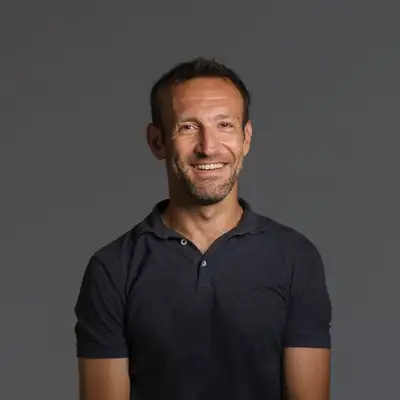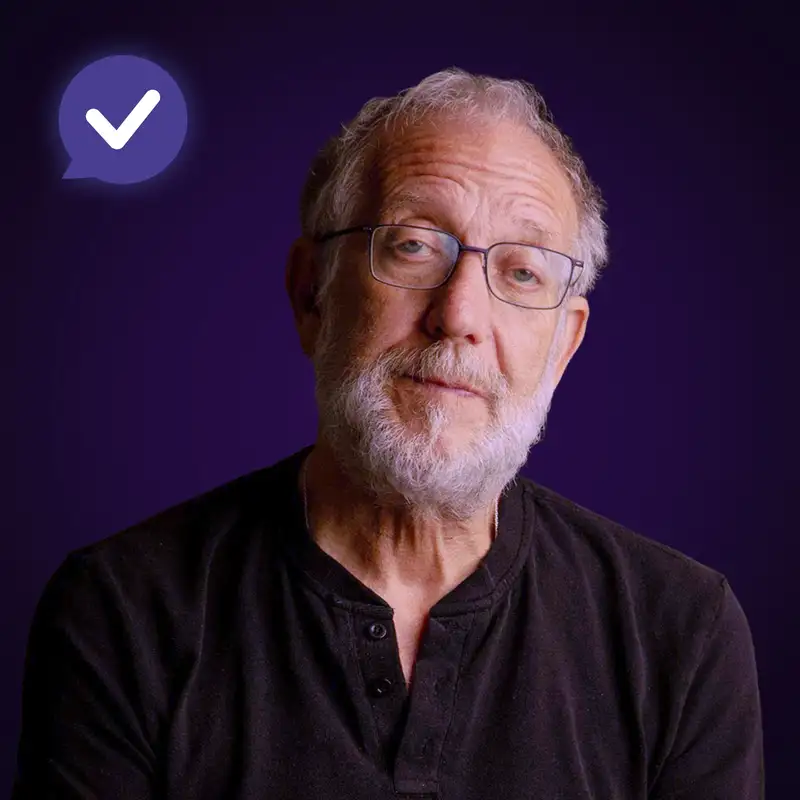
The Justice and the Injustice of Our Claim: Hebron, the Settlers, and How Israel Came to Rule the West Bank | With Yossi Klein Halevi
The Honest Take — Yossi Klein Halevi — copy-edited transcript
Guest: Yossi Klein Halevi · Host: Ben Chertoff · Runtime: 52:26
Source: "THT YKH West Bank Fine Cut.mp4" (HR-Active/THT/THT_2026-11_Yossi-Klein-Halevi/05_Exports, exported Nov 15, 2026, 16:45). Built from the corrected fine-cut transcript (Whisper large-v3-turbo with word timings). Flagged and garbled spots were re-checked against the export audio with Whisper large-v3 and medium. Timestamps are [MM:SS] in the fine cut, taken from where each block starts. Copy-edited Nov 16, 2026.
Edit level: light. Fillers, stutters, false starts and repeated words are removed, along with Ben's one-word backchannel "Yeah" at 32:00. Names and ASR errors are fixed, numbers follow AP style, and spelling is American. Wording and meaning are unchanged. Consecutive blocks by the same speaker stay separate, as in the corrected transcript.
Chapters (from the show notes). Headings in the transcript sit at the chapters that start a turn; the rest fall inside a turn.
00:00 Cold open: Hebron
00:33 Introducing Yossi Klein Halevi
03:16 Welcome back: starting with the history
04:23 1967: a war with no plan
05:40 Abraham and Sarah, and the hills over Tel Aviv
07:41 The children of Kfar Etzion
09:02 "Kinderlach, go pray"
10:52 1977: Begin makes settlement policy
11:52 Missed chances: Sadat and Camp David
13:48 Occupying a people, not the land
16:00 "From the river to the sea" cuts both ways
16:41 Land for peace after October 7th
17:09 "There's no such thing as never"
18:32 Keeping the options open
19:15 Who the settlers are
20:37 "Silence is a form of admission"
22:17 The Hilltop Youth: like our enemies
24:18 Growing up on the Jewish radical right
25:41 Kahane, Kach and the break
27:02 The two Kahanes
29:28 Radical aloneness after October 7th
33:06 Yad Vashem: "a drop in the ocean"
35:26 What the press gets wrong
37:22 The Iranian opposition's anger
38:10 A people with agency
39:45 Oslo and Areas A, B and C
40:15 Necessary vs. voluntary occupation
41:46 Who lives in Hebron
43:52 The justice and the injustice of our claim
45:40 A compromise everyone can live with
46:06 Mutual injustice
48:09 Aspiration vs. grievance
49:31 From grievance to aspiration
50:31 Thank you
50:44 Closing thoughts
00:00 Cold open: Hebron
[00:00] YOSSI KLEIN HALEVI: You know, Hebron is the place — I always feel this when I go — that Hebron is the place that simultaneously proves the justness of our claim and the injustice of our claim. The justice of our claim is there's no other place in the world where Jews belong more than in Hebron. If we don't belong in Hebron, we don't belong anywhere.
00:33 Introducing Yossi Klein Halevi
[00:33] BEN CHERTOFF: This is The Honest Take, the show that goes past the headlines to find out what's actually true about Israel and about the people covering it. I'm Ben Chertoff, and my guest today, back for a second time, is Yossi Klein Halevi, senior fellow at the Shalom Hartman Institute in Jerusalem and an author who has spent decades writing about Israeli identity and the Arab conflict. Today, we're going to Judea and Samaria, or the West Bank: how Israel got there, who the settlers really are, and why the violence of a few is everyone's problem.
Quick favor first: if you haven't subscribed, do it now. And if you've got a second, rate the show. That's how new people find us. Okay, here's Yossi.
In the summer of 1967, Israel won the Six-Day War. It ended up ruling a territory it had no plan to take, including the hills of Judea and Samaria, where the Jewish story begins. Within months, a group of young Israelis asked the prime minister if they could go back. They had been children at Kfar Etzion, a kibbutz near Bethlehem that fell in 1948. Its defenders were killed after they surrendered. As Yossi tells it, Levi Eshkol never told them to settle. He told them, in Yiddish, to go pray. They went, and they never left.
That's the part of the history most coverage leaves out. It shows the checkpoints and the barrier, but not the decades of history that put them there: the wars, the peace offers turned down, and the bombings.
Yossi knows the other side of the story from the inside. As a teenager in Brooklyn, he followed Rabbi Meir Kahane, a man he calls the spiritual father of today's Hilltop Youth. He wrote about it in his first book, *Memoirs of a Jewish Extremist*. His book *Like Dreamers* follows the paratroopers who took Jerusalem in 1967. Some of them went on to build the settlement movement, and some of them went on to oppose it.
We get into how the settlements grew from that first prayer to close to a million Israelis living beyond the 1967 lines, by his count. We get into who the settlers really are and why he says the silence of leaders makes the violence of a few everyone's problem. We get into Hebron, the place he says proves both the justice and the injustice of the Jewish claim. And we get into what it would take for two peoples, each sure the whole land is theirs, to finally settle for less.
03:16 Welcome back: starting with the history
[03:16] BEN CHERTOFF: Yossi Klein Halevi, welcome back to The Honest Take.
[03:20] YOSSI KLEIN HALEVI: Well, thank you. Good to be back with you, man.
[03:23] BEN CHERTOFF: So before we get into the settlers and the extremism and what's misunderstood and understood about that: about an hour before we started, I kind of reorganized all my questions, because I realized I was making the mistake that a lot of the media in the world makes, which is to kind of start the story bereft of the history of how we got here and how Judea and Samaria got to where it is right now. Now, if you come into the coverage cold, it looks like Israel is just a really big, bad, evil bunch of people who one day decided to make life for Palestinians terrible and install these checkpoints and border walls. But there's a reason behind why they're there. Whether they should be there is another story. But I want to tell that story of how we got to where we are, and I can't think of anyone better to do that than you.
04:23 1967: a war with no plan
[04:23] YOSSI KLEIN HALEVI: Well, thank you. And let's start in 1967. Let's start in the summer of 1967. Right after the Six-Day War, Israel finds itself ruling 1 million Palestinians at the time. That's who lived in the West Bank and Gaza. And it finds itself in control of these territories that it had had no intention of taking before the war. In fact, I wrote a book about the paratrooper unit that took Jerusalem in 1967 and liberated the Western Wall. And what I found out was that there had been no contingency plans, even for taking East Jerusalem, let alone what we call Judea and Samaria and the world calls the West Bank.
And this is really strange if you think about it, because Israel was in a state of war with Jordan, which was in control of East Jerusalem and the West Bank. And these are territories that are deeply meaningful, resonant to Jewish people. We were born in these lands 4,000 years ago. Our story begins in Hebron, in the West Bank, with Abraham and Sarah 4,000 years ago. I don't know if there's another people in the world that can point to the graves of their most ancient ancestors, going back all those thousands of years. So just on that level, on the historic level, the religious level, these are territories that are deeply resonant for us.
And in terms of security, these territories border Israel's heartland, greater Tel Aviv. The hills of the West Bank overlook 70% to 80% of the Israeli population centers, stretching from Tel Aviv to Haifa along the coast. Our whole infrastructure is there, and yet there were no contingency plans for what do we do if we find ourselves in a war with Jordan. And I'm saying that because I think it points to a very important and overlooked fact, which is that Israel didn't intend to conquer these lands. Even though we have a claim, even though these are lands that one can argue are essential for Israel's security, we didn't have a contingency plan.
And so we find ourselves in East Jerusalem, in the West Bank, in the aftermath of the Six-Day War. And what do we do now? Nobody really had an idea. Well, it's not quite true that nobody had an idea. Small groups of would-be settlers had a very good idea of what we should do with this land. So it began with a group of young people who had been born on a kibbutz called Kfar Etzion, about 10 miles out of Jerusalem, near Bethlehem in the West Bank. And this kibbutz had been overtaken, had been conquered in the 1948 war. And the children of Kfar Etzion had been evacuated just before the kibbutz fell. And it's a very famous story. It's a deep trauma in the Israeli psyche. The defenders of Kfar Etzion surrendered, raised the white flag, and they were all gunned down after they had laid down their weapons.
And so the children of Kfar Etzion say, "We can go back home now." Now, of course, there was no home. It was all destroyed. It had been turned into a Jordanian army base. But the children approach Prime Minister Levi Eshkol, the Israeli prime minister at the time, and they say to him, "We want to go home." And Eshkol is noncommittal. And one of them says to him, "We'd like to go and pray in our..." Rosh Hashanah is coming. "We'd like to pray in our ancestral home." And Eshkol says to them in Yiddish — he loved to speak Yiddish — "Kinderlach, children, go pray." And this is how the settlement movement was born: with a noncommittal wink from the Israeli prime minister. Not "go settle." "You want to go pray on Rosh Hashanah in Kfar Etzion? Go pray." They went, and they never left.
Now, the Israeli public, virtually wall to wall, from left to right, saw the return of the children of Kfar Etzion as kind of a natural response to the Six-Day War. Everyone was moved by this. There was no opposition. Even the Israeli left, which did not support settlement in the West Bank — but somehow this was an exception, the children going back to Kfar Etzion. And of course, the children, who included Hanan Porat, who later became the founder and leader of the settlement movement, had a very clear idea that this was not just a curiosity of a group of children returning to their destroyed parental home. This would be the beginning of a massive settlement movement.
Now, the Labor Party, which was in control, did not permit massive settlement, but there were isolated groups that did succeed under the Labor Party in creating settlements. It wasn't until 1977, when Menachem Begin, the head of the Likud Party, the right wing in Israel, came to power, that settlement movement became government policy. And settlements began appearing across the West Bank. And there were fits and starts, but the overall trajectory was to increase the Jewish population, until we get to the point today where we have probably 600,000 Jews living in the West Bank and another quarter of a million to 300,000 living in East Jerusalem. It's close to a million Jews living in areas that were not in Israeli hands on the eve of the Six-Day War. So that's the rough history.
Now, it's important to say that had the Palestinian leadership engaged with Israel to make peace — let's say in 1977, when Menachem Begin came to power and Egypt's president, Anwar Sadat, came to Jerusalem — had the Palestinian leadership say, "We want to join the peace process," they may very well have been able to stop the settlement expansion. In the year 2000, when you had, I would guess, about 100,000 settlers living in the West Bank, and when it was still not irreversible demographically — 100,000 is a lot of people, but most of them were concentrated along the borders. And you could have drawn the map easily around those enclaves and still have clear Palestinian territorial contiguity in the West Bank. Had the Palestinians in the year 2000 joined or accepted President Clinton and Israeli Prime Minister Ehud Barak's offer of virtually the entirety of the West Bank and Gaza in exchange for peace, again, you would have forestalled the massive movement of Israelis into the territories.
So there are consequences when a leadership is continually offered a deal and the response always is, "No, it's not good enough. We want more." I can't think of another stateless people that was offered sovereignty more often than the Palestinians and turned it down more often.
13:48 Occupying a people, not the land
[13:48] BEN CHERTOFF: And that leaves us in... You mentioned that after '67, there was no plan for the West Bank, for occupying it — I don't want to use "occupy" — for settlements, for...
[14:03] YOSSI KLEIN HALEVI: I think it's an important point you just raised, actually, because when I speak about occupation — and I do — I make a clear distinction between the land and the Palestinian people. We are occupying another people. We are not occupying our ancestral land.
Now, in principle, I've had the position for many, many years that if the conditions are right — if there is a genuine willingness on the part of the Palestinian leadership to accept Israel's legitimacy, to not insist on what they call the right of return, which is bringing the descendants of the refugees of 1948 into a Jewish state, and essentially destroying the Jewish majority, undermining it from within — if there were real indications that we had a Palestinian leadership that was prepared to end this conflict on a genuine two-state basis, then yes, I would be in favor of that position. But we are so far from that.
And so I would be prepared to give up land that belongs to me, not give back. That's a really important distinction. If Israel were to withdraw from Judea and Samaria — and for me, it's not the West Bank. It is Judea and Samaria, as it was for Jews for thousands of years. I would be prepared under those conditions to give up what I believe is historically mine to the other claimant to this land, that also believes it's all theirs. And if you're ever going to reach a compromise, both sides need to give up something of what they believe is theirs.
And so "from the river to the sea," the slogan that we hear on the streets and campuses all over the West — "from the river to the sea" cuts both ways, because the settlement movement also has adopted the slogan "from the river to the sea," except what they say is, from the river to the sea is all the Land of Israel. And emotionally, I agree with that. For me, it's all the Land of Israel. But I am prepared, for the sake of a genuine peace, to compromise, to give up what I believe is mine. And so I don't use the term "occupation" for the land, but I do use it for the people.
16:41 Land for peace after October 7th
[16:41] BEN CHERTOFF: The possibility of that land-for-peace trade, which is something that Israel has done many times in the history of attempting peace — post-October 7, that's not a realistic... At least in terms of the opinion of Israelis and the feeling of Israelis, that's not something that anyone is realistically talking about. Even the Israeli left isn't talking about it.
17:09 "There's no such thing as never"
[17:09] YOSSI KLEIN HALEVI: It's so inconceivable at this point — and I'm emphasizing "at this point," because the situation here is very fluid, and what seems inconceivable today becomes obvious tomorrow. And we've seen that time and again, in good ways and bad ways. But that's the pattern here in Israel. There's no such thing as never, as impossible.
But for now, the thought of risking another Gaza in the West Bank, of the West Bank turning into another Gaza and endangering Israel's heartland, the greater Tel Aviv area — to turn Tel Aviv into the kibbutzim along the Gaza border — it's something almost no Israeli Jew is prepared right now to consider. It's simply a nonstarter. And so when I hear these conversations around the world about a two-state solution, I think, "Okay, here we go again, another round of fantasy and wishful thinking." So it's not conceivable.
Really, now I think the issue in Israel is making sure that we don't annex the territories. If we were to have another four years of this Netanyahu coalition, we would be in a fait accompli. It would be irreversible. I don't think we're there yet. And so one of my hopes for the opposition, if and when it becomes the government, is to slow down settlement construction in the territories and to keep open our possibilities.
19:15 Who the settlers are
[19:15] BEN CHERTOFF: So we're talking about the settlers. Let's get into that. I mean, the media focus is on a small minority of extremist settlers, but by and large, that doesn't describe the settlers themselves. They're commuters. They go to work. They have a life. Can you kind of break down the different strata?
[19:40] YOSSI KLEIN HALEVI: Yeah. In principle, you're right, but it's becoming less and less significant, and I want to play that out a little bit. It's certainly true that the strong majority of settlers don't support indiscriminate violence against Palestinians. I know that this is destructive for the reputation of the settlement movement today. I don't think that most settlers really understand just how destructive this violence has been for the settlement movement, for Israel, for the Jewish people around the world. This has been a devastating — I would almost say historic — blow against the moral credibility of Israel and the Jewish people. And it will take us years to overcome this.
But at the same time, we've seen near-total silence on the part of the settlement leadership. The politicians who represent the settlers in government either are silent or tacitly support violence. And I'm thinking of Ben-Gvir and Smotrich, the two far-right politicians of the government. And so what was once true, in terms of this being a small number of fringe characters, is no longer quite true. When you have very powerful people in government backing you, when the army is essentially being told hands off and let the violence continue, we're all implicated in that.
And so it almost doesn't matter what the majority of settlers want or don't want, because there's a phrase in the Talmud: silence is a form of admission, of confession. If you're asked a question and you take the Fifth, you're basically confessing. And that's silence as admission. And we have really seen a very shameful display of silence. And that's a very important part of this story.
22:17 The Hilltop Youth: like our enemies
[22:17] BEN CHERTOFF: I want to get into who the Hilltop Youth are. You had a great talk with Yardena Schwartz, another Honest Take alum, at the Shalom Hartman Institute. And you were talking about how the Hilltop Youth — these kids in the settlements who are largely the ones perpetrating most of the violence — have become like the Palestinians. And I want to kind of unpack that and hear how that works, because it explains, in a way, a rational view of where they are coming from. And not to condone at all any of the behavior, but I think it makes sense to understand that.
[23:05] YOSSI KLEIN HALEVI: Or they've become like the Palestinian terrorists. I think that's the analogy. They've become, I would say, like our enemies in several ways. They're motivated by a mixture of extreme fundamentalist religion and extreme nationalism. The meeting point between fundamentalism and radical nationalism is being played out in the ideology, the theology, of these kids. And they also believe that there are no moral limits if you're on the right side and if God is on your side. And they believe that certainly God is with them, but also they are on the right side of history, and it's the rest of us who are either weak or cowardly.
And I understand that mindset because, to some extent, that is the world that I grew up in, under very different contexts. But I grew up in the Jewish radical right in the U.S. in the 1960s and early '70s, and I was a follower of Rabbi Meir Kahane, who is the spiritual father of the Hilltop Youth. And again, the circumstances were different. We were fighting for Soviet Jewry, to free the Jews of the Soviet Union. But the mindset was not all that dissimilar: the ends justify the means. If your ends are worthy — and I'm not sure that the ends of the Hilltop Youth are worthy, but I think our ends were worthy. We were trying to save 3 million Soviet Jews who were being oppressed by the Soviet Union. But we believed that all means are legitimate. We believed that if you are a victim people, then there are no moral constraints that apply to your actions. And there you certainly see a parallel between Palestinian terrorists and our Jewish homegrown terrorists. So that's what's playing out.
25:41 Kahane, Kach and the break
[25:41] BEN CHERTOFF: Yeah. So Meir Kahane, of course, is the founder of Kach in Israel when he went to Israel, which eventually led to Baruch Goldstein, and back to Hebron and the massacre there. Where does that divide happen, where you come out of that and Baruch Goldstein continues to that massacre?
[26:05] YOSSI KLEIN HALEVI: Yeah, I left Meir Kahane when he made the transition from the U.S. to Israel and his agenda started to change. And it took me a little while to realize that. I was in Israel in 1973 as a student. I was at the Hebrew University overseas one-year program, and Kahane ran for the Knesset for the first time. And I volunteered for his campaign because, well, it's Rabbi Kahane. But I began to notice that he wasn't really talking about Soviet Jewry anymore. He wasn't talking about helping oppressed Jews around the world. He was talking about expelling Palestinians. And so I left the campaign and never had anything to do with him again.
And he became more and more radical. The Kahane that I knew in America was a right-wing nationalist. He was not a theologian. He wasn't obsessed with these religious apocalyptic visions — the end of the world and the Messiah coming and Israel's role in the apocalypse. That began to develop when he was in Israel, and he began taking more and more extreme positions on the Arab-Israeli conflict, calling for destroying the holy sites on the Temple Mount and, of course, expelling the Palestinians. And this was all part of an eschatology, of this apocalyptic worldview: that if Israel does provocative acts and antagonizes the whole world, and the world then converges against Jerusalem, God will step in, send the Messiah, and save us. It was really insane. Insane politics and insane religion. And the combination was really out there. And that was the Kahane that began to emerge in Israel. That was not the Kahane that we knew in America.
There were other problems with that Kahane, and there is this direct link between the Israeli and the American Kahane: in a love of violence; in, as I say, the resort to all means for the sake of an end; and an arrogance and a self-righteousness and a contempt for everyone who is not part of your circle. That is key to any underground group, any cultish group. And very intense political or religious communities have those elements. They all share those elements. And the more extreme, of course, the more dangerous. But the psychology of us versus them, and them is everyone who is in us — that applies to all these groups.
29:28 Radical aloneness after October 7th
[29:28] BEN CHERTOFF: In 2014, you said that the sense of radical aloneness in the world is the soil from which extremism grows. And after October 7, I think a lot of Jews feel more alone than they have in their entire lives. I mean, do you think the soil is richer now?
[29:47] YOSSI KLEIN HALEVI: Yeah. Definitely. And I think that there were several long-term traumas that we carry from the Holocaust. One is that what we were guilty of was existence. The problem with the Jews was no longer that they didn't believe in Christ or Muhammad. It was no longer that we weren't revolutionaries, or we were capitalists, or... You can correct ideological or religious deviations. You can adjust. You can become what the majority wants you to be, and that you solve your problem. In the Holocaust, the problem was our being, our existence. And there's something of that in the war against Israel. The very term "the right to exist" is so outrageous. It's so offensive. And we are fighting for... Once again, the problem is that we are. That's the problem. And so that's the first trauma that we carry from the Holocaust that was reawakened on October 7.
The second is what you mentioned, which was the trauma of aloneness. Jews felt radically alone at our worst-ever moment. Now, we did have some friends, and you can go to Yad Vashem, the Israeli Holocaust museum, and you'll see the trees that are planted all over, now something like 28,000, in memory of the rescuers who really risked their lives, the lives of their families, to find Jews. My father was hidden by a non-Jew in Hungary. And so it's more complicated, but the general feeling that Jews had was that we are alone. And certainly on the international level, we were alone.
[32:01] YOSSI KLEIN HALEVI: No, almost no country was ready to accept us. Almost all doors were shut, and we were alone. And so October 7 also reawakened that sense of aloneness. And I know for me, growing up, one of the reasons I was so drawn to Jewish extremism was precisely because I felt alone. I felt that we're the most hated people in the world, and we're friendless, and we have to take care of ourselves, and all means are legitimate for people that no one else will protect. And so Jewish extremism thrives in an atmosphere of isolation, when the Jewish people is under siege. And I'm afraid that we are becoming more and more under siege, and this is going to increase the temptation of extremism.
33:06 Yad Vashem: "a drop in the ocean"
[33:06] BEN CHERTOFF: It is. I mean, it is legitimately a lonely feeling. I mean, when you look... You mentioned Yad Vashem and the Righteous Gentiles, the Righteous Among Nations. But statistically, for everyone who said before October 7, "I would happily hide Jews if I were in the Holocaust," statistically they wouldn't. It was such a small amount of people.
[33:32] YOSSI KLEIN HALEVI: And that's something I've realized. I took a group recently through the Hartman Institute, where I'm a fellow — took a group of American Jews who were visiting the institute to Yad Vashem, and we met with a woman who is one of the people who runs their Righteous Among the Nations division. This is the division that examines applications for a tree, and to be recognized by the State of Israel and the Jewish people as a Righteous Among the Nations. And amazingly, they're still giving out these certificates. They're still planting trees. Every year, about 300 new trees are added, because new stories emerge.
And so I said to this woman from the department, I said, "You work in the happiest division of Yad Vashem. You really hit the jackpot. You're in this place, everyone must be really depressed, and you're dealing with all these wonderful stories." And she just kind of looked at me, and she said, "It was a drop in the ocean. And I am aware of it all the time. Every story that comes our way, I think of all the thousands and thousands of people who turned away or collaborated." And so that cut the legs off of my little attempt at an optimistic conversation. But yeah, in other words, this goes really deep.
35:26 What the press gets wrong
[35:26] BEN CHERTOFF: Back to Judea and Samaria, the settlers, the coverage of it. There is a tremendous... I mean, and this is endemic of Israel to begin with. There is an asymmetry in the coverage, where Israel gets... It's one of the most covered places in the world, which, based on population and based on size, doesn't make any sense. That seems to be the case in Judea and Samaria too, or at least if you're looking just at the numbers without any of the context, it seems that way. But what do you think the world press gets most wrong about the situation, about the settlers, about the violence there?
[36:10] YOSSI KLEIN HALEVI: Well, I think the first thing is what you put your finger on just now, which is the disproportionate emphasis on the West Bank, Judea and Samaria. It really is a very small place. And obviously the media has a responsibility to cover this. But when you think about the even more severe crises around the world that are so woefully undercovered — how much attention and energy the Palestinian cause sucks up — there's a really profound imbalance here. And I suspect there's a lot of anger around the world among peoples living in crisis, and envy.
[37:14] BEN CHERTOFF: Yeah, millions and millions of Sudanese who are in IDP camps, and not a word about it.
37:22 The Iranian opposition's anger
[37:22] YOSSI KLEIN HALEVI: You know where you see it a lot? I get this on social media. I try to follow the Iranian opposition closely, and you see this anger of Palestinians coming from Iranians who say, "Everything is about you." And then the anger really comes out at the pro-Palestinian movement for not only not protesting on behalf of Iranian dissidents, but very often supporting the Iranian regime because they're pro-Palestinian. And so there's this tremendous rage that you see being expressed. So I think that the disproportionate emphasis is one piece of this.
And a tendency to treat the Palestinians as a people without agency, as helpless victims. And I don't let us off the hook. We have our share, our ample share, of responsibility in bringing this tragedy to this point. But we didn't do this alone. We had active partners. The Palestinian leadership went along every step of the way, made every disastrous decision, and shows no indication of having learned anything. And you look at the ruins of Gaza, and one would think that more Palestinians would be asking themselves, "Maybe we need a new strategy. Maybe 100 years of war against the Zionists hasn't worked out that well for us. And maybe we keep underestimating who they are and why they fight with such determination, and why, when we think this time we really got them on the run, it turns out to be even worse for us. Maybe we misread them. Maybe they're actually not ruthless colonialists, but actually indigenous people who fight for their land, just like we do."
39:45 Oslo and Areas A, B and C
[39:45] BEN CHERTOFF: As you had mentioned earlier, the temporary status of things, the idea that Israel hadn't intended on going into the West Bank and holding any of that territory, the very structure of the different areas, A, B and C — it's all remnants of the Oslo Accords that were stalled. I mean, an attempt at peace that was stalled.
40:15 Necessary vs. voluntary occupation
[40:15] YOSSI KLEIN HALEVI: Yes, and certainly the Palestinian leadership missed one opportunity after another. That did not give us the license to build across the territories. It did not give us the license to turn an unavoidable occupation based on security necessity into an optional, voluntary occupation based on historical roots. Now, I believe that one is allowed to occupy another people if that people threatens your existence, and in that case, I believe we have no choice. But I don't believe that you can occupy another people to fulfill your historical rights. I think that that's the limit, especially if you already have sovereignty in part of your land. Extending sovereignty into more of your land and occupying, ruling over another people — that to me is a moral red line, and that's why I oppose the settlement movement. But I oppose it in practice, but not in principle. In principle, of course, we have the right to settle in Judea and Samaria. In practice, if the consequence is ruling over another people, then no, we should not be doing it.
41:46 Who lives in Hebron
[41:46] BEN CHERTOFF: I want to talk a little bit about Hebron, because, again, Yardena Schwartz's book talks about that. You talk about that as being such an important part of your life and of Jews in general. I mean, it is the second-holiest place in Judaism. It is the first piece of land in the Torah that the Jews own. Abraham purchased it, if we're going to go by that. Yardena Schwartz also mentioned this in that talk, that she had gone into Hebron thinking that the Jews there would be these extremists, but they're not. Can you walk through... I mean, we talked about a lot of this, but who these people are and what it's like there?
[42:44] YOSSI KLEIN HALEVI: Well, certainly some of them are extremists, and Hebron is in some ways the capital of Jewish right-wing radicalism. And Ben-Gvir lives there; Baruch Marzel, one of the leaders of the Kach movement. Meir Kahane settled in Hebron as his first stop when he moved to Israel in the early '70s. Later on, he moved to Jerusalem. But Hebron has been a magnet for attracting extreme right-wingers. They're not all — and Yardena's right, certainly not all — but many.
So the main motive of the Jews in Hebron is to be in the deepest root of the Jewish people, and I respect that, and I resonate with that. Hebron is the place — I always feel this when I go — that Hebron is the place that simultaneously proves the justness of our claim and the injustice of our claim. The justice of our claim is there's no other place in the world where Jews belong more than in Hebron. If we don't belong in Hebron, we don't belong anywhere. On the other hand, what it takes to enforce our presence in Hebron is inflicting a great dislocation on Palestinians there.
And Hebron is really where you feel the intimacy of the occupation most acutely, because really, Jews and Palestinians live on top of each other in this city, and it's the only place, really, that that's true. Everywhere else, there's a bit of a distance between the two populations. Hebron, we're on top of each other. And so the consequence is, it requires a lot more security, requires a lot more heavy-handed security. And it's very painful, very painful. Every time I'm there, I feel torn to pieces, because part of me is so much at home in Hebron, and part of me feels so alienated from what I see.
45:40 A compromise everyone can live with
[45:40] BEN CHERTOFF: It is such a nuanced and complex story in history. You got out of the extremism — how do we get out of that into a place where everyone is moderately disappointed in a compromise?
[46:01] YOSSI KLEIN HALEVI: You mean with the Palestinians?
[46:03] BEN CHERTOFF: Yeah.
46:06 Mutual injustice
[46:06] YOSSI KLEIN HALEVI: Well, I've always felt that the basis for a compromise is mutual injustice. And by that, I mean that if both peoples can make a claim to the entirety of the land between the river and the sea, then each people is going to have to give up something that it deeply believes belongs to them. The Palestinians will have to give up their claim to what is now the State of Israel, the sovereign State of Israel. And we will have to give up our claim to Judea and Samaria in order to accommodate each other's claims. And the result of that is that a peace agreement would inflict a mutual injustice on both claimants. The positive side, of course, is that each side gets to fulfill its need for sovereignty.
But the question that I always have for the Palestinian leadership is the same question that I've asked friends of mine in the settlement movement, said: "If peace were possible with the other side, would you accept territorial compromise?" And the answer that I got from settlers is, "It's a theoretical question, because they'll never accept us." I said, "Okay, right. I agree with you. That's the situation now. I don't know about the future. Humor me. Let's say... Would you, in principle — I just want to know what your lines are — would you, in principle, say, 'Okay, I'll write a deep historical claim to all this land, but if it's really the end of the conflict, truly the end of the conflict...' What do you do?" "Oh, I can't answer that question. It's ridiculous. It's too..."
And so my feeling on the Palestinian side is that it's not about resolving or satisfying an aspiration — that what they really want is to satisfy a grievance. And there's a very important distinction. If you're trying to satisfy an aspiration: my aspiration is statehood for my people, and yes, I would want it to be between the river and the sea. Oh, there's another people between the river and the sea, so I will have to compromise on my aspirations. Now, we all do that in our daily lives. We all have our aspirations, our dreams. You compromise on dreams. It's very hard to compromise on grievances, especially when your grievance is based on a deep sense of injustice. The existence of the State of Israel for many, many Palestinians is a grievance. It's an injustice. "And I can't compromise on that injustice. You're asking me to live with injustice." And that's why we can't reach a peace agreement: because the Palestinian national movement is not seeking to satisfy its aspirations, but its grievances.
49:31 From grievance to aspiration
[49:31] BEN CHERTOFF: I want to ask you one more question based on that, which is, how do you switch from grievance to aspiration? I mean, is that a leadership thing, or is that...
[49:42] YOSSI KLEIN HALEVI: Well, it's partly leadership. It's partly long-term, painful education, painstaking education. It's partly creating the conditions within the region where the Palestinians will look around and say, "Well, the rest of the Arab countries are kind of washing their hands of our cause. And maybe it's not good enough that we have demonstrators at Columbia University supporting us when, one by one, we're losing our Arab allies," which I think is happening. And so it's a combination of conditions — political conditions, educational circumstances, leadership that will take us forward — but it's going to be a very slow process.
50:31 Thank you
[50:31] BEN CHERTOFF: Yossi Klein Halevi, thank you so much for joining us today. I look forward to the next time we can chat.
[50:36] YOSSI KLEIN HALEVI: Same here. Thank you for having me.
50:44 Closing thoughts
[50:44] BEN CHERTOFF: Early in our conversation, Yossi said something about Israel that I'd hang this whole episode on: there's no such thing as never here. What looks inconceivable today becomes obvious tomorrow, sometimes for the worse, sometimes for the better. That's the reason to tell this story from the beginning.
When the West Bank comes up in the news, it shows up as a checkpoint, a wall or a burned car, as if it's always been that way. People made choices that got us here: the young Israelis who went home to pray, the Palestinian leaders who said no to offers of peace, and the settler leaders who stayed silent when they should have spoken up. People can make different choices.
Yossi can hold the Jewish claim to this land and the cost of that claim in his head at the same time. Most of us find that hard, and most of the coverage doesn't even try. He learned to do it by leaving extremism behind. That gives me some hope that society can do the same.
If this one gave you something to think about, do me a favor and leave a review on Apple Podcasts or Spotify. It's genuinely the thing that helps new people find the show. Subscribe on YouTube, Apple or Spotify so you don't miss the next one, and follow @HonestReporting at Instagram, X, Facebook and TikTok for the work behind these conversations. Yossi's books include *Letters to My Palestinian Neighbor*, *Like Dreamers* and *Memoirs of a Jewish Extremist*. You can hear him every week with Donniel Hartman on his podcast, *For Heaven's Sake*. I'm Ben Chertoff, this has been The Honest Take, and we'll see you next time.
Flags
1. [43:30] Crosstalk after Yossi's "but many." Two Whisper passes (large-v3 and large-v3-turbo) hear "Baruch Goldstein lived in Kiryat Arba." and then "Of course." The track is a mono mix, so I can't tell who says which line, and voice comparison doesn't separate them. Both lines are left out of the transcript and the captions, and the [crosstalk] tag is gone. If you said the Goldstein line and Yossi answered "Of course," I can put both back with the right names.
2. [37:14] "Yeah, millions and millions of Sudanese who are in IDP camps, and not a word about it." This is attributed to Ben by voice comparison, with low confidence. The mix is mono, so the channels don't help. Yossi picks up at 37:22.
3. [47:55] "Okay, I'll write a deep historical claim to all this land." (The show notes put this at 48:41; it is at 47:55 in the fine cut.) Every unprompted Whisper pass (large-v3, turbo, medium) hears "I'll write." You probably said "I have" or "I'll waive," but the audio doesn't confirm either one, so it stays as heard.
4. [29:19] "and them is everyone who is in us." He probably means "who isn't us," but every pass hears "is in us." Left as heard.
5. [31:35] "risked their lives, the lives of their families, to find Jews." This may be "to hide Jews," but the audio says "find." Left as heard.
6. [09:15] "he loved to speak Yiddish." Large-v3 hears "you love to speak Yiddish," and medium hears "he loved." I used "he loved," the only reading that makes sense about Eshkol. Please confirm.
7. [37:31] "you see this anger of Palestinians coming from Iranians." The sense is anger at Palestinians, but Whisper hears "of" or "to." Left as heard.
Editor's notes (resolved, not flagged)
- [43:27] The garbled "that's" before "certainly not all" is "and Yardena's right." Both large-v3 and turbo hear it, and Ben had just cited Yardena Schwartz on Hebron.
- [41:45] "we should not be doing" → "we should not be doing it" (large-v3 on the window).
- [25:12] "we believe that all means are legitimate" → "we believed" (large-v3 and medium). The "We believed" that follows matches it.
- [09:32] "go pray on Rosh Hashanah and Kfar Etzion" → "in Kfar Etzion."
- "Hevron" is normalized to "Hebron" throughout. No "Hevron" remains.
- [00:33] "Israeli identity and the Arab conflict" is kept as read on tape. The intro doc said "Palestinian conflict."
- Outro: "follow at HonestReporting at Instagram" → "follow @HonestReporting at Instagram." The handle is written as a handle, and "at Instagram" is kept as said.
- Removed: Ben's backchannel "Yeah." (32:00) and the repeated "And yeah." in his 46:03 reply.
- Style: "October 7th" → "October 7," "70 to 80 percent" → "70% to 80%," "a hundred years" → "100 years," "one million" → "1 million," and "'67"/"'70s." Book and podcast titles are in italics here. The captions carry the same text without the asterisks.
- Captions: cue timings come from Whisper word timestamps on the fine-cut audio, not from proportional interpolation. Each cue has at most 2 lines of 42 characters or fewer and lasts 1 to 7 seconds, and no cues overlap. The speaker's name appears on the first cue of each turn. The caption text matches this transcript word for word.
Creators and Guests