The Lie That Lit the Match: Hebron, Nazis, and the West's Vanishing Memory | With Yardena Schwartz
speaker-1: Yet in 1929, in newspapers like the New York Times, the Times of London, the massacre was presented as a massacre by Arabs of unarmed Jews. So what was really shocking to me as a journalist was to see how 100 years later, how far journalism has fallen, that journalists are now incapable apparently of telling truth from fiction. And now journalism is mounted to essentially a case of he said, she said.
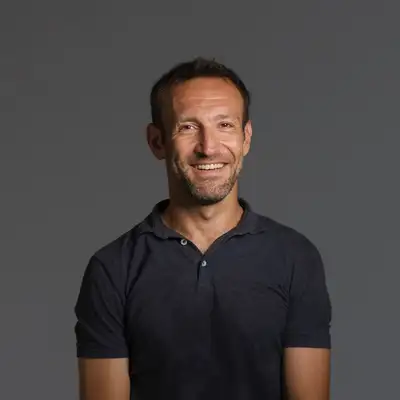
speaker-0: Welcome back to The Honest Take. I want to start today with something I think a lot of us have felt over the past year. The sense that we're living in a moment where history is constantly being invoked, but very rarely understood. We hear the same phrases over and over again. The same talking points. The same moral shortcuts. Occupation. Resistance. Colonialism. Often stripped of context. and almost always detached from the deeper history that shaped this conflict long before 1948, long before 1967, and long before October 7th. My guest today has spent years doing the kind of reporting that resists those shortcuts. Yardenna Schwartz is an award-winning journalist and Emmy-nominated producer who spent a decade based in Israel reporting internationally for outlets including the New York Times, The Wall Street Journal, Time, The Economist, National Geographic, and Foreign Policy. Her first book, Ghosts of a Holy War, is a deeply reported work of history that centers on a largely forgotten event, the 1929 Heron Massacre, and traces how the ideas, lies, and incitement that fueled that violence still echo powerfully today. Yardena, thank you so much for joining me. I want to start at the beginning. with how you first came across these letters that led you to write this book and why the events of 1929 are still so essential to understanding where we are now.
speaker-1: Yeah, so I started working on this book in 2019. At the time, I was a freelance journalist based in Tel Aviv, writing for American magazines and newspapers. And I was introduced to a family in Memphis, Tennessee that had discovered a box of letters in their attic in Memphis. And that box was filled with hundreds of pages of letters written in the late 1920s by their late uncle, David Chainberg. who had moved to Palestine, to British Mandate Palestine in 1928, to study at the prestigious Hebron Yeshiva. And he wrote these beautiful letters to his family every week describing what life was like in Hebron. And this family not only didn't know that these letters were sitting in their attic for decades, but they knew very little about their uncle because he had been killed in the Hebron massacre. of 1929. So about just about a year after he arrived in Hebron, he was slaughtered along with 66 other unarmed Jewish men, women and children in Hebron in what was at the time the deadliest pogrom ever perpetrated outside of Europe. â It was deadly, more deadly than the Kishnev pogrom, more gruesome. â You know, I, as a journalist, living in Israel. I had been living there for six years at that point. â I now live in New York, but I was based in Israel as a correspondent for 10 years. despite the fact that I had studied this conflict in college and for many years after and was living in Israel reporting on this conflict on a daily basis, I had never learned about the Hebron massacre. I'd heard about it. knew that something had happened in Hebron, but I didn't know the details. meeting this family, reading these letters, started this journey for me, trying to piece together not just the story of David Schoenberg, why he went to Hebron, how he was killed, but the story of this massacre, which really shockingly has rarely been written about in English. You can find a few pages written about it in some books like One Palestine Complete by Tom Segev, Orrin Kessler's book Palestine 1936 briefly mentions it. But there's no English language book focused on this massacre, which was really a pivotal moment in Israel's pre-state history. It not only decimated this ancient Jewish community, one of the world's most ancient Jewish communities that existed in Hebron, which ceased to exist after this massacre, but it also really transformed â Zionism. And what I realized over the course of my research is that this massacre was ground zero. of the Arab-Israeli conflict as we know it, the driving forces that really pull the levers of the conflict today, they began then. And the only way to really fully understand why this conflict persists and why every peace effort has failed is to understand what happened in 1929 and how those patterns continue to this day.
speaker-0: That's one of the things that I found the most fascinating probably is just the similarities between the Hevaral Massacre and October 7th and where we are today. So much of the â encouragement for the mobs that were going after Jews in Hevaral was like, goes back to the same principle ideas that are in... that were behind October 7th, like the Al Aqsa Mosque and this idea that Jews are going to destroy the holy sites of Islam in Jerusalem.
speaker-1: Yeah, so what led to the riots in 1929, of which the massacre in Hebron was really just kind of the climax. It wasn't the only massacre that took place, but it became sort of the symbol of these riots. â What led to those riots was this rumor that began in 1928, initiated by the leader of Arabs in Palestine under British rule, the Grand Mufti of Jerusalem, Haj Aminah Hussaini. He started to spread this lie that the Jews of Palestine were planning to conquer Al-Aqsa Mosque in order to rebuild their ancient temple in Jerusalem. And he convinced his people that the Jews who were praying at the Western Wall at the Kotel and then demanding British protection to pray in peace at the Western Wall without being attacked by Muslims were actually seeking to turn the Western Wall into a synagogue and then from there take over Al-Aqsa. This rumor spread like wildfire. mean, the Grand Mufti was the leading Islamic official in Palestine. So he had a role. He was the person who decided who became an imam, what they were saying in their sermons. And so all of this lie was spread not just by the Mufti, but all of the religious leaders in Palestine. And in Hebron, it was localized. to apply to the tomb of the patriarchs and matriarchs, which is known to Arabs as the Ibrahimi Mosque. At the time in 1929 and actually for 700 years, Jews were forbidden from entering the tomb of the patriarchs and matriarchs. They could only pray outside. And the Ibrahimi Mosque was considered only a Muslim holy site. No non-Muslims could enter. And so in Hebron, Islamic officials convinced Muslims in Hebron that Jews there were going to also conquer the Ibrahimi Mosque and turn it into a synagogue. So this disinformation and this weaponization of religion and religious sites that we see today with things like October 7th, which was called the Al-Aqsa flood, â the Second Intifada was called the Al-Aqsa Intifada, this lie that began a century ago. has sustained itself and actually intensified. â It is common knowledge among Palestinians today that Jews are seeking to destroy Al-Aqsa. There have been polls that show the vast majority of Palestinians sadly still believe that this is actually going, not just a plan, but that it's going to happen. And so this is why you see so many outbreaks of violence fueled by... things happening around Al-Aqsa, like when Israel decided to put in place metal detectors to prevent people from bringing weapons into Al-Aqsa, which is something you would think that Muslim worshipers would want. We wouldn't want guns in their mosque. â But this was what was happening in various rounds of â violence at Al-Aqsa. And so Israel decided to put metal detectors to prevent it. And there was this just... â explosion of violence directed at Israeli civilians as well, not just Israeli police at Al Aqsa. â At the time was known the knife intifada. â There were many stabbings at the time. think this was in 2015. And so this lie surrounding this supposed Jewish plot to destroy Al Aqsa, many people don't know where it came from. It came from 1928 and the Grand Mufti of Jerusalem, Haj Aminah Husseini, and the riots of 1929 and the massacre of Hebron were just the first time he realized the power of this disinformation and how galvanizing it was for the population. And also the reason why he initiated this rumor was because he himself had been dogged for years by accusations. justifiable accusations of nepotism, corruption, misuse of religious funds. And once he started this rumor and suddenly his people, the press, the political rivals who were the source of all that criticism, they realized that there was this far more menacing threat and that was this Jewish plot. And so after he started this rumor, this disinformation campaign, so much of the criticism that he had faced for many years melted away and he became even more powerful. And â his rivals and â the masses rallied around him, not only within Palestine, but throughout the Muslim world. Because throughout the Muslim world, â they grew this consciousness around, we need to protect al-Aqsa from the Jews. And so al-Aqsa and this supposed threat to al-Aqsa and to Islam from the Jews of Palestine became this rallying cry. within Palestine and throughout the Muslim world, and it continues to be so today. â For example, during the war with Iran this past summer, and even during the war in Gaza, you could see murals in Tehran put there by the regime in Iran showing al-Aqsa and floods of Muslims from across the Muslim world from various countries flooding al-Aqsa, liberating al-Aqsa.
speaker-0: We, you mentioned the Mufti just now. â You've written about him extensively, especially there was that piece that you had put out in the Spectator recently. I remember after October 7th, seeing posts with these pictures of the Grand Mufti and Hitler and thinking like, wait, is this AI? And then realizing, no, it's not. This is real. But it's more than just like chance meetings that he had with Hitler. He took the Al-Aqsa lie and then combines it with actual Nazism, which I find fascinating also because you don't see it anywhere.
speaker-1: Yeah, that was actually one of the most shocking revelations of my research for this book. The Grand Mufti of Jerusalem's intimate alliance and collaboration with the Nazis. He wasn't just a supporter of the Nazis. He himself was a Nazi. I had seen that image of the Grand Mufti sitting down with Hitler in 1941 in Berlin. And I think like many people, saw it and figured, like you said, it must have been this chance meeting. It couldn't have been that the first leader of the Palestinian people was. a Nazi. But what I discovered was that the Grand Mufti, when he fled Palestine evading arrest by the British, he ended up allying himself and his people and their cause with Adolf Hitler and the Nazi regime. He was based in Berlin from 1941 to 1945 in an estate that the Nazis provided him, that estate had actually been confiscated from its Jewish owners. And he was made the director of the Arab Bureau of the Nazi's Ministry of Propaganda. He worked under Joseph Goebbels and he broadcast Nazi propaganda in Arabic throughout the Muslim world for years. He called on Muslims to rise up and kill Jews in the name of Islam. He recruited tens of thousands of Muslim fighters to join the Waffen SS from Bosnia and Herzegovina. He toured concentration camps. He befriended the architects of the Final Solution, â exchanged very warm letters of gratitude and praise with â Himmler. And he was actually placed on the UN's list of Nazi war criminals when World War II ended. He was wanted for Nazi war crimes. And yet so few people know about this. â When we're taught about the Holocaust, we really only hear about how the Holocaust played out in Europe. And yet it also impacted the Arab world, not only through the Mufti, but there were other Arab leaders who were intimately involved in the Holocaust and there were Nazi operations in the Middle East. Actually, the Mufti tried to establish a Nazi communications base in Palestine â and part of that operation, it's known as Operation Atlas.
speaker-0: I was going to.
speaker-1: Yes, so that operation was also involved in an effort to poison the drinking water of Tel Aviv and to kill all, because Tel Aviv was an all Jewish city. So they knew if they poisoned the drinking water, it wouldn't â affect the Arabs of Palestine. Thankfully, that operation failed miserably. And so no Nazi communications base was established. It was actually, it failed because local Arabs in Palestine saw things dropping from the sky. and they reported it to the British police. so â the militants and the Nazi representative who was part of this â operation were caught. And that was, I believe, in 1944, up â until the very end. And even after, the Mufti showed absolutely no remorse for what he did. In his memoirs, he wrote about how he â lobbied various leaders of European countries who were not Nazis. He kind of freelanced outside of his work with the Nazis. He wrote letters urging, pleading with various European leaders saying, please don't let your Jewish refugees flee to Palestine, send them to Poland instead where they can be under active control. And this was in 1943 when he knew exactly what was happening in Poland to Jews who were sent there. â And so, you know, just, I could go on with other, you know, things he did, but it's undeniable. I mean, these are, this isn't my opinion. This isn't propaganda. This is historical fact that you can, it, and it's, it's not hiding. Like it's, it's hiding in plain sight. You know, people can easily find this out by just Googling the grand Mufti. â so I was really shocked that we're not taught more about this. â whether it's in Holocaust education, whether it's in, you know, when we learn about the origins of the conflict, the early days of the conflict. And so as a journalist who was, you know, when I was writing this book and researching this book, I was still reporting for news outlets. And I just couldn't help but realize over the course of my research for this book, how many other â truths of this conflict are hiding in plain sight and how often these inconvenient truths go unreported or unmentioned. because of the ways in which they undercut the narratives we have been taught to think about this conflict. Absolutely. Yeah, mean, look at this â film right now, Palestine 36, that is up for an Oscar. It's Palestine's official entry to the Oscars. was made by, â you you can't make this up. The name of the production studio is Watermelon Films or something like that. And â it's called Palestine 36 because it claims to be a film about the Palestinian Arab Uprising against British rule in 1936. There is also an amazing book called Palestine 1936 by Orrin Kessler. When I first heard about this film, I thought, wow, his book was made into a film. That's amazing. And I quickly realized, no, this is a fictionalized version of history. If you watch this film and think you are watching a film about the Palestinian uprising in 1936, It's a complete distortion of reality. â it's a, you know, to call it a disservice to the public is such a vast understatement because people go to see films like this to educate themselves about history. And this is, it's a complete distortion of history. â The way the uprising is presented is as a peaceful uprising. There's no mention of â violence against Jews when This uprising killed about 500 Jews â and was a direct response to the mass immigration of Jewish refugees from Europe. Yet that is not mentioned. â There are so many other ways in which this film rewrites history, yet it's just one example of this effort to rewrite history. When I wrote the piece â you just mentioned that I wrote for the spectator about Grand Mufti of Jerusalem, Haj Aminah Husseini's intimate relationship with the Nazi regime and his role as a Nazi war criminal, there were comments online, online trolls commenting on my post and on my article been, well, what about the Havera? What about the Zionist link to the Nazis? How can you compare an agreement that allowed for tens of thousands of Jews to flee Germany and required them to pay the Nazis? How can you equate that with an actual effort to send Jews to the gas chambers. I mean, what lengths will they go to deny and distort reality? It's really just â mind boggling.
speaker-0: So yeah, one of the things that really shocked me, the kind of mic drop moment, or one of the many in your book was when we learn who the Mufti's cousin was.
speaker-1: Yeah, so I was also pretty shocked to learn that Yasser Arafat was the Grand Mufti's cousin. And not only was he his cousin, but he was actually his closest disciple. The Grand Mufti, in a sense, groomed him to be his successor. And he did become his successor, his successor. So often when you ask people who was the first Palestinian leader, they'll say Yasser Arafat. But Yasser Arafat became only became the leader of the Palestinian Nationalist Movement after the Grand Mufti became too old to continue to lead it. So he â met Yasser Arafat in Cairo â when the two were living there at the same time that Arafat was actually born in Egypt. â The Grand Mufti born, â Husseini was born in Jerusalem, but ended up. fleeing to Egypt, â one of the many times he was fleeing arrest from the British. So this was after the Holocaust when he had to flee Berlin. First he ended up in France. The French refused to extradite him. They didn't want to anger their Arab allies. â He ended up being able to flee France with the help of Arab dignitaries living in France at the time he fled. I think he first went through Syria and then ended up â living in Alexandria, Egypt for many years until the Egyptian government kicked him and Arafat and the rest of the Palestinian nationalist movement out of Egypt. They went to Beirut. â But Arafat was deeply involved in the Grand Mufti's efforts â to wage jihad against the Jews of Palestine. going back to â basically right when he got to Egypt, He was gathering his allies in Egypt to wage war against the Jews of Palestine. And that escalated immensely when the UN voted to partition Palestine into two â independent states. So at the time, of course, this was the British mandate. Palestine had never been free and independent before the British ruled Palestine. It had been ruled by a rotating cast of other foreign powers from the Ottoman Empire to the Egyptians, the Crusaders, the Romans. And the UN Partition Plan would have given Palestine and the Arabs of Palestine their first chance in history at self-governance. not only did the Grand Mufti, but every other Arab state and Arab leader rejected this separation, this notion of sharing the land with the Jews of Palestine. And the Grand Mufti and other Arab leaders declared jihad against the Jews of Palestine. And so Yasser Arafat joined that jihad. â the Husseini family operated this army called the Army of the Jihad, the Army of the Holy War. And Yasser Arafat helped smuggle weapons to that army in Palestine. And he didn't fight alongside that army. He fought alongside the Muslim Brotherhood, which was active in this war as well. And I was also really shocked to learn that among the members of this Army of the Holy War in Palestine, were about a thousand fighters that the Mufti had recruited to the Waffen SS. So Bosnian Muslims who had joined the Waffen SS to fight, to execute Jews in Europe then went to Palestine to prevent the creation of the Jewish state.
speaker-0: I'm fascinated by this, like the meeting of the Muslim Brotherhood and â Nazism. is, you know, I always think back, I had a college professor who, it was like my first class in college and she had this thing, like how to argue, and the very end was like, if all else fails, compare your opponent to Hitler. like, everyone's calling everyone Nazis now. And I don't, And it feels like so extreme to say that there is this through line of actual Nazism. But we read your reporting and there is a through line of actual Nazism in the Palestinian nationalist movement. And I'm fascinated by how it becomes this like confluence of Nazism and the Muslim Brotherhood together with Yasser. I mean, how much did Yasser Arafat take in terms of the Nazi legacy?
speaker-1: So I didn't go into depth with my research on Arafat. â I felt like that was going to be a different book or for a different book. â So I didn't do too much research into how far he carried that into his movement. But it was absolutely a part of it. there â were investigations into â former Nazi officials who helped arm â the PLO and the PFLP and were deeply involved in getting funding towards for the Palestinian movement that Arafat was leading at the time. I came across research that showed that in the various camps where there were guerrilla fighting camps and like this place is like the Soviet Union or Lebanon where members of the PLO and the PFLP were training and there were often copies of Mein Kampf there, or the Protocols of the Elders of Zion. â The Grand Mufti actually had made â extensive use of the protocols during his disinformation campaign in Palestine.
speaker-0: And this is before even before he met with Hitler, right? is â
speaker-1: Yeah, this Yeah,
speaker-0: The other thing is that he came, you it wasn't just a partnership out of convenience that, you know, they're trying to get resources or help from, I mean, there was like an ideological.
speaker-1: Absolutely. Yeah. Yeah. I mean, there was also a sense of, you know, the enemy of my enemy is my is my friend. You know, they had the same enemy, the British and the Jews. But he when the Grand Mufti met with Hitler in 1941, when he first arrived after soon after he arrived in Berlin, he pledged his allegiance to the Nazi cause, said that the Arab world is ready to help in whatever way we can. He asked. if the Nazis could bring â freedom to Palestine and get rid of this Jewish home in Palestine that the Jews were trying to build. He did not hide his hatred of Jews and his desire to export that hatred of Jews throughout the Muslim world. In a sense, Arafat is not his only political heir, but Hamas as well. mean, the same way that the Mufti managed to deflect criticism from his abysmal leadership by creating this more menacing threat, which was this supposed threat to Al-Aqsa. Hamas has also presented itself as the defenders of Al-Aqsa and of Islam against the Jews. And when it named its attack on October 7th, the Al-Aqsa flood, this wasn't the first time it was using Al-Aqsa as this rallying cry, as this kind of emblem of resistance. The Hamas emblem is the image of Al-Aqsa with a gun before it. â And Hamas is not the first, nor will it be the last group to try to distract its own people from their failures and their corruption by creating this â much more supposedly dangerous threat to their people.
speaker-0: which always somehow ends up being the Jews. We see all these photographs of coming out of Gaza, for instance, of like the mine comp translations in Palestinian homes. How much of this still persists?
speaker-1: So I don't know. mean, it could be that one copy of Mein Kampf was found in Gaza and people just extrapolate that to think that, every home in Gaza has a copy of Mein Kampf. I don't know how widespread that is. What I do know is that the propaganda about 1929, which not only predated the massacre but also followed the massacre, the widespread claim within the Arab press and among Arab leaders and the Arab population in 1929 after the massacre was both that it didn't happen, that there were no atrocities committed, and that if atrocities were committed or when they were, they were committed by the Jews. So one of the most shocking examples of this was I found this statement that was put out by the Arab higher executive, which was kind of like the Arab leadership at that point, kind of like the Jewish agency equivalent for the Arab leadership in Palestine. And the title was Scandals of Jewish Propaganda. And alongside its denials of any atrocities committed against â Jews by Arabs was this claim that in Hebron, Jews were slaughtered by Jewish Yeshiva students who wanted to raise funds from the diaspora for their Yeshiva. Right. And yet, fast forward 100 years, we saw the same justifications alongside denials. um from the pro-palestine movement after october 7th yet in 1929 those denials were only coming from arab leadership in the arabic press in newspapers like the new york times um in places like new york there weren't protests in support of the massacre there were mass protests against the massacre and against the british for their failure to protect the jews of palestine in newspapers like the new york times the times of london the massacre was presented as a massacre by arabs of unarmed Jews. So what was really shocking to me as a journalist was to see how 100 years later, how far journalism has fallen, that journalists are now incapable apparently of telling truth from fiction. And now journalism has mounted to essentially a case of he said, she said. So Israel says this happened and the Palestinians say this happened. And there's no longer a capability of very smart, capable journalists of saying, okay, well, here's what they're saying, but here's what actually happened.
speaker-0: There also seems to be just a complete lack of institutional memory. Those Times articles are available in the morgue at the Times. Exactly.
speaker-1: Exactly. What I found in my conversations with Arabs in Hebron and Palestinians throughout the West Bank in my conversations was that that propaganda has stuck. So when I would speak to them about the massacre of 1929, either they didn't know about it or they made the same claims that Arab leadership made in 1929, that it was actually the Jews who initiated the violence, the riots. were launched by Jews in Jerusalem who massacred Arabs. Or they said that those who didn't know about the massacre just made claims, wildly inaccurate claims about â Jews and Jewish history. For instance, the mayor of Hebron, who's now serving his second term as mayor despite being a convicted terrorist who served time in Israeli prison for carrying out in 1980 what was then the deadliest attack ever committed in the West Bank. He told me in several interviews that Jews have no history in this land, that Abraham was not Jewish, he was Muslim, that the tomb of the patriarchs is not a Jewish holy site at all, but a Muslim holy site, and that â all archaeological evidence of ancient Israel â was invented by Zionists. So, you the amount of rewriting of history and, you know, this the depths to which the denial of any Jewish right to live on this land is really, that is widespread. â That is what I found to be widespread in my conversations with Palestinians today. And it was really, you know, disappointing would be an understatement. But, you know, when I went into these conversations, when I started to do this research in 2019, I was really under the impression that And there were many, and the majority of Palestinians simply just want to live in peace with us and want to live side by side. And it's just their leaders who are extreme. And what I found is a lot more depressing than that. After years of being told by their leaders and taught in their schools that Jews have no history in the land of Israel, â they are of course going to believe that. so I do think that there is hope that it there, could be different, but that will only be possible when their leaders change their tone and the education of Palestinians isn't all about negating â Jewish right to live in the land of Israel, but about how we can live side by side.
speaker-0: And I think that education has, or I mean, at least it seems to me, has bled into Western understanding of the conflict. â mean, especially when you look at news reports of it. You know, like you look at the history, like the history is so focused on â everything started in 48, it was the Nahba and that's it. But then, you you start learning about Hebron and it's this... anti-Semitism and anti-Jewish. Well, first of all, Jews were there and have been there for millennia. that this â anti-Jewish sentiment was there way before, â way before the war.
speaker-1: Yeah, I mean, I think that one reason so many people have never heard about the massacre of 1929 is because it really challenges so much of the conventional wisdom about this conflict, which is that, know, settlements are the primary obstacle to peace and that, you know, the conflict between Jews and Arabs in this land is the result of establishment of the state of Israel. No, began, this massacre itself took place two decades before the state of Israel was born. The Jews who were massacred in Hebron were not Zionists. They were pious Jews living a quiet existence centered around the Torah. And the mobs that chased them down and hunted them on August 24th, 1929, they weren't angry about land being purchased by Jews. They weren't angry about â Jewish immigration. They were cheering, Allah Huakbar, God is great. They were shouting that they were defending Al-Aqsa against the Jews. They were not saying anything nationalistic. It was religious. Their language was religious. And you look at the, if you have to look at the footage from October 7th. In the hundreds of hours of footage, and sadly, I watched hundreds of hours of footage, not once did anyone say in any language, free Palestine and the occupation and the settlements. No, they were cheering gleefully over and over, Allahu Akbar, God is great. Many of them carried Korans with them on their way into Israel. â It's just really mind boggling. how so many in the West refuse to see the religious aspects of this conflict and refuse to hear the words of the drivers of this conflict, what they're willing to say openly, that this is about Islam and Judaism. â And yet the West and leaders in the West and people who claim to want peace refuse to see it. And that refusal is one of the reasons why this conflict has persisted for so long and why a resolution has been so elusive. Because if you don't understand what the problem is, you're never going to solve it.
speaker-0: Through your reporting, did you find any moment where the narrative began to shift, especially in Western press, from this more objective view of facts and history into more of a subjective, just wholesale buy-in to the Palestinian narrative?
speaker-1: Yeah, I saw the shift because I did a lot of my research was in newspaper archives and in archives in general. where I saw the shift specifically in the New York Times was in the 1980s. Because even after 1967 and even into the 70s, the way the area was being referred to and the way Palestinians were being reported on was It was clear that it was accurate. was more accurate. It was more of an honest depiction of reality. They were quoting Palestinians when they said things that made clear what this conflict is really about. When they referred to areas of the West Bank, they were sure to mention the history of it. For instance, Kiryat Arban, Hebron, they referred to the massacre of 1929 and why there had been this... exile of the Jewish community in 1929 and why there was this effort to reestablish this Jewish community. So that's one example. And I saw that that started to change around the 1980s. And I think what changed is that Israel stopped being seen as the underdog. That is not new. think journalism in general at its core has kind of always favored the underdog. It's about giving a voice to the voiceless. And so anyone who's seen the party that's seen as being weaker, being more vulnerable is generally reported on much more sympathetically. And I think in the 1980s, that just really significantly changed with Israel being seen more as the more powerful entity in the region.
speaker-0: Yeah, yeah, I mean, like we have that, I think it's almost a â desire to like, for the underdog. Where do we go? Like, what do we, how do we change those narratives? Is there a way to do that?
speaker-1: I mean, I think there is only so much we can do when certain institutions refuse to, as I said earlier, refuse to acknowledge inconvenient truth. So there's only so much we can do to change those institutions â that don't want to change. But what we can and should and are doing, and I think we should continue to do, is yeah, shout from the rooftops about the inaccuracies, the falsehoods that are being presented by news organizations, the ways in which history is being rewritten before our eyes. We can't afford to stop drawing attention to these cases of journalistic failure and not just in journalism, but by human rights organizations that are turning a blind eye to certain human rights violations that don't fit their narrative. as we're seeing with the coverage of Iran, of course. And I think we shouldn't discount the fact that I believe the silent majority still believes in truth â and still is able to see who's right and who's wrong here. And I think, know, we give so much so much attention to the loudest people in the room, the extremists, because they're the ones making the most noise. But I think the majority of people are on the right side and understand what's actually happening. And I hope, you know, that could be wishful thinking. But I think that it's also important to have conversations with the people in your life who maybe aren't. reading, you know, honest reporting and times of Israel and getting the accurate picture of things â as it relates to reporting from Israel. you know, one of the reasons I chose to report for, you know, American magazines and newspapers and most of my time based in Israel during the decade I was reporting from there, I chose specifically to report for, you know, mainstream news organizations, not for the Jewish world, not for, you know, times of Israel or Jewish newspapers, because I didn't want to just be, you know, reporting to, you know, not preaching to the choir because I wasn't preaching. I was, you reporting, but I want, I made, I felt it most important to get these facts to people and communities who might not be otherwise exposed to this kind of reporting. And so I think that, you know, journalists who do still tell you truth and, â truth above all, we need to keep pushing forward. you know, I can probably speak for many Jewish journalists or Israeli journalists who since October 7th, it's been harder, much harder to â get pitches accepted by the publications I used to write for. so, you know, â absolutely. Yeah. I mean, I had never, I wrote for this piece I wrote for the spectator about the Grand Mufti. â I
speaker-0: to be the case for
speaker-1: have never written for the Spectator before. And it's one example of needing to look for publications that are still open to truth and aren't pushing just one specific narrative. And so when I was living in Israel, the publications I wrote for most frequently were Foreign Policy, Time Magazine, â USA Today, and I don't think a piece like that. would be accepted by them today. â The last time I wrote for Time, it was in, I believe, the summer of 2024. It was a piece I wrote that was critical of Netanyahu. And I think that today, those are the only kinds of pieces that are going to be accepted by those publications when it comes to Israel. If it's critical of Israel, they'll run it. But if it's critical of the Palestinians or their leadership or even their historical leadership, it's just not going to be touched.
speaker-0: Have you pitched any of those to mainstream press? Yeah. Okay.
speaker-1: And they weren't, yeah, they weren't.
speaker-0: Yeah, yeah. What is the reception of the book Ben?
speaker-1: The book has gotten really incredible reviews, it's been written about in dozens of publications and I've gone on so many podcasts to talk about it. It's all been wonderful and I would not complain. But â what's been glaring to me is the lack of any willingness by the publications and news outlets I wrote for and worked for to even mention my book. So I wrote for the New York Review of Books, the New York Times, I worked at MSNBC, NBC News, USA Today, LA Times. â The only publication that is not Jewish that ran a review of my book was the Wall Street Journal. â
speaker-0: Wow, that's insane. Sorry. I mean, it's such a bit like it is a It is a work of history
speaker-1: Yeah, it's not a Jewish book. mean, yes, it's about a young Jewish man.
speaker-0: I mean, you're also like, I think it's important to say too, like you're very careful to talk about â the Arabs in Hebron who helped Jews escape. it's not this like â monolithic evil people, you know, there's a, there's a very, or, know, good versus evil in the way you're phrasing it. There's a very like even handed.
speaker-1: Yeah, yeah, I was really blown away by the stories of heroism that I discovered from 1929, stories of Arab families risking their lives to save their Jewish neighbors. 250, at least 250 Jews were saved that one day by their Muslim neighbors who risked their lives to stand outside their homes or hide them inside their homes. And I think my reporting from Hebron in... recent years also illuminates, you know, the fact that this is a journalist writing this book. This isn't a dea tribe. This isn't a one-sided look at history. Um, I was very, it was very important to me not to shy away from things that Israel has done wrong over the years. You know, I write about the massacre of Muslims in 1994 by Baruch Goldstein in my book, How Could I Not? It's a book about Hebron. And yet, In a way, the reception of my book has treated it as if it is one-sided when it is absolutely not. So it's just telling that the idea in 2025, the idea of shedding light on a massacre by Arabs against Jews in Palestine, that is seen as being one-sided. I was actually one of the few events I had for my book that was protested. It was in Woodstock, New York. I was protested by the Jewish Voice for Peace, who framed me and my book as Islamophobic. Because clearly talking about a massacre by Arabs against Jews, that is Islamophobic. I mean, it's just really sad what society
speaker-0: Choose your own reality. Yeah. Very cool. Very cool. Thank you so much for joining us.
speaker-1: I keep holding out hope that the world will turn back right side down, because it's been upside down. Sorry, right side up. It's been upside down since October 7th. And I'm still waiting.
speaker-0: Yeah, well it certainly won't go anywhere unless we continue to write about this stuff and get the truth out there. So thank you so much.
speaker-1: Thank you so much, Ben. This was such a pleasure.
speaker-0: If you found this conversation valuable, please like this video, subscribe to the Honest Reporting YouTube channel, and follow us on social media for more episodes of The Honest Take and our continuing coverage of Media Bias. You can also find us, of course, at honestreporting.com. Thank you for watching. We'll see you next time.
Creators and Guests