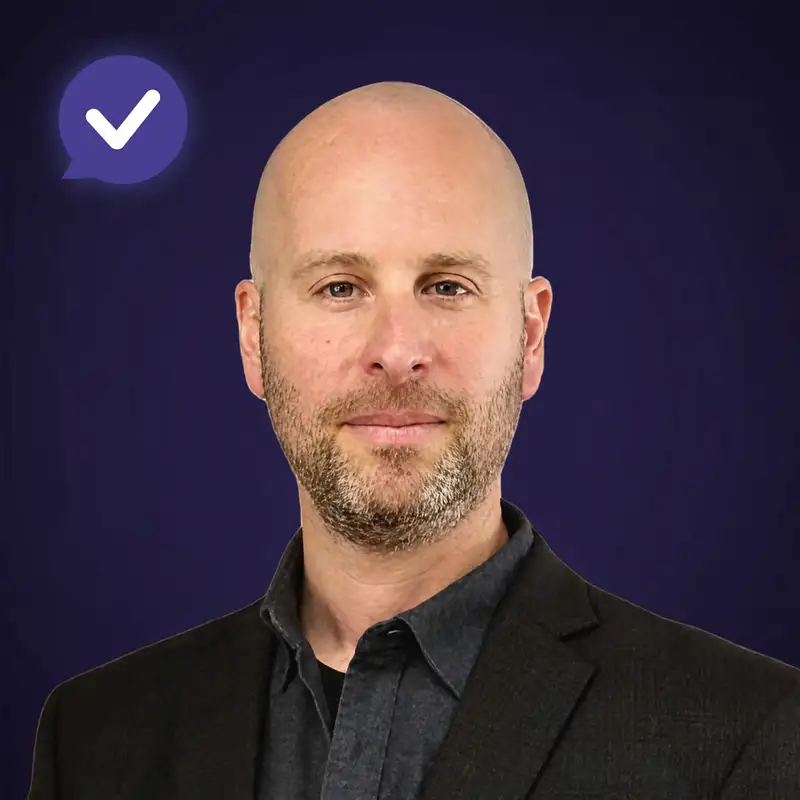
Who Will Keep Me Safe? What the First Election Since October 7th Really Means For Israelis | With Yaakov Katz
We can lower the toxicity. We can lower the temperature. I think anyone who cares for Israel understands that the current political environment in America... You have, what, 430 something races in the house, another 35 right now in this cycle in the senate. Israel is an issue in every single election.
Yaakov Katz:It comes up.
Ben Chertoff:Disproportionately so.
Yaakov Katz:Yeah. I mean, that's horrible for Israel. We don't wanna be a a football that you kick around in in in American politics. We need quiet. Keep us out of the room.
Yaakov Katz:Right? Don't talk about us so much. This
Ben Chertoff:is The Honest Take, the show that goes past the headlines to find out what's actually true about Israel and about the people covering it. I'm Ben Chertoff, and my guest today is Yaakov Katz, editor in chief of the Jerusalem Post from 2016 to 2023, a senior fellow at the Jewish People Policy Institute, and with Amir Babot, author of While Israel Slept How Hamas Surprised the Most Powerful Military in The Middle East. Israelis vote this week for the first time since October 7. Today, we're asking what's really on the ballot and how to read the results from wherever you are. One quick thing first, if you haven't subscribed, take a second and do it now, and if you can spare a moment, give the show a rating.
Ben Chertoff:It really is how new listeners find us. Alright, here's Yaakov. Israel goes to the polls this week and it's the first national election since October 7. Yaakov Kat says that makes it more than a vote on the government. This is the coalition that was in office that morning, so the election is also a question about accountability.
Ben Chertoff:But he doesn't pretend that the picture is simple. He calls October 7 a coin with two sides, the failures that led to it and everything that came after. Hamas, a shadow of its former self, Hezbollah degraded, Iran's nuclear facilities damaged. Compare Israel today with 10/06/2023 and he'll tell you the country is safer and stronger militarily. That's a big part of why so many Israelis who are angry at this government may also still vote for it.
Ben Chertoff:Yaakov has his own view on how this election should go, and he says so plainly as his opinion. What he also does is lay out what voters see. When Israelis vote, the question is, who's going to keep me safe? We get into how Israeli elections actually work, why left and right don't explain this race, and why nobody may know the next government on election night. We talk about Donald Trump's endorsement and about what he thinks American Jews misunderstand about having a Jewish state.
Ben Chertoff:And we talk about the coverage. He ran the Jerusalem Post through five elections in three and a half years and his verdict on how the world's media explains Israeli politics is two words, mostly wrong. A note before we start, Yaakov has written that he thinks it's time for a change in government, and he once served as an adviser to Naftali Bennett, who's on the ballot. Honest reporting is nonpartisan. We're not here to tell anyone how to vote.
Ben Chertoff:We're here to understand what's at stake. Yaakov Katz, welcome to The Honest Take.
Yaakov Katz:Great to be with you, Ben.
Ben Chertoff:So this is the first election since October 7. What what does it feel like on the ground these last few days of the campaigns?
Yaakov Katz:Well, I mean, obviously, Israeli elections tend to be quite animated, and people get emotional and excited. And I think that this election in particular, you know, there's a lot of different adjectives that people are using, most consequential, most faithful, most historic. It's probably a bit of all the above, but primarily, I would say because of the fact that this is really the first election since October 7, and this is the government that was in office when October 7 took place. To some extent, this government is responsible for what happened when Hamas invaded Israel that morning at 06:29AM. It was them who set the policies.
Yaakov Katz:It was their judicial reform in the year prior that, at least in my mind, divided the country and created the vulnerability that was taken advantage of by our enemies. And this is going to be a referendum, not just on the government, obviously, also on Benjamin Netanyahu and his long career as prime minister, definitely, at least since 2009, almost uninterrupted except for a brief eighteen month interlude when the Bennett Lapide government was in office from '21 to '22. But it's also going to be a question about October 7, and do we want to see as a people and as a collective a degree of accountability that this government has refused until now to take at all?
Ben Chertoff:Yeah. You've also said, that a lot of undecided voters you talk to still see Netanyahu as, someone who can still keep Israelis safe. Why does that survive October 7?
Yaakov Katz:No. I mean, look. October 7... And, you know, I wrote a book, while Israel slept, which looks at how October 7 happened. Right?
Yaakov Katz:And and the lead up to it, the state of mind, the policies, the strategies, the reliance on technology, obviously, the twenty four to thirty six hours preceding the Hamas attack, what went wrong, why was the intelligence that was there not interpreted correctly and and understood to be what it was, which was a Hamas attack. And this has to do with just a whole policy of containment, which basically Israel believed in kicking the can down the road, trying to avoid wars as much as possible, trying to not, find itself in a big conflict, but if anything, small ones, and then try to prolong as much as possible the periods of quiet and peace in between. But I think that for a lot of people, October 7, and this is true. I agree with this as well. October 7 is is a coin, if I could call it that, with two sides.
Yaakov Katz:One is the failures that led to that horrible morning and, obviously, the war that now is going on pretty much uninterrupted for the last three years, although at different, you know, intensity levels. But there's another side to that, and that is the reengineering of the Middle East. That is how Israel has turned the tables on its enemies, and there's no question that we have. I mean, Hamas is a shadow of its former self. His bilah is significantly degraded, and even Iran, which as we talk, there's there's increased now new tension of maybe another kind of clash whenever that might happen.
Yaakov Katz:But even Iran has had its nuclear facility significantly damaged, its military degraded, its top leadership decapitated. I mean, if you look at Israel and you ask yourself just a simple question, I think, objectively speaking, if I compare where we were from a military security safety perspective on 10/06/2023 to where we are today, I think we're safer and more secure and more and stronger militarily. But I also look at the fact that these conflicts continue. There's no resolution that we see yet in sight. The the country is still very much divided, And the fundamental, I'd say, foundational issues that were there back on October 7 still are here, and they have not been taken care of, and the country has not been able to heal yet and to be able to move on and and try to chart a new course forward.
Ben Chertoff:How much of the voting block do you think is undecided right now?
Yaakov Katz:I I I could tell you what the polls are showing. Mhmm. You know, well, a bit under 10% or so undecided voters. You know, it's a question of where they come from, which
Ben Chertoff:is That was my next question. Where do they come from politically?
Yaakov Katz:So a a lot of them are former coalition voters. Right? And and, I mean, the numbers are pretty obvious. Right? If you look at the coalition right now, so that's the Liqud party led by Netanyahu, Benvers party, the Betzal Smotrich religious Zionist party, and then the two ultra orthodox parties.
Yaakov Katz:If now in the coalition, they're about 65 seats, then why are they now, according to polls, only getting 51, 52? So suddenly, they've lost upwards of 10 seats. Where did they go? So a lot of those people... Some people have left and moved over to the other side, and they found a new home in Gadi Aizenkatz Yaakov party or in Naftali Bennett's party.
Yaakov Katz:But a lot are just still somewhere in the middle, and and they've yet to make the full transition from... Let's call it... You know, let's use the terms that are just used publicly and in the media. They've yet to transition from the right wing bloc, the Netanyahu bloc, to the so called center left bloc Mhmm. Or I would call it the opposition bloc led by Eisenkat.
Yaakov Katz:They've yet to make that move because it's hard for them ideologically, politically, from a tribal, if we could call it that kind of self identification, people who, you know, I talk to who all their lives and their parents' lives were Likud voters. Right? It's just... It's unimaginable that suddenly they're gonna vote for someone else even if they feel inside that that Netanyahu let them down. I mean, I was having...
Yaakov Katz:Take this one conversation, which is anecdotal, but it doesn't... You know, I think it reflects a a trend that that I hear and see and you read about with a good friend of mine who was complaining to me about how the ultra orthodox think this country is theirs, and they could do whatever they want, and they could block roads, and they're taking too much of the the the government funding, and they're not producing and working and not serving in the military. He's going on and on and on. And I said, okay. Who are gonna vote for?
Yaakov Katz:And he said, Netanyahu. So I said, do you not see the contradiction in what you're saying? In other words, Netanyahu's government is with the Ultra Orthodox. He's going to give the Ultra Orthodox again the carte blanche that you're you're you're catching and complaining about. Why do you think it will be different?
Yaakov Katz:He said, you know what, Yaakov? My values are with Netanyahu. Mhmm. And I said again, but I don't understand what you're saying. You just said your values aren't with Netanyahu because you're upset about the ultra orthodox situation.
Yaakov Katz:I think you have a lot of people like that, and I think that tension has a lot of people kind of trying to figure things out, but there's another piece to the puzzle. Mhmm. And this is where Netanyahu's political brilliance comes into play. I think his greatest success as a politician has been throughout, you know, I would say, you know, '96 to '99, he had his first term, then he was replaced. When he came back in o nine, he very much succeeded entrenching this idea within Israeli society and definitely the electorate that only he can keep Israel safe.
Yaakov Katz:And he is the best best equipped, best capable. He can work with America. He knows the world. He can manipulate... You know, that's not the right word, but he can he can engineer situations in the world to to to advance Israel's interest with whether it's America or Europe or Russia or China, you name it.
Yaakov Katz:And when Israelis go to the polls, they ask themselves really the the the ultimate question. Who's gonna keep me safe? Mhmm. And Netanyahu is a commodity that they know even with mistakes, even with the flaws, even with the problems. And the other guys, they feel are something of a gamble.
Yaakov Katz:Now even when I say that, it sounds crazy because, what do mean, Gotti Eisenkopf, years in uniform. Right. IDF chief of staff, lost a son in the war, two nephews in the war, a guy who knows... I mean, he's been shot in the head. Like, he...
Yaakov Katz:You know, he knows war. He knows how to make tough decisions. He knows how to send people across enemy lines into battle. And this is where Netanyahu's political maneuvers come into play. Mhmm.
Yaakov Katz:The de legitimization of the Israeli Arab parties and of this constant... And he's been so consistent with this message, and it's effective, that Gadi Eisenkat has no path to a victory without leaning or relying or merging with Arab parties. And that is something that is beyond the pale today for Israelis. And you could argue that that's wrong. You know, Israeli Arabs are part of the country, etcetera, etcetera.
Yaakov Katz:Fine. We could talk about that for a long time, but but I think emotionally, it's very difficult for people to to to see that. And Netanyahu beating at that for so many months now has been effective.
Ben Chertoff:And that's another consequence of October 7. Right? I mean, that wasn't necessarily the case before October 7. There had been coalition governments with, right, with, Lapid and Bennett?
Yaakov Katz:Yeah. Lapid and Bennett were the first who, really, in my mind... And I was very supportive of that government at the time because in my mind, when I think of Zionism and I think of what Israel has been trying to achieve in almost eighty years of statehood, and I look at the declaration of of independence back in 1948, I mean, equality for all people who live here, I think there's nothing greater, better... No better illustration of what we... Which we've been trying to achieve, which is seeing Israeli herbs, 2,200,000 people in this country, equal...
Yaakov Katz:They should have equal rights just like me, and for the most part, they do. Be part of the decision making apparatus, be part of government, be be hand in hand with us in building up the state. And and and, you know, it was a nice idea, and and I think it was brave of all those people to do it, but it didn't work. So you have, on the one hand, the fact that it didn't work. Now let's just open up parentheses for a second, Ben.
Yaakov Katz:The Ram party led by Mansour Abbas, which joined with Ben and Lapid back in the summer of twenty one when they formed what was known as the change government, was part of the original 61. So in the Knesset, which is a 120 seats, a majority is 61. Mhmm. What that ultimately means is that for any vote, for any decision, for any piece of legislation to pass the budget, if, God forbid, you go to war, you are relying on those people to continue to maintain your government. Mhmm.
Yaakov Katz:That is complicated because as you know and we all know, Israel is not a country that unfortunately doesn't find itself occasionally at war. And then it becomes complicated. Can you rely on an Arab party to give you the support, political support that any government would need to go fight Hamas? Right? I mean, let's imagine just for a moment, October 7 happened under the Benet la Pied government.
Yaakov Katz:What would Mansour Abbas have done? Maybe in the beginning, he would have supported and said, yeah. Of course. This was horrific, and he, you know, he did condemn it at the time. Mhmm.
Yaakov Katz:But a few weeks in, when Israel's bombing Gaza, would he have been able to stay in the government? So I think that that has led at least me, and I hear this from a lot of other people, say, listen. We still support having Israeli Arabs in the government, but I would do it from 62 and up. So not of the the the core '61 because you need to have a government that can be stable and be able to make those tough life and death decisions that are about war, unfortunately, that come our way too frequent than I would like to see. Mhmm.
Yaakov Katz:But the the the facts are today that definitely after October 7, like you mentioned, Israelis are just... Israeli Jews are very suspicious and very security focused and are... You know, there's a there's a breakdown of trust, and and we can't... You know, you can't ignore it. We could say it's not...
Yaakov Katz:People could get upset at it. They could say it's it's not right, but but that's the reality. And and it's the reality to some extent, if I might say, because I think we haven't had a moment to breathe and to pause and to heal as a nation from the the end of this war for two main reasons. One is it's not really yet over. Right?
Yaakov Katz:I mean, we're not actively fighting in the same way with Hamas and Hezbollah right now, but you got troops, thousands over the lines in Lebanon, in in in Gaza, in Syria. Hamas, know, is not disarming. Hezbollah's still there. Iran, we're talking about another war with. So the war is not over, number one.
Yaakov Katz:And number two, we haven't had a commission of inquiry. And a commission of inquiry, can really investigate and study and and learn the lessons of what happened, is really important for closure to be able to say, okay. I've learned the lessons. I've now applied them. Now I can breathe and move on.
Ben Chertoff:Mhmm. That's something that Gotti Eisenkult has been vocal about bringing about, a a commission of inquiry. Right? Or
Yaakov Katz:Everyone in the opposition. And this is, you know, where I think you have wall to wall support, says that the first decision they will make if they are able to form a coalition is to immediately establish a commission of inquiry. A commission of inquiry, you don't you don't need it. The state appoints a commission of inquiry. The one that by...
Yaakov Katz:On Israeli legislation is is establishing a vote of ministers. So it's not that you need a majority in the Knesset. And, of course, if you're a coalition and everyone agrees with it, then they're gonna do it. Netanyahu has refused calls and and and pleas essentially to form a commission of inquiry, I think because he's nervous of what that commission would eventually discover. But he's made an effort to delegitimize the process because according to Israeli law, once the government, the cabinet, the ministers vote to establish commission of inquiry, the mandate to appoint the panel is given to the president...
Yaakov Katz:To basically the chief justice of the Supreme Court. Now this ties in, if we didn't get our listeners and viewers already dizzy from everything Right. Ties in judicial reform. Right. Right.
Yaakov Katz:Which was the year preceding, October 7.
Ben Chertoff:Before we... And and so people don't get too dizzy here, I wanna just, kinda define our terms for the American audience, and lay out how the election works. So Yaakov, feel free to jump in if I'm... If I miss anything or get this wrong. Israelis don't vote directly for a prime minister.
Ben Chertoff:There aren't any districts. It's not like The US. You vote for a party. And again, unlike The US, there are multiple parties. It's not just a by party, system.
Ben Chertoff:And the Knesset's then a 120 seats as you as you had said are split by national vote share and each party needs only three and a quarter percent to get in. And it takes 61 seats to govern. And after the vote, the president asks whoever has the best shot of building a coalition, and that person doesn't have to lead the biggest party. So, I mean, essentially, we might not know what the government looks like election night.
Yaakov Katz:Oh, I'm pretty sure we won't. I mean, based on polls at least, right now, we're at a deadlock or stalemate. Neither side. If we look at the Netanyahu coalition that I mentioned before, the current government, they are at about 51, 52. Mhmm.
Yaakov Katz:The Gotti Eisenkat party... Coalition or opposition parties, which is him, Bennett, Lieberman, and Yaakov Golan's democrats, they're at about 52, 53. The rest are going to the Yaakov parties, essentially. Mhmm. They...
Yaakov Katz:Neither has a path. Now could something still change in these last few days of the campaign and suddenly we'll have a landslide for one side or the other? Obviously, anything can still happen, but it doesn't look that way. And then then it gets interesting but complicated. Mhmm.
Yaakov Katz:Because at this point, you're right. So the president meets with all the parties and says, who do you think has... Who do you recommend to be prime minister? So, you know, party x says Netanyahu. Party y says Eisenkat and goes back and forth.
Yaakov Katz:And then he counts up the numbers. And like you said, it's not necessarily who is the biggest party. It is who has the most recommenders. Right? People who are recommending that that individual.
Yaakov Katz:Then usually the president taps that person and gives him or her the mandate to try to form a coalition. They have about thirty days to do so. They can get a, I think, a fifteen day extension. And then after that period, if they fail, he meets with all the parties once again. Here's again what they have to say, and then he can give it to somebody else.
Yaakov Katz:He gives it to another guy, usually from the other side. They try for thirty days plus the fifteen. And then if no one is able to form a coalition, essentially, Israel goes to a new election. This has happened a number of times in recent years. You remember in April 2019, we went to our first five elections in the span of three and a half years.
Yaakov Katz:So it's not a foreign idea for Israel, but in my mind, it is... I think it would be a catastrophe for Israel to roll again to another election.
Ben Chertoff:The Americans map is really politics onto left and right because that's what Americans are familiar with, but that's not what this election is really about. And I don't think that explains the coalitions accurately or, you know, Netanyahu himself. What what is the core about what this election is about?
Yaakov Katz:It's a great question. I mean, first of all, you know, there's two parts to, I think, what you just said. Mhmm. Right? One is this isn't a right or left issue.
Yaakov Katz:Right? I mean, you know, there's a lot of people who I talk to in Israel and around the world who are like, listen. We just needed to go and kind of all of Israel's problems will be solved. No. That's that's that's just...
Yaakov Katz:You know, that's naive if not a little stupid. I'm sorry. Because if I think... If I go to Gadi Aisenkat and I say, hey. What are you gonna do in Gaza?
Yaakov Katz:He's not pulling the troops out of Gaza right away. Mean, by the way, Gadi Aisenkat, you're right. You know, you said right left. The the the issue used to be Palestinians. Right.
Yaakov Katz:Two state solution or no two state solution. Now everybody says no two state solution. Gadi Eisenkat said just a couple weeks ago, a two state solution is delusional. Naftali Bennett has long been an opponent of a two state solution. Avigdor Lieberman is probably the only leader of a party who has rolled out, you know, the crumbs of what could be a diplomatic kind of vision for the Palestinians, and that talks about getting the Jordanians to deploy inside the West Bank and giving them responsibility.
Yaakov Katz:So, I mean, far from being a two state solution. No one's even talking about it. No one believes it's possible. So then why aren't they getting along? Right?
Yaakov Katz:What is what is preventing Gotti Eisenkat, Naftali Bennett, Avidor Lieberman, and Benjamin Netanyahu from forming a coalition? And and the answer, tragically, is it's about the personalities. They don't trust one another. They can't stand one another. Everyone's finger pointing at one another.
Yaakov Katz:And and this is why... And there's, you know, there's valid reasons why. I'm not gonna say there aren't. Netanyahu's trial, the corruption allegations, the the the the the fact that he can't be trusted. He's backstabbed partners of coalitions of past and and October 7 and so much more.
Yaakov Katz:But I think we do have to look forward. And if the the option, when I think about it, is to go to another election or form this sort of unity government, I wanna avoid another election. And I think that Israelis, though, when they're going to the polls right now, it is that question that I said before of who do I feel is going to keep me safe, but it's also gonna be a big referendum on Netanyahu. This is really, you know, a lot of elections, the one after he was first indicted, the one once he already was on trial. I mean, that...
Yaakov Katz:We could say a lot of those were his big fight for survival. This one definitely is. And he... You have to remember that for Netanyahu right now, if he loses this election, if there suddenly is a landslide... Let's think of the consequences.
Yaakov Katz:He's out of the government. He might stay in the opposition, but either way, his trial continues. Mhmm. And there's a chance he could get convicted. Now he'll fight it, but there is a chance.
Yaakov Katz:There will be a commission of inquiry that will go after him. Right? And and that will become his legacy. Mhmm. So to some extent, Netanyahu really right now is is is fighting for political survival, for potential personal freedom, and for the legacy that we will all remember him by.
Ben Chertoff:So, yeah, back to the commission of inquiry that that you've been talking about. Why why has that not been as prominent a feature of this campaign?
Yaakov Katz:So some of the party leaders on the on the left or center left tried to make it the big issue. There's been attempts a few times by different parties to make a number of the issues the issues. So, you know, first was the Haredi draft, the induction to the military of the ultra orthodox, 13% of population here in Israel, about 1.3, 1,400,000 people. For the most part, they don't serve in the military. You have right now speaking about 70 to 80,000 men who are of draft age, excuse me, and they're not serving.
Yaakov Katz:And this government has been trying to find them a way out and continue that exemption. That's a big issue because that inequity has really been felt Yeah. Viscerally, right, by people who have reservists and families. So many people have been killed in this war, taken hostage in this war, paid a very painful price of being hundreds of days away from their homes, their families, their businesses because they're serving in reserves because we're short on the number of soldiers. People tried to make that the issue.
Yaakov Katz:Didn't catch. People tried to make the October seventh commission of inquiry the issue. Didn't catch. And people tried to make it, we need to repair and fix the country. Also hasn't really caught on.
Yaakov Katz:I think that this is again because Netanyahu has been able to dominate the political conversation. He's been able to steer it in a specific direction and make it more about that whenever journalists meet with the politicians, well, are you gonna sit with the Arabs, or who are you gonna sit? Are you gonna make a coalition with this guy or make coalition with that guy? That is the Netanyahu effect on on on the political discourse.
Ben Chertoff:You, and your your coauthor wrote while Israel slept. What what did you find when you researched that book?
Yaakov Katz:I mean, look. You know, I think, like, a lot of people around the world and definitely in this country, we saw what happened on October 7 and were shocked. Right? How did this happen? There was obviously the tactical operational mistakes and failures that broke down and...
Yaakov Katz:Or were uncovered that morning. And and those you could understand. Right? You know, sophisticated attack. Hamas got through.
Yaakov Katz:Mhmm. It was able to surprise the military. It... The the IDF was unprepared. Lots of different...
Yaakov Katz:Where was the air force? Why did take so long to deploy? Lots of operational answers we could talk about. But there was a bigger question that that we felt had to be answered. And this was, you know, when you kind of think about nine eleven for a moment and you go back to 2001, there were people who knew of Al Qaeda.
Yaakov Katz:Mhmm. But how many Americans knew what Al Qaeda was? Very few, if any. Right? Israel, everyone knows what Hamas is.
Yaakov Katz:I mean, we've been fighting with Hamas for decades. If you go back from 2005 till October 7, we... When we pulled out of Gaza, right, in the summer of two thousand five, we had fought a war on average with Hamas every two years. So this wasn't like we didn't know there's this bad guy over there Mhmm. Who's bent on our destruction, who's trying to develop the capabilities to do so, who periodically attacks us through a tunnel, through a rocket, through a burning kite, whatever.
Yaakov Katz:We know they're there. We know they're amassing weapons. We know their their weaponry is is getting better. I mean, if I go back to 2005, the rockets could barely hit the area around Gaza. When I jump already to 2014, they're striking in Tel Aviv.
Yaakov Katz:Mhmm. Right? So, I mean, they're improving their capabilities. We all see that in the country, and no one thinks to themselves, we gotta go take these guys out before before something happens. And that raises a very deep question about Israel, which is why.
Yaakov Katz:Why did we not do that? Why did we embrace this policy of containment?
Ben Chertoff:Is that the conceptia?
Yaakov Katz:That idea? The conceptia. Yeah. Exactly. Right.
Yaakov Katz:It's because then with the conceptia, the concept or the paradigm, this Mhmm. I call it, like, this belief or faith system that we had worked on a couple of principles. Number one was Hamas does not want war. Mhmm. Hamas wants economic prosperity.
Yaakov Katz:Just keep sending them money. Keep lending their workers into Israel. Keep that. We'll keep things quiet. The second is we know they're there, but we can handle it.
Yaakov Katz:We can... You know, we have the best technology. We have better soldiers. We have superior intelligence. All that will stand if one day something does happen.
Yaakov Katz:Mhmm. And it all broke down. So the question that we looked at is how does a conceptia get created? Right? So we we went back to the nineteen eighties to when Hamas was first founded in Gaza.
Yaakov Katz:We spoke with the with the Israeli officers because then Israel was in control of Gaza who were on the ground, who saw those original kinda street signs that were plastered on walls announcing the establishment of this new movement, which no one really knew what it was. Maybe there was something along the way that could have been done differently that would have changed the trajectory of where we found ourselves. And it's important, I think, to to really learn and study this because it could happen again.
Ben Chertoff:The participation in Israeli elections, the voter turnout is very different from America. Can you can you talk about the... Just the difference in kind of civic mindedness and how how closely people follow this and participate?
Yaakov Katz:So in America, remind me, it's about 50% or so? Or
Ben Chertoff:If that. Yeah. And If that.
Yaakov Katz:Right? Mean, it's it's it's low. In Israel, we we look at around 70% of voter turnout. And, you know, I I wish it would be more. I think more people should be participating, but I think it's it's because it's real here.
Yaakov Katz:Right? We are we are... We, the people, are making decisions to put in place leaders, political leaders, who we know will make life and death decisions that that will affect us literally. Right? You know, I think of October 7.
Yaakov Katz:I think of my family, my small family. My wife, Kai, and I, our four kids. The morning of October 7, we didn't know right away, but we knew people who had been killed. We knew people who had been taken hostage, and we're one family in Israel. Everyone throughout this war has been impacted and felt by this, whether personally or by extension.
Yaakov Katz:And and and that is something that when you think about who you're gonna vote for, you know this will impact you. Will I have rockets flying over my head tomorrow? Right. Or will something else change? So that makes this real and raw.
Yaakov Katz:And I think that as a result, Israelis say, this is how I... This is how we make decisions. This is how I can make myself matter, and they go out and they vote. And I think that this coming election, there is anticipation that it will be higher and maybe substantially higher in terms of voter turnout because of everything we said before of how consequential and important this election is going to be.
Ben Chertoff:What are the two... You know, if if you're gonna play out what the consequences of this election are, people are calling it, you know, possibly the most consequential election. What what are the consequences that people worry about on both sides?
Yaakov Katz:Well, I think their safety is number one. The other issues that people are thinking about is obviously cost of living. They're thinking definitely about the inequity and the fact that there is not a shared burden of of of what we have to do here in this country and serve the daughter
Ben Chertoff:The Haredi draft and
Yaakov Katz:Yeah. Have a daughter serving in the IDF, you know, in the navy. She's giving of her time and her and her energy and and and and physical being to serve this country while there are people in our... My own family who don't serve, who are her same age. Mhmm.
Yaakov Katz:But they don't serve because that... They're Haredi. Mhmm. That is something that a lot of people are very upset about, and that is guiding a lot of their votes. There are people who are concerned that the Palestinian issue might come back in one way or another.
Yaakov Katz:And we look at what's happening in the world, and we see the sanctions that The United Kingdom and France have imposed on Israel. Israelis look at what's happening in The United States and the the shift, not just which is the most evident in the Democratic Party, but you're seeing it also in the Republican Party. And they're concerned about what that means in that political and diplomatic isolation. So that's another issue. Iran, with obviously its pursuit of a nuclear weapon, how can they be stopped?
Yaakov Katz:And Donald Trump, who has seemingly been on Israel's side on that issue, has two years left in office. Who would be the best suited person to con... To work with him on on this issue over the next two years? Judicial reform is another issue that, for some people, is still something that truly troubles them, and it's unfinished business for this coalition. If they could, they would come back and change it.
Yaakov Katz:So I think there's a lot that people come with, but there's one other thing, which maybe overtakes it all, and that is identity.
Ben Chertoff:Mhmm.
Yaakov Katz:Right? Israelis still very much are a divided people that is mixed tribes, we could call it that. You know? Most obvious are, I would say, four groups that we have in the country. The secular Israelis, a lot of them who built the country Mhmm.
Yaakov Katz:From the center of the country, for the most part, carrying the socioeconomic and military burden, but more of the liberal left. You have then the religious... The national religious, the people who believe in the the holiness of the land. This is the the continuation of the redemption, and they are for the most part supportive of expansionism in the West Bank in Judea And Samaria. You have the Israeli Arab group Mhmm.
Yaakov Katz:And you have the ultra orthodox group. Now, obviously, it's it's much more complicated in that people cross lines. That identity, and if I even go deeper into it, you have the Ashkenazim, and you have the Sephardim. Right. And that still is something that's real for a lot of people.
Yaakov Katz:So those identity issues, you won't tell me
Ben Chertoff:Mhmm.
Yaakov Katz:Who to vote for. You won't... In other words, when I when I think of my friend who said that to me about the ultra orthodox, but then Bibi is my guy. Mhmm. That is an identity issue.
Yaakov Katz:Right? He votes Likud. His family supports Likud. Likud because they supported his family. Mhmm.
Yaakov Katz:A Moroccan immigrant family that came here.
Ben Chertoff:And the irony, is that Likud, you know, was typically a Sephardi Mizrahi party, but Isinkot is from Morocco.
Yaakov Katz:Yeah. I mean, Isinkot's parents are Moroccan immigrants. He... It's even more than that. He grew up in what we call the periphery.
Yaakov Katz:Right? He grew up in in in a in a lot all the way down south. He's not part of the, you know, secular elite in this country. Benjamin Netanyahu was born and raised not far from where I am in Jerusalem in a neighborhood called Rechavya, the upper elite Ashkenazi neighborhood. His father was a professor, spent formative years, Benjamin Netanyahu did, in The United States, went to MIT.
Yaakov Katz:Right? It's it's a very different life experience. Yeah. One of his selling duties
Ben Chertoff:that he... His command of English. Right? That
Yaakov Katz:A 100%. You know, it it... But by the way, it's what... It's this... What you just touched on.
Yaakov Katz:It's interesting for two reasons. Number one is Isenkat tried to stay away from it throughout the campaign. He didn't try to play it up, which you could say might have been a mistake or might have not. But I think for him, he didn't wanna go into the issue. He didn't wanna make it...
Yaakov Katz:It's not it's not a race issue like you have... You know, you'd call in America, but it is something of a race issue.
Ben Chertoff:Right.
Yaakov Katz:And he he didn't wanna make it that. Mhmm. But what it also did and makes this interesting is it made it hard for the right to attack Adi Aisenko. Right? You could say he doesn't have security experience.
Yaakov Katz:He was chief of staff of the IDF. You could say he doesn't know the price of war. He lost a son in in the Gaza War. You could say he doesn't know the the the challenges of growing up in this country as a Sephardi. Well, he does, and he did.
Yaakov Katz:You know? So he doesn't speak English at a high level. I'm okay with that. Right? That's not what I'm looking for in a leader of the country.
Ben Chertoff:How much does the identity politics, what we would call identity politics in The US, how much does that play a role in Israeli politics?
Yaakov Katz:Oh, I mean, I think it plays a huge role. Right? I mean, just what we were talking about before. Right. You know, where I come from, what camp I'm with, that's who I vote for, and that's who I support.
Yaakov Katz:And there... You know, the problem is... I mean, there are... The facts and the problem, at least how I see it. The facts are Israel is...
Yaakov Katz:It's not segregated. I mean, you have families that are mixed. Mhmm. Most families today are Ashkenazi, Sephardi. I think, you know, it's probably fifty fifty, if not even a little more to the Sephardic Jews of this country.
Yaakov Katz:But, you know, it's perfectly integrated. Here, the facts are. You just mentioned Gadi Eisenkat, Moroccan descent, made his way to become the IDF chief of staff. Right? Mhmm.
Yaakov Katz:It's it's... You've had them in all roles, whether foreign minister, defense minister, finance minister, not yet prime minister. But what it is is it's something that politicians play at or harp on. And it's this nerve that you can kinda touch every once in a while, and it sets things off. Mhmm.
Yaakov Katz:And and and people know how to take advantage of that, and that makes this very emotional for a lot of people.
Ben Chertoff:I wanna get back to the, the influence that America and American politics have on the Israeli elections, especially since... As we're taping this recently, the American president has endorsed, Netanyahu, which is very very out of character for an American president to do that. And you've described Israel going from flying side by side with American f 30 fives to, quote, not even in the room. So like how much of that is president Trump being unpredictable? How much of that is Netanyahu?
Ben Chertoff:And how much of all of that relationship plays into people's worries about how this will play out going forward? I mean, does it help or hurt Netanyahu?
Yaakov Katz:You know, I think it mostly helps him. Right? Donald Trump's endorsement of him, which is pretty unequivocal and and unprecedented in that way, makes it clear to a lot of people that... Who can make the argument. Listen.
Yaakov Katz:Netanyahu is the guy who we need to have because only he can really work with Donald Trump, and Donald Trump is so unpredictable. Mhmm. So volatile. Can turn on us in a in a heartbeat. We we need somebody who can work with him.
Yaakov Katz:And, you know, we'll we'll we'll swallow a bitter pill if that's what it takes, but for the next two years... And I hear lots of people say this. For the next two years, we should have Netanyahu there in office to be able to work with Donald Trump. That's only one, though, facet, I think, of The US Israel relationship. Because in my mind, and I spend a lot of time writing about this and and and talking to international audiences, but also Israeli audiences to educate them of the existential importance of the relationship and the alliance with The United States.
Yaakov Katz:Now that that... That's long been an easy argument to make for Israelis. You look at airplanes that we fly all American. You look at munitions American. You look at the veto at the United Nations Security Council.
Yaakov Katz:It's American. But things have shifted in America. Not because of Israel. They happened on their own, but the situation in Israel is makes makes the whole situation much more frightening for us. And I don't think that people here enough understand what's coming.
Yaakov Katz:Right?
Ben Chertoff:Mhmm.
Yaakov Katz:You're you're about... You know, you're gonna have your midterms. Yeah. The house is going to flip to control of the Democrats. Senate, there's a few seats up in the air.
Yaakov Katz:The senate could also flip. Who knows what's coming in the elections for the president in 2028? And we're looking at a new reality. Even if, you know, even if a Republican wins right now in in 2028 for the '29, for the next two years, what's gonna be with Israel military aid if that needs to be approved? You don't...
Yaakov Katz:You won't be able to get the votes. I mean, you see the calls and what's changing among members of of congress. We should be very, very concerned. And then the question is, how do we fix that?
Ben Chertoff:Mhmm.
Yaakov Katz:And I think there's lots of ways to fix that, but it's gonna be very hard with this current government. They just... They they don't wanna fix it.
Ben Chertoff:Is... Do you know... How could they? I mean, like, is there... Is...
Ben Chertoff:Do you have, what steps could be taken? And I mean I mean that, like, in a... Like, I I don't know.
Yaakov Katz:You know, I think... So I think there's a lot of steps that can be taken. Look. I'm... I don't live in an illusion.
Yaakov Katz:Mhmm. And I don't think... You know, I think even to some extent, if we tomorrow make a Palestinian state, it's not that everyone's gonna line up and love us. Right? But with that said, we can lower the toxicity.
Yaakov Katz:We can lower the temperature. I think anyone who cares for Israel understands that the current political environment in America... You have, what, 430 something races in the house, another 35 right now in this cycle in the senate. Israel is an issue in every single election. It comes up.
Ben Chertoff:Disproportionately so.
Yaakov Katz:Yeah. I mean, that's horrible for Israel. We don't wanna be a a football that you kick around in in in American politics. We need quiet. Keep us out of the room.
Yaakov Katz:Right? Don't talk about us so much. And you see what's happening all over Europe is is is no better. So I think that if we look at the big issues that are out there, the way I see it, there's three. The most immediate right now is what's referred to as settler violence.
Yaakov Katz:I don't like that term, Ben, because it makes it seem as if all settlers are violent. This is a very small number. 99.9% of the people who live in Judea and Samaria and are called settlers Mhmm. Are are law abiding, serving, contributing people.
Ben Chertoff:Mhmm.
Yaakov Katz:But there is this small tiny number that is running rampant and and carrying out acts that in my mind, and I have written this, are are Jewish terrorists that should be stopped and and feel the full force of the law. But this government is not doing it, and there's a political reasoning behind it. But it's a stain on Israel, and it's causing Israel horrible damage. So a new government... By the way, even one with Netanyahu, just not with Itzelth Smot or Shanid Samar Benavir, would be able to bring back tools that were taken away to be able to combat this, would be able to deploy the troops, the resources, and an effective response to stop it and bring it down.
Yaakov Katz:That is a low hanging fruit right there. Mhmm. That's one. And that could lower the temperature. Number two is we do have to then talk about the bigger issue of the Palestinians.
Yaakov Katz:That has to do with Gaza, and it has to do with Judea And Samaria on the West Bank. Today, the government of Israel does not talk to the Palestinian authority. There's no prospect of any sort of dialogue. I don't even wanna go as far as to say peace talks. Right?
Yaakov Katz:Because that would be jumping way too ahead. We gotta we gotta get back on track. Mhmm. We also have to do something and move forward Gaza, right, which is stuck right now. Mhmm.
Yaakov Katz:But then there's the third part, which I think Israelis often don't appreciate in their way of understanding America.
Ben Chertoff:Mhmm.
Yaakov Katz:If you think of every every American lawmaker over the years who would ever talk about Israel, they would say two things. One is our bond and commitment to Israel's security is unbreakable, unshakable, etcetera. And the second thing is we are not just allies, military allies, but we also have shared values. For Americans, values are an important thing. And when they look at Israel today, definitely on the democratic side, when they look at Israel today, they feel and they see a country whose values have fundamentally and stubbed...
Yaakov Katz:Substantively changed. Settler violence is an example of that, but judicial reform was another example of that. So I think that what Israelis need to do... And I know for a lot of people, this will sound too progressive and too far left, but I'll say it anyhow. Israelis gotta get back to talking in the democratic language that we used to talk in.
Yaakov Katz:Right? And and that itself will, I think, contribute to... People will look and say, okay. This is a different Israel. This is the Israel I knew, the Israel I I I I I felt an attachment to.
Yaakov Katz:I think that could have a simmering calming effect as well.
Ben Chertoff:What do you think American Jews, especially American liberal Jews, don't understand about Israel that that or don't understand about Israeli politics and sentiment that they should and could help them understand, you know, why things are the way they are that, you know, there's a rift.
Yaakov Katz:You know, I've been thinking a lot about this actually over the last few days, so you catch me in kind of a thoughtful moment about this exact question. I think that there is a misunderstanding of what government, statehood, and a Jewish state actually means. Mhmm. And what a Jewish state actually means is that occasionally you are going to have to use military force and power. And it's a very different experience, I think, for diaspora Jewry when they think of that concept because they don't wield or have or possess Mhmm.
Yaakov Katz:That type of power, right, living in another country. Not that they're powerless. In many cases, they are powerful, but it's a very different type of power. Right. Israel's a country that has to...
Yaakov Katz:Has the problems and the flaws of every other country in the world. I'll give you one example. I I met with a group of lawmakers from one of the... One of your 50 states in The United States Of America recently, and they had visited Jerusalem. And they're going on and on about, you know, I hear there's crime there, and there's building violations, and some parts are run down and not enough investment of the municipality.
Yaakov Katz:And why is that? And he's getting upset. And I said, you you know, I've been... I grew up in Chicago. Right?
Yaakov Katz:There are neighborhoods you wouldn't walk into. Yeah. Now they're Chicagoans just like me. Mhmm. And they're not getting the municipal services, and there's murder rate through the roof and crime, and schools are run down.
Yaakov Katz:So why not? Right. You know, we're we're a country like every other country. We are... We have cities like every other cities.
Yaakov Katz:We have the same problems. So I think people need to, a, understand that. The second thing people need need to understand about Israel is that with all those flaws that every country has in the world, we also are in a neighborhood that forces us to fight all the time. And that is very hard, I think, to come to terms with. And Israel and I would tell you that we fight in ways that no one else does, in the means that we use and deploy to spare civilian casualties and minimize, I don't like this term, but collateral damage.
Yaakov Katz:Mhmm. From dropping leaflets to making robocalls to millions of people, from publishing maps, leave this area. I mean, what military, when fighting an enemy, says leave where I'm going? I mean, that's... You're giving up the element of surprise.
Yaakov Katz:But this is what Israel does. And I think, you know, people don't understand that, so they see what's happened. They say, okay. It's genocide Mhmm. In Gaza when...
Yaakov Katz:And by the way, majority of American Jews think it's genocide as well according to polls. But when you think about it for a moment, you say, one second. It's genocide. Then how has the Gaza population increased since October 7?
Ben Chertoff:Right.
Yaakov Katz:Right. So, I mean, of course, it's not genocide. Mhmm. But it's very... It's hard for people to come to terms with the fact that this is a war, and this is happening in twenty twenties...
Yaakov Katz:You know, in the twenty twenties, and it's also happening by the Jews.
Ben Chertoff:Right. Well, it seems like Israel is always exempted exempted from the the standards and rules that the rest of the world is judged by. And I think we do that. You know, diaspora Jews do that as well in in judging Israel. Maybe it's because we're in, you know, swimming in that water to a certain extent.
Ben Chertoff:But... Yeah. You you mentioned briefly that there is a possibility of a Netanyahu government without Smoltrich and Ben Gavir. How how would that work? And, you know, the...
Ben Chertoff:What are the mechanics of that and the like So
Yaakov Katz:that would be what we would refer to as a national unity government. Mhmm. Right? That would be a government that would be something along the lines of Netanyahu's Likud, Isaac Katz Yaakov, Ben Yaakov, and and Avidor Lieberman's Israel Beitenu.
Ben Chertoff:Mhmm.
Yaakov Katz:You could then keep out the far left, the the Arabs, the far right, and the ultra orthodox, and have a government of potentially, depending on how the numbers play out, of over 60 that is ideologically on the same page Mhmm. That can really deal with the issues that we're facing, the ultra orthodox issue. It can deal with the security threats. It can build back the economy, lower, hopefully, the cost of living. I mean, a lot...
Yaakov Katz:Fix the education system, which I think is the foundation for a lot of our problems. That is what that government would look like. But here's the question that gets everybody stuck. Who's prime minister? Mhmm.
Yaakov Katz:Right? Netanyahu is unlikely to agree to go into a government like that if he's not prime minister. Mhmm. The other three would say, one second, together, we are the majority of what this government is. Why would we let you be prime minister?
Yaakov Katz:And you have to go. Right? Because that was what we ran on. So I don't know how to square that circle, if we could say that. I don't know how that's done.
Yaakov Katz:I don't know how it could happen, but but I go back to something I said before. If I if I am faced with the two options, another election, which means we're perpetuating the division and the the inability to heal and to move on and still facing all these amazing challenges and threats. I say, hell no. You guys go figure this out because we gotta we gotta we gotta run this country. We don't have that luxury to play these little games anymore.
Yaakov Katz:I hope they can, but I don't know if they will be able to.
Ben Chertoff:The the morning after the vote, American international news outlets will be trying to explain what happened. You're a longtime newspaper guy. You were the editor in chief of the Jerusalem Post. What what framing should listeners watch out for? What do you...
Ben Chertoff:What what do news outlets get correct? What do they get wrong about Most really wrong.
Yaakov Katz:I mean,
Ben Chertoff:you know?
Yaakov Katz:Well, I I mean,
Ben Chertoff:if the past three years is anything.
Yaakov Katz:You know, I was I was editor up until right before the war in, in 2023. So I I I went through five elections in in those three and a half years. And first election, all excited. You know? First time as an editor putting together coverage of a of a national election.
Yaakov Katz:That's exciting. Second election was, you know, weird. How have we done this? But I had the I had the, you know, format already of what the front page is gonna look like and what is the... What each reporter should be doing just did copy paste third election.
Yaakov Katz:I was like, my god. I just don't even have to work. I just take what we did last time. And, of course, same in the fifth election. So the the...
Yaakov Katz:I think that what we have is the polls, the exit polls, which are gonna come out about 10PM on Tuesday, October 27 here in Israel time. So I guess it's 3PM on the East Coast or or 2PM, is what Israelis are... You know, what the numbers are Mhmm. Pretty much what the blocks look like, but it's it's still not going to be a 100% clear. That will take another day or so.
Yaakov Katz:But if you have a landslide that's obvious that one side is one, that will be the declaration of victory. I think the the the newspapers, though, in the world will be reporting on, we're stuck.
Ben Chertoff:This... You know, we started off talking about how the the... On the ground, this is being talked about as being an incredibly consequential election, existential perhaps. What are you optimistic about in this election regardless of the outcome or at least in the future?
Yaakov Katz:Yeah. I mean, you know, first of all, I'm I'm I'm very happy that we have a democracy and we have the ability to vote. I think that we have big decisions to make, and I wanna be optimistic that we will make the right decisions. There is a lot at stake here. The future of this country, whether my children will have to continue to fight or not, and what type of country will be here and and what its economic viability will be when my grandchildren come.
Yaakov Katz:So I I I I think we have a lot that's that's real real and relevant. But I'm optimistic that I think Israelis will figure it out. I think, ultimately, if there is a government change, which I think we need, I believe that a new government would be able to bring the people back to its core focus of how do we stay united as a people. And we were never fully united. Mhmm.
Yaakov Katz:That's true. But there were better eras than the one we're in right now. And I think a new government could do that, so I'm optimistic about them. The reason I'm optimistic, though, is because, you know, closely following and and and working on policy issues and and the government and politics, you you, you know, you see how a lot is problematic up there, and it broke down on October 7. But what didn't break down was the resilience of the Israeli people Mhmm.
Yaakov Katz:And our youth that have... Who have been fighting nonstop. Mean, I I have nephews, three, who until recently were all in the military. Now two are left there as as officers. One got out.
Yaakov Katz:And at one point, joked to them, and I said, you know, you guys could stop paying taxes in Israel because your residency over the last few years has been outside the country, in Syria, in Lebanon, in Gaza. Right. I mean, the youth here are unbelievable. Are unbelievable. And there's so many stories that we could just spend hours talking about.
Yaakov Katz:That that gives me a lot of optimism and hope.
Ben Chertoff:Yaakov Katz, thank you so much for joining us today.
Yaakov Katz:It was my pleasure.
Ben Chertoff:Remember Yaakov's friend, the one who spent a whole conversation complaining about the ultra orthodox and still said my values are with Netanyahu? When the results come in, there will be a lot of people like him behind the numbers. And when the morning after explainer start rolling and remember Yaakov's prediction for the real headline, Israel is stuck at least for now and the country will still have to figure out how to stay one people. If this one helped you make sense of the election, do me a favor and leave a review on Apple Podcasts or Spotify. It's genuinely the thing that helps people find the show.
Ben Chertoff:Subscribe on YouTube, Apple, or Spotify so you don't miss the next one, and follow HonestReporting on Instagram, Facebook, TikTok, and X for all the work behind these conversations. Yaakov's book, written with Amir Babot, is While Israel Slept: How Hamas Surprised the Most Powerful Military in The Middle East. You can read his weekly column in the Jerusalem Post and hear him as host of the JPPI podcast. I'm Ben Chertoff. This has been The Honest Take, and we'll see you next time.