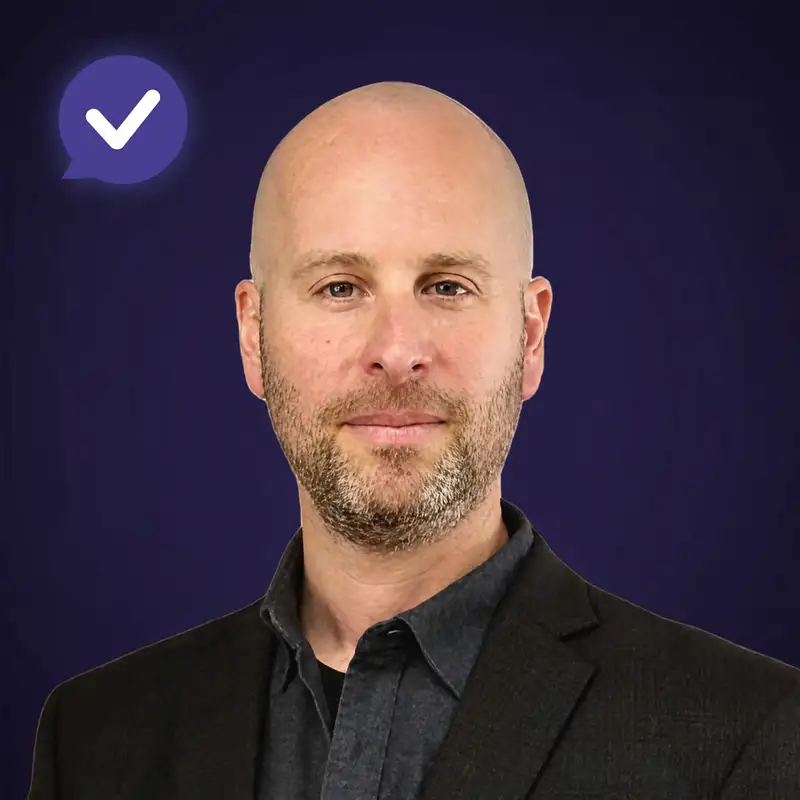
Who Will Keep Me Safe? What the First Election Since October 7th Really Means For Israelis | With Yaakov Katz
A good friend of Yaakov Katz spent a whole conversation complaining about the ultra-Orthodox: they block roads, they take too much government funding, they don't work and they don't serve in the army. So Yaakov asked him who he was voting for. Netanyahu. Didn't he see the contradiction? Netanyahu's government is the one that keeps giving the ultra-Orthodox what he was complaining about. "You know what," the friend said, "my values are with Netanyahu." Yaakov says there are a lot of Israelis like him, still trying to figure out where they stand.
On October 27, Israel votes for the first time since October 7th, and the coalition on the ballot is the one that was in office that morning. Yaakov calls the election a referendum on Benjamin Netanyahu and a question about accountability. But he doesn't pretend the picture is simple. He calls October 7th "a coin" with two sides: the failures that led to it, and a war that has left Hamas a shadow of its former self, Hezbollah significantly degraded and Iran's nuclear facilities damaged. When Israelis go to the polls, he says, they ask one question: "who's gonna keep me safe?" Netanyahu is the commodity they know. Everyone else feels like a gamble, even Gadi Eisenkot, a former IDF chief of staff who lost a son in this war.
He walks through how Israeli elections actually work: you vote for a party, not a prime minister, and 61 of the Knesset's 120 seats make a government. The president hands the mandate to whoever gets the most recommendations, not necessarily whoever leads the biggest party. Will we know the next government on election night? "Pretty sure we won't." He explains why left and right don't explain this race. The two-state solution has all but disappeared from the campaign, so what keeps Netanyahu, Eisenkot, Naftali Bennett and Avigdor Liberman apart is personalities. He lays out what a national unity government could look like, the question that gets everybody stuck (who's prime minister?), and why he thinks another election would be "a catastrophe."
Then identity. He describes the tribes of Israeli politics and the Ashkenazi-Sephardi divide politicians still know how to touch. Eisenkot's parents are Moroccan immigrants and he grew up in the periphery, while Netanyahu grew up in Jerusalem's Rehavia neighborhood. He says Donald Trump's endorsement "mostly helps" Netanyahu, why he worries Israel is becoming a football in American politics, and the three things he thinks a new government could do about it. And he says what American Jews misunderstand: "what government, statehood, and a Jewish state actually means."
Yaakov ran The Jerusalem Post through five elections in three and a half years. His verdict on how the world's media explains Israeli politics: "Mostly wrong." His prediction for the real headline the morning after: "we're stuck." He closes on what still gives him hope: the resilience of Israel's young people, including his three nephews, who until recently were all serving.
Also in this episode: the konseptziya, and why While Israel Slept goes all the way back to Hamas's founding in the 1980s; why there's still no state commission of inquiry into October 7th, and how one would be appointed; why the Haredi draft, the commission and "fix the country" never caught on as campaign issues; Netanyahu fighting "for political survival, for potential personal freedom, and for the legacy"; why Arab parties in the core 61 became a hard sell after October 7th; why voting feels "real" in Israel; and copy-pasting the front page by the third election.
Yaakov has his own view of how this should go. He thinks Israel needs a change of government, and he says so plainly. He also explains why so many Israelis see it differently.
CHAPTERS
00:00 Cold open
00:40 Intro
03:28 The first election since October 7th: the mood on the ground
05:12 Why voters still see Netanyahu as the one who keeps them safe
12:38 Coalition math after October 7th
17:51 How Israeli elections actually work
20:49 Why left and right don't explain this race
24:14 Why the commission of inquiry isn't a campaign issue
25:59 While Israel Slept: what the research found
29:31 Turnout, and why voting feels real in Israel
31:24 What each side fears
36:48 Identity politics and Israel's tribes
38:09 Trump's endorsement and Israel in American politics
45:33 What American Jews misunderstand about Israel
49:29 Could there be a national unity government?
51:50 How the world's media will cover the results
53:37 What still gives him hope
56:25 Outro
YAAKOV KATZ Website: https://www.yaakovkatz.com/ Column at The Jerusalem Post: https://www.jpost.com/author/yaakov-katz While Israel Slept: How Hamas Surprised the Most Powerful Military in the Middle East, with Amir Bohbot (St. Martin's Press, 2025): https://www.amazon.com/dp/1250345685
MORE FROM THE HONEST TAKE Daniel Gordis, "America Is Not Zion": https://podcast.honestreporting.com/episodes/america-is-not-zion-why-american-jews-and-israelis-are-living-two-different-jewish-lives-with-daniel-gordis Colonel Richard Kemp, "Hamas' Human Sacrifice": https://podcast.honestreporting.com/episodes/human-sacrifice-not-human-shields-a-british-commander-on-why-gaza-is-a-war-not-a-genocide-with-richard-kemp
THE HONEST TAKE Podcast: https://podcast.honestreporting.com Apple Podcasts: https://podcasts.apple.com/us/podcast/the-honest-take/id1896315802 Spotify: https://open.spotify.com/show/1pCnClcM4jiggKP46YZGjG YouTube: https://youtube.com/playlist?list=PLLuF-lEHTGTw_RrfN9EP6pdWhgjMX7Fg5 HonestReporting: https://honestreporting.com HonestReporting on X: https://x.com/HonestReporting
The Honest Take is HonestReporting's weekly long-form interview show, hosted by Ben Chertoff. Every episode at podcast.honestreporting.com.
If this one helped you make sense of the election, please leave The Honest Take a rating and review on Apple Podcasts or Spotify. It's the single biggest thing that helps new listeners find the show.